| Originally founded in Denmark, digital publishing platform Issuu has become one of the fastest growing global companies for digital magazine publication. Today, the company announced not only the launch of its US operations in Palo Alto, California, but also named some former executives with companies like Yahoo! and Google in key leadership roles. Joe Hykin, formerly with companies like Gaia Interactive, Yahoo!, Flickr and Virage, has been named as Issuu’s new CEO, while Bradley Horowitz, Google’s Vice President of Product Management, Social Products Division, has been named to the board of directors. Hykin spoke to Good e-Reader last week ahead of this announcement about what some of the directions the leadership intends to take the company will be. “We’re about providing access to the depth around content ideas and subject matter that people are passionate about,” explained Hykin when discussing the role of Issuu in providing content. “It’s less about the immediacy of current news, and much more about connecting people with the content for which they have a huge passion.” “We’re announcing that we’re expanding our presence and our operations, and we’re bringing on Bradley Horowitz to our board. He has an extensive background in content distribution and combining access to content with cutting edge digital technology. We look at Bradley coming on the board to demonstrate the seriousness for which we want our platform and access to the transformation that we’re making available to the digital publishing world.” “Our focus is really about connecting readers to content that they love. In order for that to happen, we have built a platform that lets publishers from around the world to have a set of tools and services to make that content available digitally and to be discovered. What we’re really looking to do is to expand access to content digitally, to facilitate the ability to distribute efficiently and effectively, and to help publishers monetize it while readers can discover content that they love. We’re think about this from an audience perspective.” Issuu has over seven million unique visitors per month, and uses that customer base to ensure that they are providing individualized content for a broad reach of interest areas. “I’m less focused on various other players in this space and much more focused on the breadth and depth of what we’re able to provide. We want to keep growing and building, and giving great tools to publishers to give really cool, fun content to readers.”
Issuu Opens US Office, Hires Yahoo and Google Execs to Lead is a post from: E-Reader News |
Monday, September 16, 2013
Issuu Opens US Office, Hires Yahoo and Google Execs to Lead


Penguin Australia Introduces New ‘Heat’ Based Rating System
| Penguin Australia has introduced a new “heat” rating system for its romance publications which will serve to let users have an early idea of how hot or cool the content will be like. The ebooks, thus categorized, will make it easy for the readers to pick up more of a particular category that they like the most. ‘The last thing we want to do is to disappoint – or offend – readers and heat ratings tell readers exactly what they’re getting, up-front, when they buy a Destiny Romance,” says Penguin’s commissioning editor Carol George. "Some people don’t care whether there’s a sexy scene or not; they just want an enjoyable romance and are happy either way. Others like the bedroom door left wide open, while there are those readers who demand that it’s shut tightly, never to be opened." Categorization of books based on their content has been in vogue for long so that we know a dagger symbol symbolizes books on crime much as a smiley with fangs has come to be associated with books on paranormal. Penguin's new heat-o-meter is also in line with the Sweet, Sexy and Blaze ratings that publishers Mills & Boon use to demarcate its ebook offerings.
Penguin Australia Introduces New ‘Heat’ Based Rating System is a post from: E-Reader News |

Sunday, September 15, 2013
Digital Comics Best-Sellers for September 16, 2013
| 1. The Walking Dead #114 DC wins in terms of most comics in the top ten, but it’s an odd mix: The latest issue of Injustice: Gods Among Us, as usual, three of the Villains Month special one-shots, and an issue of Final Crisis that was on 99-cent sale over the weekend. The Walking Dead, which has become a behemoth of a comic, tops the list, and it’s interesting to see another Big Two alternative, Locke & Key Alpha, make the top ten. This is the first issue of a two-issue final arc, and it’s priced at a rather steep $7.99 for 40 pages, but apparently the readers don’t care. 1. Injustice: Gods Among Us #35 There are some interesting alternatives on Kindle as well. The Sixth Gun, Cullen Bunn and Brian Hurtt’s action-packed supernatural Western, has been out for quite a while so it’s interesting that it shows up not only here but on Amazon’s overall comics and graphic novels list (print and digital), where it’s in the fourth slot as of this writing and was number one a little while ago. In the number five spot we have The Hedge Knight, George R.R. Martin’s prequel to Game of Thrones, which won’t actually be out until November—it’s charting now based on pre-orders. And the other non-Injustice/Walking Dead title is the first volume of Bill Willingham’s Fables, in which the familiar characters of fairy tales and children’s literature take on new lives and adventures that are anything but childish. 1. Injustice: Gods Among Us #35 There’s a certain sameness to the Nook charts; it’s Injustice, Peanuts, and The Walking Dead all the way, with just that one issue of Sandman to break things up a bit. iBooks 1. Injustice: Gods Among Us #35 The iBookstore continues to be dominated by My Little Pony, and interestingly, it’s the only platform where this shows up at all. Overall, a pretty ordinary week for comics, but it’s interesting to see readers reaching for a few new titles and snapping up some older comics (besides the first volume of The Walking Dead) in digital as well. Digital Comics Best-Sellers for September 16, 2013 is a post from: E-Reader News |

Big Library Read is back!
| This morning the latest Big Library Read title was rolled out to users of more than 6,500 libraries. Patrons from around the world can borrow Jane O’ Connor’s “Nancy Clancy: Super Sleuth” in eBook or audiobook form until Sept. 30th without wait lists of holds. This ‘global book club’ allows parents and children to read together and join thousands of users to read the same book at the same time! To borrow the title simply log in to your library’s digital collection. You’ll see the title on the home page ready to checkout.
If you’d like to learn more about Jane O’Connor and her writing you can join us for a Facebook chat on Tuesday, Sept 24th at 9 pm (ET). You’ll be able to ask Jane anything you’d like to know about her writing process, where Nancy Clancy came from or what we can expect from her next! You can also join the conversation on Twitter during this event by using the hashtag #BigLibraryRead.
Adam Sockel is a Marketing Communication Specialist with OverDrive
 |

Newspaper And Book Publishers Facing The Heat From Digital Publishers
| Book retailers in Australia have started voicing concerns over the loss in business that they have been witnessing for the past five years. Newspaper publishers have voiced similar concerns, which industry sources have pegged at 5.6 percent on an annual basis over the past five years. Experts are already predicting the loss for the 2013-14 period to stand at 5.6 percent which amounts to a considerable $3.8 billion. The above trend comes on the back of contrasting factors, such as increase in disposal income among families, though several other factors can be considered to have contributed to the digital wave. These include a general lull in the world economic scene that has forced consumers to seek greener pastures, and an increase in internet penetration which has proved to be positive for online retailers and a source of concern for the conventional bookstores. According to IBISWorld industry analyst Claudia Burgio-Ficca, the newspaper publishers are likely to respond to the changes scenario by rationalizing “distribution networks, cut newsagent margins and ramp up digital offerings over the next five years.” Book publishers are also expected to adopt similar strategies as they try to enhance their digital presence to remain afloat in the changed world order. Newspaper And Book Publishers Facing The Heat From Digital Publishers is a post from: E-Reader News |

Aldiko Updated to Version 3.0 with New Look and Features
| Aldiko is one of the most popular ePub reading apps for Android tablets and phones and it just got updated to version 3.0 today. The 3.0 update is being rolled out to Aldiko premium users first, and then the free version will be updated in the near future. The download for the 3.0 premium version […] |
Overdrive to Bring Digital Library Book Lending into China
| Overdrive is best known for their digital infrastructure that allows libraries to loan out eBooks to their patrons. The company has a massive footprint in Canada, Australia, US, Ireland and the UK. Recently Overdrive attended the IFLA annual conference as well as the Beijing International Book Fair. The big news that broke out of these two events was a new contract being signed, that will bring Overdrive to China. The China National Publications Import & Export Corporation (CNPIEC) and OverDrive signed an E-Publications Import License Agreement, in an official signing ceremony. With this agreement in place, OverDrive can now take steps towards making OverDrive's catalog of digital content available in China to libraries and retailers. CNPIEC is the largest importer of publications in China with domestic customers of over 10,000 libraries and institutions. OverDrive's entry into China will provide an additional market for OverDrive's publisher partners, who can rely on the trusted relationship with OverDrive as their digital distribution partner. The foray into China is something Overdrive has been focused on for the better part of a year. This is a huge deal, but there is no timeline in which the digital ecosystem will be widely available. Sources within the company have speculated that English Schools will be the first ones to make the eBooks available, as this makes up the bulk of Overdrives digital portfolio. It is currently unknown how many digital editions are currently in Chinese libraries, as publishers have been resistive in embracing them. Overdrive to Bring Digital Library Book Lending into China is a post from: E-Reader News |

Friday, September 13, 2013
Digital Comics Bargains for the Weekend of Friday the 13th
| It’s Friday the 13th, a good day to stay indoors and read digital comics! And we have some bargains to help you avoid the bad luck that inevitably comes with an empty wallet. ComiXology has a bunch of 99-cent sales this weekend, catering to a variety of tastes. My first choice would be the all-ages Adventure Time and Bravest Warriors comics. Adventure Time took home honors in both the Harvey and the Eisner awards this year, so the creators must know what they are doing. These are comics that children and adults can both read and enjoy; they’ll just be laughing at different things. The sale runs through September 16. If you’re in the mood for something a bit grimmer, check out the Forever Evil sale. This is a bit of a misnomer, as it doesn’t include the comic Forever Evil—that’s full price, as it just came out this week. However, there’s plenty of evil to be had in these comics, which feature bad people doing bad things in titles like Arkham Asylum, Final Crisis, Secret Six, and Villains United. This sale runs through Sunday evening. Want something not too light, not too dark? Try out the Spider-Men sale, with 99-cent issues of Spider-Men, Scarlet Spider, and Spider-Man: Reign. Don’t delay, though, as that sale ends today at 11 p.m. And finally, comiXology has the first volume of Annihilation marked down from $8.99 to $3.99, for this weekend only. Dark Horse is celebrating Friday the 13th with a sale on horror titles, including Colder, Ex Sanguine, and To Hell You Ride. Not sure where to start? Try their free Horror Sampler, featuring excerpts from nine different horror titles. Digital Manga’s eManga site is enticing readers to change over to their service with the September Switch promotion: Create a new account at eManga and send them proof that you have purchased a book from another digital retailer, such as Amazon, and they will send you a gift code for a free eManga book, up to $7.95. The offer is good till October 13. If you’re already a subscriber, comics aren’t on sale this week but their prose novel sale is still going on. Digital Comics Bargains for the Weekend of Friday the 13th is a post from: E-Reader News |

Sony PRS-T3 vs Amazon Kindle Paperwhite
| The Amazon Kindle Paperwhite has been on the market for almost a year and the e-commence giant as announced a successor to be released at the end of the month. The company claims to have sold millions of units worldwide and many people are eager about the new model coming out soon. In the meantime, how does this e-reader stack up against the newest edition from Sony? The Sony PRS-T3 is the newest e-reader to hit the market and will be on sale next week. The big draws about Sony readers are the physical buttons, PDF Support and sleep covers. We compare both of these e-readers side by side and primarily evaluate the core e-reading experience. Over the course of this video tutorial we look at books purchased from the stores and how the performance is. We also check out fonts, dictionaries, highlights, note taking and PDF files. Finally, we check out the main difference between both of their retail stores, and what you can expect to find. Sony PRS-T3 vs Amazon Kindle Paperwhite is a post from: E-Reader News |

Sony PRS-T3 vs Kobo Aura
| Welcome to another exclusive Good e-Reader Video Comparison. Today we take a look at two new e-readers that are not commercially available yet, but will be in the coming weeks. Of course, we are talking about the Sony PRS-T3 and the new six inch Kobo Aura. In the following comparison we focus primarily on the core reading experience. How exactly do these two devices handle EPUB and PDF Files? We dive deep into every single aspect and look at the pros and cons. Sony is very well known for deep support for reflow and the ability to augment PDF files. Has Kobo managed to catch them? If you are thinking of buying either of these two new readers, you want to check this video out. Sony PRS-T3 vs Kobo Aura is a post from: E-Reader News |

Amazon’s Interactive Map of Regional Food Based on Cookbook Sales
| Periodically, Amazon compiles an interactive feature for its customers that chronicles the sales data from certain genres of books, such as its romance map from February of this year. Last week, Amazon sent out its Great American Eats map, which provided customers with a listing of 360 different new and classic cookbook titles based on their sales around the country. Not surprisingly, the most popular cookbooks fall under Southern cooking and Tex-Mex types of recipes, as both of those are considered to be mainstays of culinary styles. Over one hundred of the cookbooks on the list fell into those categories. However, New York City was actually responsible for fifty of the titles that made the bestselling list. “Fall is such a huge cookbook season, especially the gift-oriented ones that come out at this time of year,” explained Mari Malcolm, Cookbooks & Lifestyle Editor at Amazon, in an interview with Good e-Reader. “I’ve noticed how many great cookbooks there are, especially from the South. I became interested in who these cooks were and what amazing restaurants there are. I decided to start categorizing the titles and seeing what I came up with, based on customer feedback.” “I looked at books that were already on my radar as editor’s picks, and then expanded that to include the books that are consistently the best reviewed by our customers.” While certain categories like holiday cookbooks and “quick and easy” time saving titles become popular at this time of year, some of the books would be considered backlist titles, such as the famed Boston Cooking School’s Fannie Farmer Cookbook, but the sales prove they are still influential to cooks today. Malcolm also perused award lists to see what cookbook titles are making waves now. Of the 360 books on the list, Malcolm stated that 230 of those titles are now available in digital format, demonstrating that more and more culinary customers are taking advantage of the full-color photos, video demonstrations, highlighting capability, ability to altar proportions, and other features that are often found in tablet-based cookbooks. Amazon offers these features to its customers throughout the year in an effort to alert their readers to some of the titles they may not have otherwise browsed for, making book discovery more valid based on book sales and annual themes. “We’re always looking for ways to break the mold with readers.”
Amazon’s Interactive Map of Regional Food Based on Cookbook Sales is a post from: E-Reader News |

Feeder Tweeter
| This is hands down the best bird feeder project we’ve seen yet. I got an email from the folks at Manifold, a creative design agency in San Francisco, this week. One of their developers works from Denver, Colorado, and has been spending some time building the ultimate bird table. It’s autonomous, it’s solar-powered, it feeds, it photographs, it tweets images when a bird comes to feed, and it’s open source. A PIR (passive infra-red) sensor detects when a bird lands at the table to feed, and triggers the camera. Photographs are then uploaded to Twitter. PIR’s a great choice here because it only responds to warm-body heat; if a leaf blows in front of the assembly, nothing will trigger, but if a toasty-warm little bird stops by for some seed, the sensor will detect it, and set off the camera. This was not a trivial build. Issues like waterproofing, power constraints, and all those fiddly annoyances you find with outdoor projects had to be dealt with. The prototype (built from the ground up out of bits of wood: no pre-made bird feeders for these guys) took around 25 hours to put together. Here’s a time-lapse video of what happened in the workshop. The first iteration of the Tweeter Feeder had a few bugs: the webcam in the assembly didn’t offer high enough resolution for decent pictures of the birds, and was swapped out with a Raspberry Pi camera board. But the camera board’s focal depth wasn’t right for this project, so an additional lens was put into the assembly – and then all the camera code had to be changed to reflect the switch. With cracking results: here’s a before and after picture. The PIR sensor was getting false positives from changes in temperature due to the sun on the feeder: an additional motion sensor was added to iron those out. A light sensor found its way into the assembly to stop the camera triggering when there wasn’t enough ambient light for a reasonable photograph. The solar panel positioning wasn’t optimal. And so on and so on – but the bugs have all been stomped now, and the end result is a thing of beauty. Read Chad’s account of what they were up to on Manifold’s blog (which has a ton of information on the development of the Feeder Tweeter), and then head to the Feeder Tweeter site itself, where there is an area for developers with a hardware list, wiring diagrams, links to all the code you’ll need on GitHub and much more. And let us know if you decide to make or adapt the Feeder Tweeter for your own use – we’d like to see what you come up with!
|



OverDrive to provide digital content to Chinese libraries and retailers
|
CNPIEC is the largest importer of publications in China with domestic customers of over 10,000 libraries and institutions. OverDrive's entry into China will provide an additional market for OverDrive's publisher partners, who can rely on the trusted relationship with OverDrive as their digital distribution partner.
OverDrive will be working with Chinese libraries, schools, universities and retailers in China to establish digital library lending platforms, and provide the best services and content catalog. OverDrive is excited to continue to provide unrivaled compatibility and selection to library patrons around the world.
Adam Sockel is a Marketing Communications Specialist with OverDrive  |

Thursday, September 12, 2013
Sony PRS-T3 Reader Review
| Sony will be officially releasing their new 3rd generation T3 e-Reader next week in the US, Canada and overseas. The overall build quality mirrors the previous iterations of the hardware and most of the differences are software related. With minor tweaks and updates, how does this e-Reader stack up against the competition? Hardware The Sony PRS-T3 features a six inch e-ink Pearl display screen with a resolution of 1024×768. This is not quite as fancy as some of the new devices hitting the market in the next few weeks and seems to be using outdated technology from last last. It also is lacking the front-lit display that allows you to read in the dark. Instead, Sony has covers that have a built in reading light and will retail for $60.00 when they are released at the end of October. Sony made a very odd design choice with the new sleep covers and other cover accessories. If you device to remove the cover you will have the battery, SD Card and other ribbons poking you from the back. Sony basically has mandated that you must always have a cover on the device. It does not have the same backing as every single e-reader on the market. Underneath the hood is a 1 GHZ Freescale processor and 512 MB of RAM. Sony says that the built in memory is 2 GB, but when you take it out of the box for the first time, you only have a paltry 1.2 GB of storage space. If you are a voracious reader, you must invest in an SD Card. As e-Readers have processed over the years, most have scrapped physical buttons to go with capacitive touchscreen displays. Tablets also have followed suite and all common functions are accomplished with software. Sony has buckled the trend by sticking with the page turn, home and settings buttons. This allows you to simply hold the device with one hand and are able to turn the pages, quickly and easily. This device as built in WIFI, that will allow you to connect up to the Sony Reader Store and surf the internet. The built in web-browser is actually very solid and has three complete pages of settings and options. You can disable Javascript, popups and even strip away all images. This is useful for blogs that are image heavy and will insure quick loading times. You will have three months of battery life if you read a few books a month. The hardware basically mirrors the Sony PRS-2 and there are really no differences in the overall aesthetics. If you have had a prior model, you know what you are getting yourself into. The main allure of the T3 is the software. Software The Sony PRS-T3 is running on Google Android, which maintains the same theme as their entire modern line of e-readers. Nook is the only only mainstream brand that has their OS, much to the enjoyment of hackers who like to root their devices. If you like to take notes and make quick annotations the T3 is the right e-reader for you. You can use an official Sony Stylus to augment any type of eBook, whether it is a PDF or EPUB. Any changes you make will be saved to your device, but you cannot export the books with all of your notes. Sony has always had deadly support for handwriting and note taking. The one drawback, is unlike previous models, this does not come with at Stylus. Instead, you must buy one from Sony and they normally cost $20.00. There are a few key software features that make the T3 stand out from the competition. The first is Evernote, which allows you to connect up your account and sync notes, books and text changes directly to your account. The second main element is an Overdrive shortcut, that takes you to the Sony website with a stripped down version of the digital library lending service. You simply just need a library card and your four digit pin code, and you can select your library. Anything you borrow, you can read directly on your Sony e-Reader, and they are the only company that has a longstanding relationship with Overdrive. The one thing that made me dig this e-reader was a very small factor, but is very unique. Most e-Readers if you are connected to WIFI have a timeout. This preservers your battery life, but automatically shutting off the internet. Kobo Readers are notorious for doing this and if you need to connect to a website, it often takes a good three minutes for everything to reinitialize. Sony has a cool option to let you disable the timeout. e-Reading Experience The PRS-T3 has a dedicated homescreen that lists the four last books you have purchased or open. At the very top is the book you are currently reading and displays the page you are on. The main menu is simply designed and a bit elegant. Kindle e-Readers often have links to books you can buy, directly on your main page, which can be dis concerning to always be prompted to buy something else. You basically buy this e-Reader for EPUB, PDF and FB2 files, it supports little else. Still, you can buy books from other websites and load them directly on it with Adobe Digital Editions. The overall reading experience lacks when you stack up the T3 head to head against the Kobo Aura or even the Kindle Paperwhite. Text seems to be a little dim, also there are plenty of advanced options to adjust There are a very options that you change the darkness of the text and background. None seem to really make a huge difference, might may offset the glare from the reading light. There are nine different font sizes and when you select one, it updates live. This means the text changes in real time and provides the reader with an indication on any changes you make. There is seven different font types, but you would be hard pressed to really know what they do, without trying them out. I mean, when is the last time anyone used “Really No. 2″ or “Frutiger Neue” or even “Univers Next”? I have used over a hundred e-Readers and have never seen such a woeful attempt to not license any official fonts. There are eight different dictionaries that are loaded on the T3 by default, but will really differ depending on what region you bought it from. The Canadian edition has different versions of French, English and Spanish. If you don’t know what a word is, you can long-press on it and select the dictionary you want to use. The T3 does not have an accelerometer or gyroscope. Instead, if you want to get out of the standard portrait mode, you can hit a settings button and visit landscape. This may suit different types of media better, such as newspapers, magazines or graphic novels. The PDF experience allows you to re-flow the text with settings options. You have to really go through a series of trial and error configuring, until you find that sweet spot. You can also pinch and zoom to more quickly find the perfect viewing perspective. When you are in the process of zooming a small notification area appears, that gives you a sense on where you are within the document. It pales in comparison to Kobo’s options that actually lists text and images in in the preview pane, instead the Sony just has white on black. Once you find your ideal prospective you can use the page turn keys to flip a page and maintain your settings. You cannot use touchscreen swiping and gesturing to turn a PDF page, if you are zoomed in. Wrap up
Sony used to have the BEST PDF support in the business for many years, but have quickly become a distant number three. They haven’t been able to solve the refresh issues with constantly turning pages or zooming in. This is mainly because they failed to use e-Ink Regal technology, which drastically reduces “ghosting” and refreshes. You should buy this device if you have a panache for using a stylus and taking notes. The T3 really shines when you are drawing or just drawing arrows and diagrams. I can see this being very useful for people who need to augment technical PDF files or for school. This reader is also perfect who just want to read and don’t need a ton of distractions with games, lights and all the other gobbledegook. If its your first e-Reader, it is a solid investment. If you are a fiendish reader and looking for a hot new item to really use as your main digital book reading device, I would go with something else. Turning it on for the first time and using it for a few hours, just felt like a dated unit. A few days of using it, and I long for the Aura, which is superior in every way. PROS Solid Stylus Support CONS Outdated Hardware Rating: 6.5/10
Sony PRS-T3 Reader Review is a post from: E-Reader News |


Monetate Ecommerce Quarterly Report Reveals Tablet And Social Sites Contributing More to e-commerce
| The latest Monetate Ecommerce report has brought to light some very interesting findings, especially that of tablet devices beating smartphones so far as the total website traffic from mobile devices is concerned. For those who prefer hardcore figures, total e-commerce traffic from tablets now constitute 12.44 percent of all e-commerce traffic, with smartphones lagging close behind at 9.69 percent. What this proves is that tablets have emerged as the preferred device for surfing the net or for online shopping. Of course, the bigger display is useful here compared to smartphones, which typically max out at five-inch displays. Users naturally will be more comfortable doing their shopping via a tablet than a smartphone. Not surprisingly, it is the iPad that has emerged as the dominant tablet based on website traffic, while iPhone is leading the smartphone segment. What the report also reveals is the decline in influence that email-based marketing efforts have registered on e-commerce. Instead, it is the social networking sites that seem to have emerged as the best destination for online marketing. Facebook has come out on top, contributing 60 percent of the referrals to online retailing sites. Pinterest and Twitter are the other significant players here, contributing about 20 percent and 10 percent of referrals to online shopping sites. All the above mentioned information is relevant for the second quarter of 2013.
Monetate Ecommerce Quarterly Report Reveals Tablet And Social Sites Contributing More to e-commerce is a post from: E-Reader News |

Amazon Controls 79% of the eBook Market in the UK
| A new survey was recently released by Ofcom, undertaken by Kantar Media and made possible by financial support from the UK Intellectual Property Office. It is very apparent that the vast majority of digital readers are doing business with Amazon and to a lesser extent all the other digital bookstores. 79% of the people polled from March-May 2013 have used Amazon's Kindle platform to download, access or share e-books in the last three months. Amazon is the bookstore of choice in the UK by a long shot and all of the others have single digit presence in one of the worlds top publishing markets. Apple's iBookstore was the second most-used e-book platform, with 9% of respondents saying that was their preferred choice. Google's search engine was the third most popular platform, used by 8% of people.Google Play has a 6% share, while 5% respondents accessed or downloaded e-books from email, 5% from Kobo and 4% through Facebook. According to the survey Waterstones has a 3% share of the UK e-book market, along with uTorrent, a platform for Microsoft Windows and Android. What is very interesting about this survey is that Barnes and Noble has not even cracked the top 10. Considering how much money they are investing in advertising and slashing the hardware prices, customers are not responding. During the survey period customers spent close to £525m, equating to £9.79 for every person in the UK, or £26.19 for people actively buying books. This is a fair amount of sales, but customers are voicing their disdain for higher than average eBook prices. A large majority of 81% indicated they would be prepared to pay at an entry price of £2 for an eBook. The average price respondents were willing to pay for an e-books was £3.74. The final aspect of the survey discussed the proclivities of pirating digital content. Only 1% of the UK survey respondents claimed to engage in the shady aspects of pirating eBooks via file sharing websites. The most interesting detail is that the book pirates actually spend more money on books then your average customers. Book pirates spent around £27.46—on average on digital and physical books than those who accessed all their e-books legally, who claimed to spent £23.77 on average. To get a better sense on what specific books are being pirated, check out our Good e-Reader Bestseller List! We track all of the major file sharing websites to provide publishers and readers with valuable metrics on what books and genres are being pirated the most. Amazon Controls 79% of the eBook Market in the UK is a post from: E-Reader News |

Akkie, and the 101 things you can do with a CD-ROM drive’s eject function
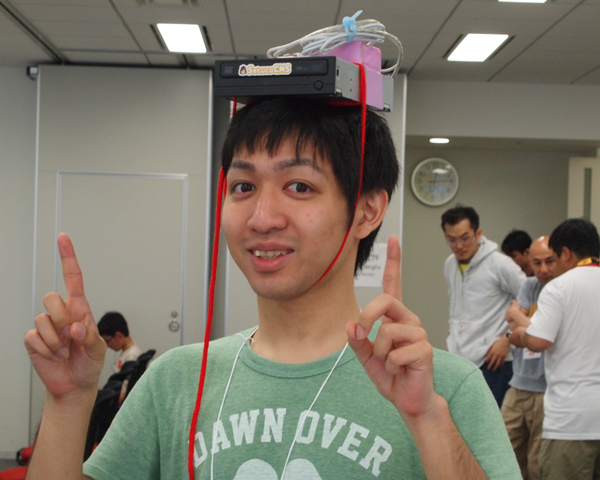
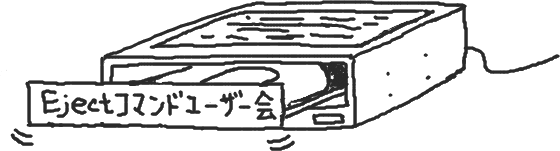
| I met Akira Ouchi – or Akkie, as he prefers to be known (his site’s in Japanese, but you can use an auto-translation service) at the Big Raspberry Jam in Tokyo back in May. Although we didn’t have much, if any, language in common (besides Python), we became friends instantly. Largely because he had strapped a Raspberry Pi and a CD-ROM drive to his head, and kept issuing the whole system an eject command while shaking my hand warmly. I noticed a different approach to hobbyist electronics in Japan. This is a broad generalisation, but it does hold some water: here in the west, we have a tendency to spread ourselves very broadly in our approach to projects (a carputer one week, a garden sprinkler the next). We noticed that our Japanese friends tend to explore a single idea very, very deeply and thoroughly: so rather than making a good-enough project and moving on to another, people like Akkie will take a single, simple idea, and refine and push it to a degree that…it’s either madness or genius. I’m still not sure which. 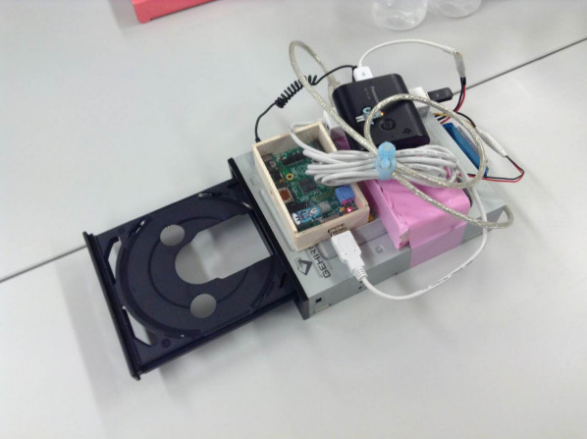 Eject! So. On the day, Akkie went on to give a presentation about what he was doing with the CD drive and the Pi. As well as making a fine fashion accessory, he hooked the kit up to the Twitter API, so whenever someone favourited one of his tweets, the eject mechanism would trigger. Call it an alternative to an LED notifier. (Akkie is @Akkiesoft on Twitter, and you should follow him even if you don’t speak Japanese, because as well as being able to trigger his CD-ROM drive, you will discover that the man is a savant of 140-character ASCII art.) Akkie then gave me a little sticker he’d had made, with a CD-ROM drive on it. Later on, Akkie attached a pencil to the CD-ROM drive and demonstrated that it could be used as a remote-control for his antiquated air conditioning system, which does not have its own remote. He triggers the Pi and CD-ROM drive with a web app and this time, instead of acting like an LED notifier, it works like a solenoid, and presses the on button on the air conditioner. And then he showed it working as a hamster feeder. On New Year’s Eve, it rang a bell to welcome in the New Year. Since then, Akkie has refined his hat. (The original version was not well-adapted to a culture where you have to do a lot of bowing.) He has also become a published author: he contributed a chapter (which I can’t read, but I bet it’s great) to the Japanese Raspberry Pi User’s Guide. See if you can guess what it’s about. I have a picture of Akkie wearing a maid’s costume at the party we went to after the Big Jam (he had borrowed it from an NEC engineer), but he probably wouldn’t thank me for showing it here. So instead, here’s a picture I took of a picture Yuriko-san took of Eben, to whom Akkie donated his headgear for the evening. I post this because I want to impress on you that sometimes simple ideas can have more application and potential than we imagine – we tend to write about huge, complicated systems here, but there’s beauty in simplicity. And I post it because I really miss our Japanese friends; the Raspberry Pi community there is huge, imaginative and more friendly and generous than any other group we’ve met. We’re hoping to return in 2014. Until then, check out Akkie’s eject gubbins on GitHub, and let us know if you can think of any more applications for his helmet. (☝ ՞ਊ ՞)☝ウイーン, Akkie! (See. I’ve been practising.)
|



Trade-In Your Old Kindle for a New One
| Amazon offers a trade-in program on their website for all kinds of items, including DVDs, textbooks, video games, music, and electronics. The latter category includes all kinds of gadgets, notably older Kindle models. Some of the older Kindles aren’t valued very high. Amazon will only give up to $26.26 for the basic graphite Kindle from […] |
Pew Internet Study Details Number of US Households without Internet Access
 Graphic courtesy of news.softpedia.com The Pew Internet and American Life Project, under the formation of the Pew Research Center, compiles data on various aspects of technology adoption in the US. Recent studies have examined tablet ownership, digital adoption among teenagers, and a host of other ways that computers and technology have become an incorporated part of daily life in America. Now, Pew Internet released the findings of a study aimed at discovering how many US adults had access to the internet, and if so, how. While only 70% of adults have home broadband access, an additional 3% still have dial-up internet. Also, another 10% of adult who did not have broadband or dial-up access did own a smartphone and were able to access the internet in that way. According to the organization, “The report also found that demographic groups with the highest rates of home broadband adoption continue to be college graduates, adults under age 50, and adults living in households earning at least $50,000, as well as whites and adults living in urban or suburban areas.” This is only a fractional jump from a Census Bureau study in 2011 that found that, while 98% of Americans live within areas where broadband access is available, only 69% of households actually used it. It’s interesting that Pew Internet found a correlation between smartphone use and internet access, one that actually goes against what logic would state. Rather than bridging the long-understood digital divide, smartphones in households that did not have broadband access actually widened the gap, according to Pew’s data charts that can be found by clicking HERE.
Pew Internet Study Details Number of US Households without Internet Access is a post from: E-Reader News |