| The Yota Phone was a good idea with marrying a traditional E Ink display built into the back and a fully featured Android phone on the front. Being able to read eBooks without burning your eyes out is the reason why e-Readers have gained massive popularity in the last four years and you would figure a portable one would be amazing. Sadly, this is not the case. The Yota Phone suffers from a clunky interface, a sub-par reading experience and terrible hardware. Good e-Reader is live on the scene at CES 2014 in Las Vegas Nevada and there were a few commercial release units of the Yota Phone. This was my first experience with this particular device and there is a huge learning curve in how to control the e Ink screen. There is absolutely no tutorials or documentation that outline exactly what you have to do to initiate the reading functionality. In order to take advantage of the e Ink screen you have to make sure the Android LCD is firmly off. In many cases the screen is simply asleep and it automatically wakes up if you are holding the phone to read. The entire control scheme of the phone is the worst I have ever seen. There are no physical buttons, and instead you have to gesture on the bezel upwards or double tap in an indeterminate area to access the home screen. In some cases you have to swipe left or right to turn pages while reading a book. Some books require you have to turn pages using the volume keys, so there is no consistency in the eBook reading experience. The resolution is 640 x 360 pixel on the e-ink panel. Text can be fuzzy very hard to read, there is hardly any options to augment the text size too. While the e-reading experience suffers overall, the pure Android phone is fairly satisfactory. Like most Android phones, all the keys are software driven. It has a 4.3 inch screen with a resolution of 1,280 x 720 pixels. The dual core chip rated at 1.7 GHz does a good job at keeping things quick and peppy though it doesn't have the more advanced quad core chips. This phone is selling for close to $700 on the main Yota website and the limited production run was sold out right away. You can find one on the grey market, such as eBay for around $900. I would avoid this phone at all costs. If you are looking for a solid e Ink phone, take a look at the Onyx Phone that is going to hit the streets soon.
The YotaPhone – A Good Idea, Terrible Execution is a post from: E-Reader News |
Wednesday, January 8, 2014
The YotaPhone – A Good Idea, Terrible Execution


Review of the Pocketbook Cover for Samsung Galaxy Phones
| Samsung Android phones tend to be very popular on the worldwide stage with the Korean company controlling over 35% of the entire market. A large advertising budget and low prices have helped catapult the brand into public consciousness. This is why many 3rd party cases and accessories tend to do well, because its the brand name phone most people own. Pocketbook is trying to appeal to readers across the spectrum with the new Pocketbook Cover. Today, we see what all of the fuss is about. The Pocketbook Cover Reader is basically a second screen that has a resolution of 800×600. You need to use the official Pocketbook app in order to read books and setup your reading preferences. Readers can turn off the Galaxy S4 screen and just read on the e-ink screen. The case is designed to flip your phone on its back and use the e-ink screen as the reading panel. This won't kill the phone battery by using the color display. Additionally, missed calls and received SMSs are displayed on it. The new CoverReader will use Plastic Logic's flexible EPD product; the 4.8" display will be manufactured in the company's Dresden facility. This new display has a range of benefits, as such screens are flexible, shatterproof, ultra-thin, ultra-lightweight, power saving, and daylight readable. From practical everyday usage, i don’t know if I could recommend this product. You need to exclusively deal directly with Pocketbook to buy and read your books. This makes it difficult, but not impossible to load in your own books. In order to get the case to work you have to open a book on the Android screen and hit a button at the top of the UI. This projects anything on the screen directly on the EINK screen. When this occurs, the Android screen dims and becomes inoperable. The e Ink screen is not touchscreen and you will have to use the page-up and page-down button to turn pages. If you want to increase the size of the font or change the font-type, you have to first do it on the Android LCD screen. The Pocketbook Cover is a bit of a gimmick, and I doubt it will sell well on the market. It is bulky and cumbersome and does not easily flip around the phone, so you can just read the e Ink screen and cover up the LCD. It feels flimsy and cheap. Review of the Pocketbook Cover for Samsung Galaxy Phones is a post from: E-Reader News |

First Look at the Pocketbook CAD
| is taking a departure away from the standard e-reader and targeting a very specific market. They are going after designers who find themselves using CAD software by Autodesk and need a device that wont die after a full days use. We caught up with this new device in the prototype stage at CES 2014 to give you a first look. The PocketBook CAD Reader features a 13.3 inch screen and utilizes new E Ink tech called Fina. This is basically super lightweight glass and is easy to hold with one hand. Underneath the hood is a 1GHz dual-core CPU with 2 GB of RAM and 16 GB of internal storage. It has built-in Wi-Fi and an optional 3G module. You will be able to use this device for a few days with its large 8000 mAh battery. This design friendly reader is running Android 4.0.4 and the final product should have a fairly intuitive interface. Your recently opened CAD documents will be at the top of the screen and there is adequate room for five documents. On the left hand side of the screen is the Android apps that come bundled with it and a few other widgets spread evenly around. The model at CES basically was running on a slideshow loop of different CAD drawings of automobiles, planes, and building schematics. It is meant to show the type of drawings it can support. Of course, a loop is not good enough for me, and was easily bypassed. This is where things went terribly awry. Outside of the loop was the standard Android interface that anyone with a device would recognize. Nothing here worked, I hit Settings and selected a few options and nothing loaded. Gallery crashed and nothing really worked at all. Obviously Pocketbook merely wanted to showcase its new CAD Reader in a controlled environment and to give an indication on the future direction of the software. Obviously, this needs a ton of work and is unusable in its current state. Is there room in the market for this? Many serious designers are using tablets, such as the iPad. This model will likely cost close to $400, as Pocketbook can’t manufacture enough of them to keep costs low. Still, its really light, can be used in the direct sunlight and can render any CAD drawing done with Autodesk software. This is aimed at a very specific niche market, and does not even have a built in e-reading software. Finally, Pocketbook did a very excellent video, that demonstrates how the CAD Reader will be used in the real world. It was one of the best videos I have ever seen and had high production values. I was told by E Ink that Pocketbook only spent $15,000 on it, and that included post-production.
First Look at the Pocketbook CAD is a post from: E-Reader News |

Key Genres Underrepresented in Writing Contests
|
But Foreword Reviews, which announced that its Book of the Year Awards were open to submissions in October of last year, has seen a drop in submissions of certain genres over previous years. Specifically a lower number of titles across non-fiction categories, the company is still actively seeking submissions for Pets, Philosophy, Political Science, Travel Essays, Crafts, True Crime, Social Science, Performing Arts/Music, Psychology, Self-Help, Architecture, and all Graphic Novels. While non-fiction publishing is an entirely different world from typical fiction publishing, self-publishing has thrown open the doors to well-researched works by knowledgeable authors. One of the genres Foreword found lacking in a wealth of titles actually comes as no surprise, given that self-publishing opportunities are still not as streamlined for Graphic Novels as the process is for strictly text-based novels. Foreword accepts submissions of titles that were published independently by authors, small presses, university presses, and more. The deadline for submission to the 2013 BOTYA will be January 15th and is only open to titles published in 2013.
Key Genres Underrepresented in Writing Contests is a post from: E-Reader News |

Iconic Barnes and Noble Bookstore Closes in NY
| One of the more interesting retail histories in the book industry is that of Barnes and Noble (the history of the stores and the brand can be found HERE), with a number of locations having significant importance both as thriving retail spaces and as icons within the company. Sadly, the flagship 5th Avenue store, bought when Leonard Riggio, founder of the Student Book Exchange in 1965 and reviver of the then-flailing B&N brand, permanently closed its doors late yesterday. While the news may have come as a surprise to customers or passersby, B&N announced in 2013 that it would be closing a number of stores over the course of this year. Despite its famous status within the company, the 5th Avenue location had transformed in recent years into one of B&N’s college bookstores, focusing primarily on textbooks and trade books. The location made it ripe for closure too, as it is only a few blocks from the very well-known and highly trafficked Union Square Barnes and Noble location. Barnes and Noble still operates a strong college textbook selling presence, but as B&N pointed out in relation to this particular store closing, most college students buy their textbooks on campus; B&N actually operates a number of campus bookstores for that reason. Those who opt to shop online for course materials often end up at B&N’s online textbook store. While this may be a wistful loss and certainly the fifty-six employees of the location will hopefully fare well, it is a move that makes sense for the company, given the location and the demographic of its customer base.
Iconic Barnes and Noble Bookstore Closes in NY is a post from: E-Reader News |

IndieGoGo Campaign Launches to Save a Brick and Mortar Bookstore
|
While Main Street Books in St. Charles, Missouri, isn’t shuttering its doors due to a lagging marketplace or the inability to compete in the digital publishing and online retail era, its cause is even more common than that: the owners are simply retiring. Rather than watch the doors close on this two-story landmark, self-professed “author, wife, mother, book Lover” Brandi Schmidt decided that it was up to her to save the bookstore. “The current owners are retiring,” explains Schmidt on her IndieGoGo campaign page. “They purchased the business seven years ago, and they are ready to spend their years traveling and some well-deserved time with grandchildren…I heard that Main Street Books was for sale, and if they didn’t sell by January 31st, they would close.” There are some interesting twists to this campaign, though. The first is that this specific venture takes advantage of IndieGoGo’s Flexible Funding opportunity, in that the campaign will receive the donations even if the goal of $15,000 is not met; that’s good news, considering that the campaign has not raised even a tenth of that amount with less than one month to go. The other very intriguing aspect of the crowdfunding is that Schmidt isn’t trying to secure funding to purchase the business itself, and is still in negotiations on the purchase of the store. Instead, the campaign is to revamp the existing bookstore into a model that can effectively compete in a retail climate where bookstores are closing. Schmidt has outlined new plans for the bookstore, which will continue to offer meeting space for its two monthly book clubs and the wealth of titles patrons have enjoyed, while also installing a coffee shop, video conferencing technology for virtual author events, study hall times for local high school and college students, and more. Schmidt points out that should the purchase of the business fall through, all donors will receive a refund as their donations were intended for the upgrade and restructuring of the store itself. To learn more about the efforts to save Main Street Books, check out the IndieGoGo campaign page.
IndieGoGo Campaign Launches to Save a Brick and Mortar Bookstore is a post from: E-Reader News |

Kurio Reveals a Tablet and the World’s First Smartphone For Kids
| Kurio has come up with a kid-specific tablet at the ongoing CES event which breaks convention as it is 4G compatible. Until now, manufacturers would usually stick to Wi-Fi connectivity for tablet devices meant for kids to ensure control over their usage of the device. Verizon would be the carrier of choice for the Kurio tablet and is schedule to launch its Share Everything plans around the same time. As for its features, the Kurio Tablet will run Android 4.2 (sorry, no KitKat for the kids) but with enough modifications to ensure parents have an idea of what their kids are up to. Kid specific tablets and parental controls are almost synonymous, and the Kurio Tablet isn't an exception to this too. As such, the tablet will allow the creation of up to eight separate user profiles, each having their own set of parental controls. Users can always remaining within the levels of control even if the tablet is shared by more than one child of different age groups within the household. The tablet also boasts of Bluetooth 4.0 compatibility. As a further precaution, the tablet will also feature Kurio Genius Internet filtering system that scans more than 450 million sites everyday to ensure maximum possible immunity for the kids against harmful sites. Parents will also be able to block sites that they feel are unsafe for their kids, a necessity for a tablet that has advanced connectivity options. What comes next is even more intriguing: a smartphone device for kids which has the potential of creating a whole new segment in itself. The Kurio Phone will be 3G compatible but will be the first to hit streets, as the device is likely to be ready for action by spring this year. The rest of the specs of the Kurio Phone include a multi core processor (of unknown make), 1 GB of Ram, 4 GB of storage along with a 4 inch 800 x 480. The Kurio Phone will also come with its own set of controls which includes alerts issues whenever the user has ventured out of a pre-determined area, parent locks on new contacts without approval before making calls or sending messages, and more. The launch is expected to happen around summer this year. It’s not known what the Kurio Tablet and Kurio Phone will cost, though there is likelihood of a bundled offer for parents opting to buy both the tablet and smartphone for their kids.
Kurio Reveals a Tablet and the World’s First Smartphone For Kids is a post from: E-Reader News |

Automated decanter
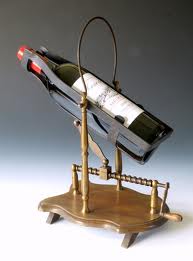
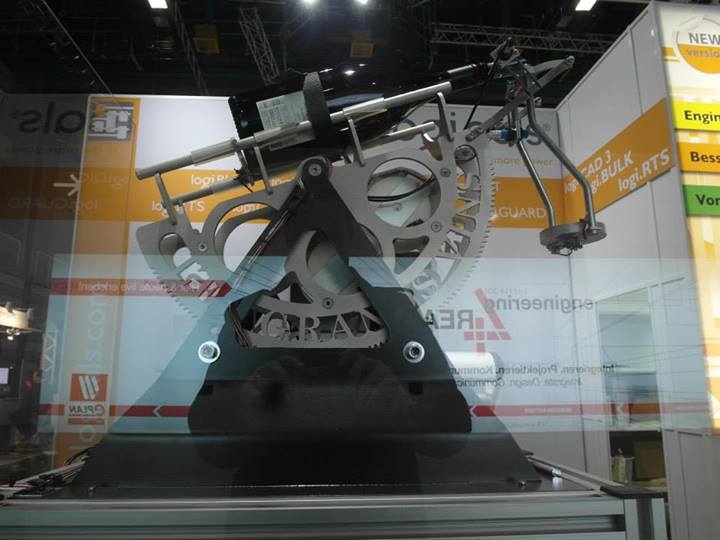
| I had mail from Jürgen Huber at Logi.cals, an Austrian software firm, who have been using a Raspberry Pi in a demo at trade fairs to show off logi.CAD 3, their new, free, software tool for automation. It’s right up our street: they’ve made an automatic decanting machine. Decanting machines, usually operated by via a hand crank and a threaded rod, turn up in the sort of restaurant I don’t go to as much as I’d like to: the sort of places where you’ll find old bottles of fine wine with delicate contents, which need very careful decanting to gently aerate the wine without over-oxygenating it, while leaving behind any sediment. Logi.cals’ version looks a bit less gentleman’s-club, and a bit more spaceship. Here it is in action, making some poor sommelier somewhere slightly less useful. Micro switches check that both a glass and a bottle are present (which reminds me: we really need to update the Pi Towers coffee machine to detect a mug in order to stop the carpet getting soggy). Light barriers assess the position of the bottle, and capacitive sensors detect flow, and detect how much wine there is in the glass. The bottle is weighed so the Pi knows how much wine is left; the glass is also weighed with a strain gauge so that the Pi knows what’s in there. Jürgen’s team even added an emergency brake. A stepper motor tilts the bottle gently. The team at Logi.cals used two expansion boards: a PiFace and a Quick2Wire board, to talk to the I2C bus, the motor and the strain gauges: you can read more about the setup at their website. It’s a great proof of concept. This isn’t going to be a commercial product, so if you’re a wine waiter, you can sleep easy: the rest of us will be dreaming sweetly about robo-boozing. |
Penguin eBooks are now downloadable for Kindle without USB
| As previously announced, the USB side-loading requirement for Penguin eBooks on Kindle devices has been lifted. Today, we are pleased to inform our partners and end-users that direct downloads of Penguin eBooks in Kindle format for U.S. library accounts is now standard. This means that these titles will have the same ease of use as all other publishers' eBooks, without the need for USB loading. In September, more than 17,000 Penguin Group (USA) titles were added to OverDrive Marketplace for public and college libraries in the U.S. in the one copy/one user lending model for a one-year term. Last month, 15,000 titles from Penguin became available to Canadian public and college libraries. If you have questions or would like assistance in expanding your Penguin eBook collection, please contact your OverDrive Collection Development Specialist at collectionteam@overdrive.com.  |
Tuesday, January 7, 2014
Review of the Samsung Galaxy Note Pro 12.2
| Samsung has just unveiled the first ultra large screen tablet, the Galaxy Note Pro 12.2 tablet. This is going to be available as a pure WIFI device or with data. It should be hitting AT&T within the next month or two and brings a fair number of compelling aspects to the table. Hardware The Samsung Galaxy Note Pro 12.2 features a 12.2 capacitive touchscreen display with a resolution of 2560×1600 pixels. Visually the resolution is arresting and multimedia looks really amazing. Underneath the hood is a 1.9GHz Exynos 5 Octa processor (Wi-Fi model) or 2.3 GHz Snapdragon 800 processor (LTE model). It also has 3GB RAM, 8-megapixel rear facing camera, and a 2 megapixel front facing camera. This model has more internal memory then any of the other tablets Samsung has debuted at CES with 32/64 GB of storage and expandable memory. There should be plenty of battery life to play games and engage in media with the 9,500 mAh battery. The 8 core processor will really make games, apps and everything else really shine. Finally, the Note Pro 12.2 is very light! For a really large tablet, you would figure it would be very hefty. I easily held with it one hand and did not find it was weighing me down. Software The Galaxy Note Pro 12.2 model runs Google Android 4.4, which is the latest version. What makes this tablet really interesting is the main UI. This is unlike any other tablet the company has released. Most Android tablet users are likely used to the pure vanilla experience. You have app icons on the main screen and the primary app list. Samsung has borrowed a page out of Microsoft’s playbook by adopting live tiles. This will have apps like the New York Times, Twitter, Facebook, give you live updates. If you install apps on your own, this can also be integrated. This is all accomplished by pinching and zooming. I have seen a number of phones lately by mainstream companies like LG that allow you to have two apps open at once, with each one taking up half of the screen. Samsung is taking this one step further to allow for 4 apps to be open at the same time and can both be used live. You can have a few spreadsheets open and a number of business documents. If you are into movies, you can watch one and then bash it on Reditt and other movie review sites. These two software elements is really what makes this stand out in a crowded market place. Wrap Up If Android is your bag, you will want to take a long look at this tablet. I can see it being a solid business device with its ability to multitask. It will also be fairly good at video games, able to handle anything you can throw at it.
Review of the Samsung Galaxy Note Pro 12.2 is a post from: E-Reader News |

Neptune Pine is Worlds Largest Smartwatch
| We have seen smartwatches before but none this big. With a 2.4 inch display, the Neptune Pine is to smartwatches what the phablet is to regular tablet devices. It is twice the size of regular smartwatch devices that usually max out at 1.2 to 1.6 inches. However, the humongous proportions isn't the only distinguishing factor of the Neptune Pine in that it is designed to operate completely on its own and not as a companion device to a smartphone that all other smartwatches currently are known to be. Put in other words, it actually is a smartphone that you can wrap around on your wrist. That is not bad either when you have a device that offer half the screen real estate as the regular iPhone. However, the size bit apart, the Neptune Pine is also about a lot of substance. Powered by a Snapdragon S4 chip rated at 1.2 Ghz, the smartwatch is zippy to say the least and is good enough to last a full day of regular usage or about 7 hours of internet usage via Wi-Fi. The device also comes with front VGA and rear 5 megapixel camera, another smartphone like credential that the smartwatch boasts of. While the need to have front facing cam on a smartwatch is debatable, the 5 megapixel rear shooter can prove handy even though it amounts to pulling the device from the wrist strap each time a pic has to be shot. The device runs Android 4.1 Jelly Bean. Typing is also a lot easier on the Neptune Pine compared to any other smartwatch which makes sending messages a breeze on the device that can be used to make or receive calls. Reading messages is also convenient thanks to the larger display area which can also serve to get along with some quick reading though surely not for extended periods. The display should also allow for smaller games to be played easily which no doubt will allow for a means to while away some time. Surfing the web will also be much more interesting on the Neptune Pine and can prove handy while on the go. However, let's not forget one of the biggest draw on the battery is the display and the bigger it is, more will be the drain on power. Also, with smartphones growing bigger in scope (and size too), what remains to be seen is whether there will be many who would like to opt for a device that they can strap on to their wrist which offers just the basic functionalities of a smartphone. This applies more to a device that is price $355 and will be available by the end of this month itself. The company though revealed the second gen version is already in the making and let's hope it is smaller than the current version. in any case, the Neptune Pine in its present form does conform to what Apple co-founder Steve Wonzniak had said of smartwatches, that he wants the entire internet on his wrists.
Neptune Pine is Worlds Largest Smartwatch is a post from: E-Reader News |

Video: LG Demonstates WebOS on Smart TV’s
| WebOS has been the kiss of death in the tech industry and nobody has really made it work since it was first developed by Palm. HP tried to make a go of it with their ill-fated TouchPad, and was promptly killed off three months after their only commercially viable product. LG is trying hard to make it relevant on their entire line of televisions. We will soon see it on 3D/4K and other new tv’s in their portfolio within the next few months. Today, Good e-Reader got an exclusive hands on demo with WebOS for televisions and we get a sense of what it brings to the table. LG is going to be running their own video and television rental service under the LG Store. They have deals with major studios and were showing off Spider Man, Hunger Games and many other popular movies. They also have a dedicated section of the store for WebOS apps. You can install Netflix, Hulu, Skype, Facebook, Twitter and tons more. I tried to confirm what the submission process would be for indie developers wanting to port over their apps they developed for the TouchPad and what the guidelines for apps actually are. No one at the event had any clue and I was told no one even asked that question but me, and everyone was fairly confused.
Video: LG Demonstates WebOS on Smart TV’s is a post from: E-Reader News |

Video: The Best of Pepcom 2014
| Pepcom is one of the largest press events and transpires the day before CES. Good e-Reader was live on the scene and checked out some of the most compelling devices. Surprisingly there was no new e-readers unveiled, but Kobo was on the scene with their entire portfolio of products. Mainly, we looked at a bunch of solid new phones, such as the Huawei Ascend Mate 2, LG G-Flex and Alcatel One Touch.
Video: The Best of Pepcom 2014 is a post from: E-Reader News |
![IMG_0218[1]](https://lh3.googleusercontent.com/blogger_img_proxy/AEn0k_veuWz1ooq6YCnygtwMbKKg9uSg3SeaO7RF_kqCOhdhvPxhepLqLHcz15NgplR8gPRFx7lXSLR7wKRkZyjtui7A71yw86iHNyhP5HB13SKI7TBKyZz7I724gEk2s44GIE9tA1u9Y6lcmuxyD-aWgXJXmQ=s0-d)
Top-Selling Digital Comic ‘Injustice’ Is Back
| Injustice: Gods Among Us is back! The DC digital-first comic, based on the video game of the same name, did phenomenally well in its first season. It was the top seller on the digital comics charts every week, and it has sold over 1.9 million copies in print and digital—mostly digital—according to USA Today. The first season of the comic wound up last September with issue #36, but it’s back today with “Year Two.” The story is darker than the standard Superman continuity: Rather than being a hero, in the world of Injustice he is the supreme ruler of a dystopian world. The Justice League, led by Batman, are insurgents fighting against him, and the familiar characters are divided in their loyalties. The second series expands the story even further, says writer Tom Taylor:
The “Year Two” arc debuted today on comiXology, Kindle, Nook, and iBooks, and a motion-comics version in the DC2 format was released as well on Madefire. Top-Selling Digital Comic ‘Injustice’ Is Back is a post from: E-Reader News |

Curved 4K 3D TV is the Major Trend at CES 2014
| The casual television crowd has all heard of 3D, but it never really caught on due to the price. 4K televisions have been available for over a year, but lack of quality content is hampering growth. This may change as Netflix and Amazon both announced this week that they will be delivering ultra hi-definition streams later this year. Google announced a new 4K streaming format, VP9, that would cut in half the bandwidth necessary to stream 4k from sites like YouTube. CES 2014 is all about curved televisions that are quite the departure from the flat-screen models everyone knows. LG, Samsung, Hi-sense, and many other companies were displaying their curved 4K 3D television sets. Most ranged from 55 inches to over 105 inches and most have a hefty price tag of $60,000! LG is doing something very interesting with WebOS, that they purchased from HP, after their ill-fated TouchPad. LG has developed a store that has WebOS apps, such as Crackle, Skype, Amazon, Facebook, Twitter and 50 other apps. They will be integrating WebOS as their infrastructure of choice on their entire line of curved televisions. The company also demoed the frst bendable UHD OLED. It will actually transform from a flat screen via motors and give you the option to curve it. Samsung was showing off a mammoth 105-inch curved Ultra HD display and will have extra 55-inch, 65-inch and 78-inch curved UHD sets (no prices, later this year). Samsung’s curved displays deliver “even more lifelike picture quality with more depth,” said HS Kim, executive vice president of the visual display business at Samsung Electronics. He compared the experience to 3-D and IMAX. “You can feel that effect.” Curved television sets were the major trend this year at CES, as more companies seem to be embracing this technology in a bid to win over consumers. Curved 4K 3D TV is the Major Trend at CES 2014 is a post from: E-Reader News |


Samsung Galaxy Note PRO line revealed at CES
| Good e-Reader is live at CES and we are putting the spotlight on just the most innovative devices that catch our fancy. Samsung was showing off three new Galaxy Note tablets of varying sizes. They had a 8.4, 10.1 and 12.2 inch editions that all had the exact same resolution by 2560,1600. All of the new Samsung Galaxy Note PRO tablets were running Android 4.4, Kit-Kat. The 8.4 and 10.1 had 2 GB of RAM and 16 GB of internal memory, while the 12.2 inch had 3 GB of RAM and 32 GB of memory. There were literary 50 new tablets debuted on the showroom floor, so what makes the new Samsung line different? The home screen is heavily customizable and bears a striking resemblance to live tiles found on Windows 8. The demo unit had Twitter, Facebook, New York Times, Rotten Tomatoes and all content was updated in real time. If you download apps from Google Play, Samsung App Store or the Good e-Reader App Store, you can setup your home screens to your liking. The Galaxy PRO 8.4 and 10.1 have a duel screen view function. For example you can swipe the bezel on the right hand side and see a list of apps. You can drag Excel to the left hand side of the screen and Word to the right. So you can work on both in real time. The 12.2 model has a quad view, so you can have 4 apps open at once and be actively interacting with them. You can be watching a movie, talk to someone via Whatsapp and then bash it on Rotten Tomatoes and participate in a Reditt thread. There is no estimated date yet, but most likely there will be data models of all three. I saw a AT&T logo on the settings menu, which leads me to believe that will be one of the first carriers in the US to adopt it in their stores and data plans. All in all, these tablets were all fairly compelling wand offered a non-traditional Android experience that I have not seen before.
Samsung Galaxy Note PRO line revealed at CES is a post from: E-Reader News |


Podcast: New and featured content for January
 Our collection highlights podcast for January is now available on OverDrive's Learning Center. Tune in to this latest edition of our monthly podcast series for details about new content that's available for purchase in OverDrive Marketplace, as well as news about publishers who will be joining Marketplace soon. In this month's podcast, we also take a special look at video suppliers who will be offering their full catalogs in the streaming video format, meaning that you can shop from these catalogs now and be assured that any videos you purchase will transfer seamlessly into your streaming video collection once your library adopts the streaming video platform. You can check out our podcast now on OverDrive's Learning Center, along with a suite of other on-demand training videos that will help you get the most out of OverDrive Marketplace. Happy listening!
Carrie Smith is a Technical Writer at OverDrive.
 |
E Fun Reveals NextOne Smartwatch, Priced $99, Will Ship by Q1, 2014
| E Fun is a known name so far as cheap tablets and e-readers are concerned, chalking out its tablet strategy based on affordability alone, though it never could make it big enough due to some pretty ordinary products. But it’s back again with the hottest device of recent time, a smartwatch priced at $100. The NextOne will offer a 1.5 inch display and is designed to pair with both Android and iOS smartphones. Plus, the NextOne also does the usual smartwatch stuff, including delivering notifications, handling data from compatible third party apps like displaying weather information, and more. The watch can also act as the trigger that activates the smartphone camera at a pre-destined time, thereby enabling the user to have better control of the smartphone's built-in camera. It runs Android 4.1 Jelly Bean but has been modified suitably to include a new user interface. As for its battery prowess, E Fun claims it will be good enough to last 2 days on a single charge. It communicates with the smartphone it is tied to via BlueTooth 2.0. However, the NextOne is all plastic which is understandable considering the device costs just $100. Expected the NextOne to start shipping from Q1, 2014. via liliputing
E Fun Reveals NextOne Smartwatch, Priced $99, Will Ship by Q1, 2014 is a post from: E-Reader News |


Amazon Initiates Shipping Incentives in UK
|
When Amazon introduced this shipping term limit over the summer, books, movies, and other categories of content were not included in the limit and were still eligible for free shipping. Now, all items sold by Amazon UK are required to meet that price minimum in order to qualify. The Bookseller reports that this move might please the country’s independent bookshops who have long felt the effects of Amazon’s impossibly lucrative and appealing opportunities for consumers. Now that customers will have to fill the shopping cart to enjoy perks like free shipping on books, it might be more of an incentive for residents to return to their locally owned businesses, at least for their reading purchases. Unfortunately for the booksellers, it might also be the incentive that holdout customers have needed to make the switch to ebooks. While the shipping increase in the US did seem to affect Prime memberships, with “millions” of new customers signing up for Prime in the weeks following the move according to Amazon, it’s possible that it will prove even more enticing overseas. The membership price remains nearly the same as for US customers, but UK Prime members will automatically receive no-minimum one-day shipping as opposed to two-day shipping in the US, largely due to geographical limitations.
Amazon Initiates Shipping Incentives in UK is a post from: E-Reader News |
