| In one of the worst kept secrets ever, Google officially unveiled the 2nd generation Nexus 7 tablet today. Various leaks before the announcement revealed all the key details ahead of schedule, so there weren’t really any big surprises. Google’s latest 7″ tablet runs Android 4.3 Jelly Bean and comes in three varieties, there’s a 16GB [...] |
Wednesday, July 24, 2013
New 2nd Gen Nexus 7 Could Be the Best Tablet for eReading

Pato surveillance system
| Pato is a little green bird who Jorge Rancé found, injured, on the street in Barcelona, and rescued. He was in a bad way, with a broken leg and the feathery equivalent of a terrible hair day. 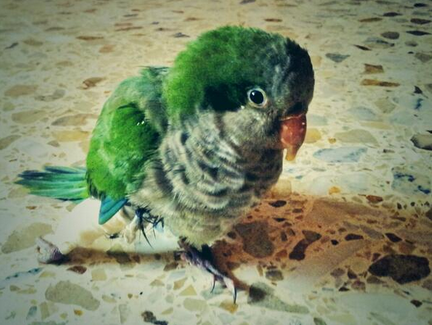 Pato after a visit to the vet, his broken leg in plaster Jorge took Pato to the vet to be patched up, and took him home to recuperate in a large birdcage at his house. But he worried that he wouldn’t be there to oversee Pato’s recovery while he was at work. Fortunately, Jorge has a Raspberry Pi. So, using a Pi-Face to interface between the Pi and some sensors, he set up PATOSS: Pato Surveillance System. Now Jorge (and you) can check out how Pato is doing from anywhere in the world. PATOSS monitors Pato’s recovery by streaming video of what he’s up to to the web, checks on the ambient temperature and the water levels in his little dish, and tweets once an hour to let Jorge know whether everything’s as it should be, with a live picture from Pato’s webcam. The data is transmitted via a wifi dongle. (If you’re following the PATOSS feed today, don’t panic; Jorge says that the water level monitor is not currently hooked up, so it’s reporting low levels, but Pato does actually have plenty to drink.) Jorge has full build instructions on his website, with a hardware list (and prices), code, diagrams and tips on housing. The whole PATOSS system is Creative Commons licensed so you can adapt it for your own needs – it’ll be interesting to see if anyone comes up with a Raspberry Pi camera board variant. 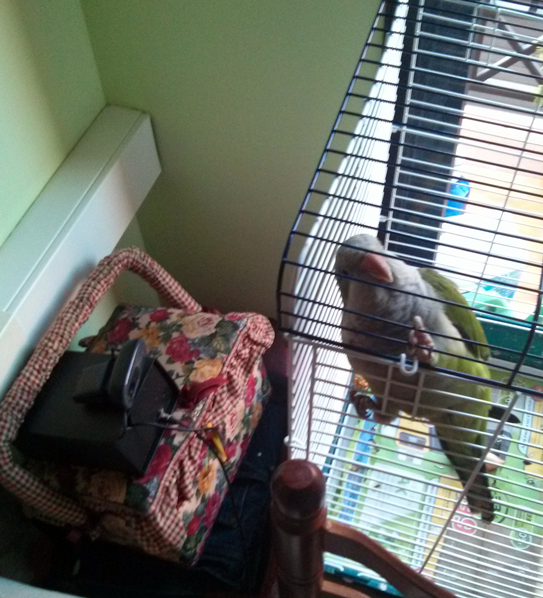 PATOSS (left) and Pato (right) This sort of build is easy to replicate at home. We think it’s a particularly good project for kids with small pets at home who want to apply some computer science to something they really care about. They’ll be able to see real-world results and share them with friends: what could be better than being able to check up on Woffles the hamster’s daily grind via Twitter from school? If you and your children’s pets end up using a PATOSS system at home, please let us know – I’d love to share your results!
|

Tuesday, July 23, 2013
Review of the Pocketbook Color Lux eReader
| The Pocketbook Color Lux is one of the first e-readers in the world to use the new E Ink Triton 2 color technology and a front-light. Today, we dive right into this new device and give you a sense of what it brings to the table and how it performs under real world circumstances. Is it a must buy or should you avoid it at all costs? Hardware The Pocketbook Color Lux features a 8 inch color touchscreen featuring a resolution of 800 x 600. The main selling point is that it has a front-lit display and utilizes E Ink’s new Triton 2 technology. Triton 2 is the next generation color display screen for your traditional e-reader. There is an added layer of film that will give customers a higher degree of contrast and better color display from the previous generation. Triton 1 had a grid of 2×2 pixels, red, green, blue, and white and used a square color filter array. Meanwhile, Triton 2 has the same color display, but instead of using square pixels it is using rectangular. It should give you 4096 degrees of color with 16 levels of each. Underneath the hood is a Freescale 800 MHZ processor and 256 MB of RAM. This is probably the weakest aspect of this device overall. Menu navigation, turning pages, loading PDF files and frequent lagging is something you will frequently encounter. For example, it normally takes two full minutes for a PDF file to load and most of the online functionality takes six to eight minutes for all graphic assets to load. Simply exiting a book and going to the main menu is not instantaneous and will irk a number of users expecting quick results. There are 4 GB of internal memory and you can expand it up to 32 GB via the Micro SD card. The Color Lux is powered by a Lithium-Polymer, 3000 mAh, that should be good for turning 5400 pages without frontlight before needing a recharge. Powering is done by plugging the device into your computer via the Micro USB cable. One of the great things about this device is that it is able to play music and audiobooks. There are no built in speakers, but it does have a 3.5mm headphone jack. The entire audio engine is actually fairly solid and has basic features to shuffle a playlist and handle a large audio library. In the end, this is a large screen e-reader, and bucks the trend of your traditional six inch device. It has full color E Ink and has a unique slider to adjust the intensity of the front-lit display. Sadly, Pocketbook is using the same amount of RAM and the same processor as it used three years ago with the 902, 912, and most of the other models. Trying to use new technology with crummy internals does not give the users the best experience. It is no surprise the company has given up on the US market and only markets its e-readers in Eastern Europe and Russia. Software One of the strengths of the Pocketbook Color Lux is the extensive app library and slew of new programs. It has a number of new apps, such as a kids coloring book and drawing app. This simply makes the Triton 2 display really shine and is a joy to use. There is also a number of games, such as Solitaire, Sudoku, Chess, and a few others. Its large app library makes it a good family device. The main menu gives you the last five books you have loaded on your device or editions you have opened. There is a Settings, Apps, and Bookstore link that directs you to Bookland. There are a number of settings to augment, with one cool feature that can disable the WIFI timeout, something you could not do on previous Pocketbook devices, and the ability to install firmware updates automatically. The large screen display really makes the keyboard shine and is quite easy to enter internet addresses to browse the web. The web-browser does not have a ton of options to disable Javascript or disable images, so you might not want to visit sites that have lots of graphical assets. Luckily, there is an RSS feed app that allows you to enter a number of websites and pull their information in raw text format, which is the best option to stay abreast of all the latest news. There are four software driven buttons on the side of the device that are likely to see regular use; home, back, forward, and settings button. If your device ever becomes unresponsive, you can hold down on page forward and page back, and after about 30 seconds, should make it responsive again. This is easier than always doing a hard reset or powering it off. One of the strongest elements of the Pocketbook Color Lux is the extensive software library. There is something for everyone, although anything to do with the internet is fairly slow. Most other apps tend to respond and load fairly quickly. The Pocketbook Color Lux reads a myriad of ebook formats that should resonate well with people who download a ton of content from the internet or have an extensive library of digital tomes. It will easily handle PDF, PDF (DRM), EPUB, EPUB(DRM), DJVU, FB2, FB2.ZIP, DOC, DOCX, RTF, PRC, TCR, TXT, CHM, HTM, and HTML. Over the course of our review, we loaded almost every type of book into it, to see what it handled best. EPUB is the best format in terms of being able to provide you with the most robust experience. Page-turns occur very quickly and there are a number of options to employ to make notes and highlights, and look words up in the dictionary. The full color screen really makes the cover art shine. One of the things that completely surprised me and blew me away was the number of fonts available to change the text. There were over 16 different open sourced fonts, mainly Droid Sans and fonts with Droid in them. One of the main drawbacks is changing the font, line-spacing, margins, and font size require you to visit a separate full page menu. This does not provide the users with any kind of visual representation of how the text will look when you make changes. Most e-readers either refresh the text on the screen live, or have sample text that changes automatically whenever you make a change. This Pocketbook model warrants you to enter the font menu, make changes, save it, and then go back to your book. Often you have to do this a few times to find the optimal output format. It is needless extra steps that may incur the ire of hardcore readers. You would figure a full color touchscreen e-reader would excel reading technical documents or other manuals. Surprisingly this fails in almost all regards. The larger the document, the longer it takes to actually open it and make any changes. When we loaded in a PDF comic book, it wouldn’t even turn a page and crashed. The DND Monsters Manual, which we load on every e-reader we test, really struggled. The largest shortcoming is not the delay or crashing when you load PDF documents or try and turn pages, but pinching and zooming. When you pinch and zoom content, all text and images start to get bigger. This pushes text and images off the page, onto the next page. For example, if your image is at the bottom of the screen, and you try and pinch and zoom to enlarge it, the picture will be split between the page you are on and the next page. The rendering engine they use to handle PDF pinching and zooming is abysmal. Pocketbook GUI and programming engineers really need to look at the libraries used by Kobo, Sony, and Amazon to try and work out all the bugs. Wrap Up It is not too often that we are really disappointed by a modern day e-reader. The devices have been on the market long enough for a universal standard for quality and control to be developed. People may have differing opinions about specific companies like B&N, Amazon, Kobo, Bookeen, Onyx, Icarus, Bebook, Sony, or Ectaco. Really, in the current e-reader space, these are the companies with an extensive portfolio of devices and have all been in the game for three years or more. Pocketbook has been in business for as long as we have been doing e-reader reviews. The company has always used the exact same internals on every single model. The philosophy of skimping out on processor and RAM will never adequately deliver a seamless experience to the end user. The Color Lux is simply unusable in its current form and should be avoided at all costs. The only thing this device does right is read EPUB books and run apps. It is easy to switch the orientation from landscape to portrait mode, 360 degrees, but it is done via the software and not a built in gyroscope or accelerometer. Everything else, just makes you wait for a number of minutes for your commands to go through. At over $300, this is too costly to take a punt on and prove us wrong. PROS Extensive app library Colors are washed out due to the Triton 2 extra layer of film Rating: 2/10
Review of the Pocketbook Color Lux eReader is a post from: E-Reader News |


Good e-Reader Radio – New Kobo e-Reader, GoodReads Milestone and JK Rowling
| Welcome to another edition of the Good e-Reader Radio Show! Today Jeremy Greenfield of Digital Book World and Michael Kozlowski talk about the new Kobo e-Reader that just hit the FCC today and how it will influence the companies bottom line this Fall. We also discuss the JK Rowling novel and how bookstores are unable to cope with the demand, influencing more users to switch to digital. Finally, we talk about Harper’s Magazine entering the digital age and GoodReads hitting twenty million users. A great show as always, check it out. Good e-Reader Radio – New Kobo e-Reader, GoodReads Milestone and JK Rowling is a post from: E-Reader News |

More Readers, Authors than Ever Are On Goodreads
| Book discovery and recommendation site Goodreads announced on its blog this week that it has grown to 20 million users, up from 10 million less than one year ago. The site, which lets readers review books they’ve read, participate in book discussion and virtual events, and organize shelves of books both new and classic that they plan to read, was bought by Amazon earlier this year, although not much has changed for this site’s day to day operations. While it’s a fairly well-known site for readers to discover great books and connect with authors, what exactly does it have to offer for authors, especially those whose publishing careers are entirely in their own hands? Good e-Reader put out the call to authors to ask them what makes the site such a valuable part of their publishing toolbox. DeLaine Roberts, author of Running to You and the soon to be released sequel, Two Sides of a Heartbeat, told Good e-Reader, “I use GoodReads as a platform to connect with readers. I appreciate the feedback that I receive. While reviews can be difficult to shoulder at times, I find the critique helpful and use them to better my writing.” This honest feedback from literary-minded people is what keeps people continuing to seek out new titles through the site’s interactive platform, but also what keeps authors coming to Goodreads for valuable criticism. In broader terms, authors can discover what readers responded to in terms of books that they themselves felt strongly about. “I use it to see what other people thought of books that I loved,” said author Quanah Edwards, whose most recent erotic romance title, Don’t Judge Me, is available for discussion on the site. “Then, I realized I could promote my books as well.” One of the things that seems to have helped Goodreads grow in popularity is the likemindedness of its users, not so much in terms of literary tastes, but in their drive to further book discovery and foster genuine discussions about books. As one author commented, there seems to be less of the “troll” nature of some reviewers and commenters than can be found on other sites, odd considering Goodreads was at the center of attempting to distance itself from an organized band of trolls who sought out titles to “punishment.” At the time, Goodreads stated that it would not prevent those types of organized book-hate since its administrative involvement could actually have a negative impact on the honest reviews the site is known for. As Christina North, author of When the Heart Lies, stated, “Authors and readers are able to join in some fun conversations about the books they love the most, and it’s the one site where I’ve never encountered being hit on!” While author Alex Kimmell of The Key to Everything pointed out the necessity of Goodreads now that the brick and mortar stores are disappearing at an alarming rate and taking their shelves of discovery with them, James H. Bird succinctly–and rather existentially–stated, “Because it is what is, Goodreads.”
More Readers, Authors than Ever Are On Goodreads is a post from: E-Reader News |

New Kobo e-Reader to be Released Soon
| Kobo has a new e-Reader in the works and have submitted an application to the FCC to gain approval for a North American release. This new six inch device will borrow heavy elements from the Aura HD, using the same type of HD e-Ink display. It also will maintain the same type of front-light technology, that will allow you to read in the dark and control the luminosity settings. The newly crafted Kobo e-Reader will poised to be announced sometime next month and likely will be released before Sony and Amazon new models. The FCC filing is light on the details, due to the quintessential privacy embargo. What we do know, is that the back of the device is the exact same as the Aura HD. Kobo is forgoing their old design and maintaining the cascading book page template that the entire team raved about at Book Expo America. It will also have a Micro SD card, Micro USB and a switch at the top to initiate the glowlight. More details should emerge rather quickly, in the meantime, here are some pictures that were posted to an e-Ink employees Facebook account before they were deleted. New Kobo e-Reader to be Released Soon is a post from: E-Reader News |


Leaked Photos of Kobo’s New eReader Show up Online
| The cat is out of the bag on Kobo’s next ebook reader. They were unable to keep this one secret like they did with the Kobo Aura HD, which surprised everyone when it was unveiled. Today leaked photos of Kobo’s next ebook reader surfaced online, and so did details from the FCC. Both reveal key [...] |
Kobo Writing Life Debuts New Online eBook Creation Tools
| Kobo Writing Life is one of the leading self-publishing platforms for authors to tap into international distribution. Today, the company has announced a newly created WYSIWYG feature that allows authors to easily create eBooks and edit their work directly within the Kobo Writing Life text editor. This means authors no longer need to convert their Microsoft Word or Rich Text Format document, giving them more control over their final product. The new WYSIWYG editor helps ensure the layout and formatting of the file is accurately translated the way the author intends. At the same time, authors can use the feature to quickly and easily update ePub files without using conversion tools and additional editing software. This is a great feature that was surely lacking in the past, you can get a sense on how the final product will look before you distribute it and make online tweaks to an existing file, or just make one from scratch. "We built Kobo Writing Life by listening to what authors need and want in a self-publishing tool, and we continue to introduce improvements and updates based on their feedback," said Mark Lefebvre, Director of Self-Publishing and Author Relations, Kobo. "Kobo is the only international eReading company to offer authors an open self-publishing service that is author-centric. We help them connect with a global community of Readers by making it as easy as possible to create, edit, and publish their work." Kobo Writing Life Debuts New Online eBook Creation Tools is a post from: E-Reader News |

Kindle Touch Software Updated to Version 5.3.7
| Yesterday Amazon issued a firmware update for the Kindle Touch that adds a few new features. Nothing major, just a couple of details that were added to the Kindle Paperwhite with recent software updates. Isn’t it interesting how Amazon keeps retrofitting most of the new features from the Kindle Paperwhite to the Kindle Touch? It’s [...] |
Reading Relevant Book Content via Social Media with BookVibe
| Good e-Reader’s recent post outlining the extreme measures that authors and publishers take to create book discovery and buzz about their new titles spoke volumes about the need for more consumer-driven marketing tactics that are both genuine and effective. A new service from Parakweet, still in beta testing, leaves the content generators out of it and focuses on more reliable sources: fellow readers. BookVibe, a free new feature that leverages users’ social media activity to pick out the really important content–while using algorithms to disregard spam-like or by-the-way posts and tweets–to provide them a tangible list of content they really need to know about based on their own follow activity. Of the 400 million tweets that the world sends each day, Parakweet has identified that about 100,000 of those tweets are book related, still a staggering amount of content for users to sift through in order to find a great book recommendation. BookVibe does the sorting for the users and provides a detailed account of what it deems to be genuine book buzz. According to a press release on BookVibe when it was first announced in May of this year, “The Parakweet platform is able to extract meaning from unstructured social chatter. Using a proprietary Natural Language Processing based platform, Parakweet is able to extract conversations where customers are discussing products, along with associated metadata such as intent, behaviors and sentiment, with unprecedented accuracy. Parakweet enables media companies to tap into these micro-reviews and other social signals that consumers are generating organically in the social universe. All Parakweet products are available through APIs which enable integration into other platforms as well as the combination of Social Media Metadata with customers' proprietary internal data.” So how does this help readers and authors? It helps by filtering out the spam-like book commercials that have begun dominating social media. Rather than having to wade through the dreaded “buy my book!” tweets that flood book lovers’ social media streams, BookVibe can bring to the top only those book discussions that are centered around genuine discussion, doing so with startling accuracy. “Parakweet identifies approximately 100,000 tweets a day that are actually about books with 96% precision. Keyword-based search techniques would identify approximately 10 million tweets per day that could be book titles, with around 99% false positives or "noise." By maximizing the signal-to-noise ratio, Parakweet enables complex and nuanced operations to be performed based on the accurately identified entities.”
Reading Relevant Book Content via Social Media with BookVibe is a post from: E-Reader News |

Publisher Spotlight: Kensington Publishing Corp. & Urban Books, Part 2
| Last week, we jumped into the world of urban fiction with recommendations for steamy romances and gritty tales of illicit activities. In Part 2 of our publisher spotlight, we feature some titles from Kensington Publishing Corp. & Urban Books that take a lighter approach and might appeal to a different audience. Click on the book titles to start reading a sample.
Urban Christian: Not all street lit is about characters behaving badly. The publisher imprint Urban Christian offers more wholesome tales that often revolve around a church community and include many happy endings and moral-laced narratives.
For Young Adult Readers: Teenagers are a great audience for fun young-adult urban fiction titles about love triangles and other high school dramas. If you're looking for a way to encourage students to get passionate about reading, try pointing them towards these eBooks.
Additional Recommendations: For more street lit suggestions, check out my first urban fiction blog post from 2011, which includes a mix of eBooks and audiobooks.
Library Journal's African American Fiction (and More) column is another good resource for summaries and suggested titles. Goodreads community also has some passionate reviews and lists featuring users' favorite urban fiction reads.
Keep in mind that some popular street lit books mentioned in Library Journal or on Goodreads have not yet made the transition to eBooks but a growing number have, with many of the hottest titles available in OverDrive Marketplace. When searching Marketplace, look for publishers: Kensington Publishing Corp. and Urban Books; Publisher Imprints: Urban Books, Urban Christian, Urban Renaissance and Urban Soul; and subjects: Urban Fiction and African-American Fiction.
Melissa Marin is a Marketing Specialist at OverDrive.  |

The Best Books of 2013 (So Far)
|
Since half the year is over, we thought this would be a good time to review the best books of the first 6 months of 2013. We compiled a list of the books voted best of each month by Amazon, Barnes & Noble, and The Christian Science Monitor, those that received three out of four possible starred reviews from Kirkus, Booklist, Library Journal or Publishers Weekly, and the books listed in BookRiot's "The Best Books of 2013: Halftime Report," Flavorwire's "The 10 Best Works of Nonfiction of 2013 So Far" and "2013's 10 Best Works of Fiction So Far."
So what did we discover? The different sources agree on a lot of the titles, and the picture of 2013 so far is beginning to come into focus. Of the 145 books on the list, here are those that were chosen by at least three of the sources mentioned above.
The Top Picks
Three books were chosen by four of the sources:
East of Eden meets Cormac McCarthy according to one reviewer. Others compare it to the works of Frank Norris, John Dos Passos, and Larry McMurtry. This is a multigenerational saga set in Texas from the Comanche raids of the 1800s to the oil boom of the 20th Century. An epic tale of more than 150 years of money, family, and power, told through the memories of three unforgettable narrators.
Karen Russell – Vampires in the Lemon Grove: Stories Russell's Swamplandia was a finalist for the Pultizer Prize. This collection of eight strange tales reminded one reviewer of Ray Bradbury's October Country. "Hilarious," "stupendous," "innovative," "flawless," "magnificent," "astonishing," "beautiful," "with prose so alive it practically backflips off the page," are just some of the words used to describe this book. Even hard-to-please Michio Kakutani liked it.
George Saunders – Tenth of December: Stories Saunders has been called "one of the most important and blazingly original writers of his generation," and a master of the short story. Saunders has "a wonderful ability to portray a character’s inner monologue," and his satiric view of America has been called "dark and demented." But this winner of a MacArthur "genius grant" has written what the New York Times Magazine called "the best book you'll read this year."
The following books were chosen by three of the sources:
Kate Atkinson – Life After Life "An audacious genre-bender, and a work of literary genius." "A deft and convincing portrayal of an English family’s evolution across two world wars." “You can’t put down Life After Life until you finish it, and then I suggest you read it a second time.”
Bill Cheng – Southern Cross the Dog "An epic literary debut in which the bonds between three childhood friends are upended by the Great Mississippi Flood of 1927."
Joseph Ellis – Revolutionary Summer The summer months of 1776 witnessed the most consequential events in the story of our country's founding. This book is by one of the premier historians of the American Revolution.
Neil Gaiman – The Ocean at the End of the Lane Neil Gaiman’s first new novel for adults since his #1 New York Times bestseller Anansi Boys. A middle-aged man is on his way to his sisters after a funeral, and is inexplicably drawn to the house where he grew up. He then narrates a strange tale from when he was 7-years-old. A creepy fairy tale.
Elizabeth Kelly – The Last Summer of the Camperdowns Canadian writer Elizabeth Kelly sets her latest novel in 1972 on Cape Cod among the Irish aristocratic families who have many secrets to keep hidden. "A unique beach read, the kind that might keep you glancing over your shoulder to make sure no one is sneaking up behind your beach chair."
The Wall Street Journal called this one "a European Gone Girl." Two couples in Amsterdam struggle to make the hardest decision of their lives — all over the course of one meal.
National Book Award winner McCann has set this sweeping novel in 1919 Newfoundland where two aviators are determined to make the first nonstop flight across the Atlantic, in Dublin in 1845 and 1846 where Frederick Douglass on a lecture tour finds the Irish people sympathetic to the abolitionist cause, and in New York in 1998 where an Irish-American Senator is chosen to shepherd Northern Irelands volatile peace talks. These crossings are connected by a family of remarkable women—an Irish housemaid who crosses paths with Douglass, and her daughter and granddaughter.
Happy reading! You can find all 145 titles under Must Haves in the left column of Marketplace all ready for you to order.
Cindy Orr is a Digital Collection Advisor with OverDrive
 |

Raspberry Ripple ice cream on the Gadget Show
| Full disclosure: I wasn’t watching TV last night. I was sitting in the garden with a glass of cider and a pizza, watching swallows eat mosquitos and cheering them on. I had surly thoughts about those swallows when Rob Bishop mailed me this morning to remind me I’d missed an epochal TV event: the Gadget Show, on the UK’s Channel 5, described the Pi as the “…most important and revolutionary piece of tech created in this country, this century.” And then went on to use it to power an ice cream machine they made from bits of laser-cut plywood and a collection of nuts and bolts in the studio, which is exactly what we think you should do with important and revolutionary technology in this sort of weather. Damn you, mosquitos. Happily, the video from last night’s show is available online, so it turns out that my evening watching the massacre of the mosquitos wasn’t wasted. The video can’t be embedded, but it’s definitely worth five minutes of your time: click here or on the picture to view. What you’re not told on the video or on Channel 5′s associated page is how Rob Bishop stepped in at the last minute, when the Gadget Show’s engineer was sick, to complete the programming for the ice cream maker, giving up a weekend (which he spent working in a Cambridge cafe known for its superior wi-fi offering) to get the tech in place for the segment in time. I salute you, Rob, and I owe you an ice cream. All that code you see in the clip? Prepared by Rob’s fair (actually, quite tanned, now he’s been on holiday) hands. There’s also a PiFace breakout board in there, via which the Pi controls the LEDS and the solenoid that opens and closes the whippyscoopy* valve. Turns out that the motion-activated dispenser and ripplicating* device driven by the Pi worked a treat. Congratulations, Rob. Any disastrous failures you might see in the video are entirely down to a failure to plan how might you get dry ice into a small opening without a funnel, and not Rob’s cool-as-ice coding. Enjoy the video (it’s a hoot), and let us know what you think below. No, I wouldn’t eat one either. *These are technical ice cream terms that I just made up. |

Monday, July 22, 2013
Is Windows 8 and RT Doomed to Fail Against Android?
| Microsoft is trying to push hardware manufacturers to either adopt Windows 8 or the RT operating system on their tablets. The Redmond based company is facing an uphill battle where it is unable to compete against Android in the battle of tablet operating systems. Earlier in the year, Microsoft surprised all of its vendors and hardware partners by announcing that it would compete against them by releasing the Surface RT and then the Surface Pro. Most companies actually heard it from the media first and ill-will started to form against Microsoft. Most people had assumed that Microsoft was too big to fail and that it would throw enough money at a huge marketing campaign to sell enough units. Obviously, this did not solve any problems and recently Microsoft took a $900 million dollar loss on the entire Surface fiasco. Word has it Surface sales were quite abysmal, selling 1.5 million units total. One of the big barriers preventing companies competing against Android with Windows would be price. It costs over $90.00 for an RT license and Windows warrants very specific ARM, RAM, battery, and overall hardware requirements to run all of the apps flawlessly. Once you account for the operating system and all of the bloatware, there is normally only 8 GB of memory for the user to play with, which doesn’t do very much in today’s world. The very fact that Microsoft makes OEM developers pay the extra $90 to license Windows RT is a recipe for failure. Normally, you can buy entry level Android tablets for the price of a Windows license. This puts your average Windows tablet over the $300.00 price point and many people are instead gravitating towards the Kindle Fire, Nook HD, or Nexus 7 at half the price. The lack of sales has prompted many companies from not even entering the market with Windows 8. Lenovo has not officially announced anything, but it has discontinued the YOGI tablet and the recently released Acer W3 has already been discontinued, two weeks after launch. Ecosystem is everything and no one is paying for Windows 8 apps. The Microsoft Windows 8 app store is rife with cheap knockoffs and clones. In the rare case you have a great first party app like Zinio or Nook, Microsoft actually had to pay them to develop an app for them. B&N was paid close to $300 million dollars to make an app for Windows 8 and Windows Phone 8, Zinio was paid an undisclosed sum to make an app for both platforms, by way of Microsoft and Nokia. Since no one is paying for apps, most are free and are being supported by in-app advertising. Most advertising is done via Bing Ads and Microsoft themselves were buying ad slots in order to generate revenue for developers. This continued until March 31, 2013 and advertising revenue has gone from barely tolerable to essentially zero. If you make an app for Windows 8 at this point and you depend on ad revenue, you will not make money. This has zero chance of changing unless Microsoft literally starts buying their own ad slots, and that is simply unsustainable. Even then, it isn’t worth writing an app for, if Microsoft changes their mind, you are dead. Would you base your business model on Microsoft's whims? Would you invest in a company that did? Zune anyone? In order for Windows 8 and RT to have any semblance of a chance against Android in the global marketplace a few things need to be done. The company needs to essentially give OEM licenses away for free to reduce costs and allow the tablets to compete against Android on price alone. Microsoft must also vow to not compete against its own OEM’s and discontinue making tablets on their own. Finally, they need to revise the way in-app advertising works and allow buyers to target tablets exclusively, instead of generically advertiser on Bing and Yahoo, in addition to mobile devices. Is Windows 8 and RT Doomed to Fail Against Android? is a post from: E-Reader News |

Apple Reportedly Testing a 12.9 Inch Sized iPad
| Apple has already been rumored to be developing a bigger iPad and there seems to be something cooking on that front. The revelation was made by the suppliers engaged with supplying components for the current iPad version, who have claimed the California company is testing a new bigger display for the tablet that measures 12.9 inches. Currently, Apple offers just two iPad variants, the iPad and the iPad Mini that come with a 9.7 inch and a 7.9 inch displays respectively. However, with the competition heating up, Apple has felt the need to innovate to maintain its edge. While the iPad continues to be the most popular tablet even three years after its launch on 2010, others such as the Samsung Galaxy tab range, Amazon's Kindle Fire, or the Nexus tablet has been gaining prominence of late. Also, with Microsoft trying to break into the tablet space with its Windows 8 operating system, Apple no doubt will also like to have a slightly bigger sized iPad to appeal to the business consumers, a segment that can be considered to be Microsoft's stronghold for all these years. Microsoft has yet to settle down into the changing personal computing market, where the tablet devices have been gaining higher precedence at the cost of desktops or even laptop devices. As such, it is hardly surprising that Apple will go for the kill by trying to make its tablet offerings more palatable to the business segment after having already enticed the general users with its iPad and iPad Mini range. However, Analysts warn it is too early to predict Apple opening up a new front with a bigger iPad variant. Apple Reportedly Testing a 12.9 Inch Sized iPad is a post from: E-Reader News |

Taking Book Discovery to New Lows, New Highs
| Authors go to some pretty dire lengths to get their books “out there” and into the hands of a reading audience. From giveaways and blog tours to high priced website ads and NetGalley offers, the business side of being an author means investing in marketing one’s work. But two new forms of book discovery are bringing authors to places they may have never been before. Hollie Belton, who works as a Creative for the Leo Burnett agency in London, came up with a system of book sharing called Books on the Underground, a project she started to pass books from stranger to stranger via the London subway. Donated books are affixed with a branded sticker which informs readers the book is theirs to take and read, with the intention that they will return the book to some of the car on the subway when they are finished. Belton said the idea came to her from her own experience of traveling to and from work everyday. “I just love reading. I have about an hour commute to work everyday, from Dalston to West Kensington, so reading is a nice escape for me. I love being recommended a book and I have always loved passing on great books to my friends. One day I finished the book I was reading on the tube and just thought what a lovely surprise it would be for the next person to find. That day I didn't leave my book, because I realised there were a lot of hurdles to overcome and also I didn't want it to be just a book out in the world alone, I wanted it to be part of something bigger. So I designed and printed the Books on the Underground stickers and that's how it started.” In the US, a book review swap site called Readioactive Books is taking Belton’s concept to slightly farther flung locations, literally flinging a few titles off of tall places. Authors can send their print editions to the company who will also affix their branded sticker and QR code to the book, then will ship those books to their affiliates around the country to be abandoned in various places. Finders are invited to read the book and transport it somewhere else in order to be found by the next reader. “Whether or not this kind of thing will mean massive sales for an author somewhere, it’s impossible to know,” said Readioactive Books’ Tampa affiliate Dea O’Brien. “But it’s a lot of fun to know that someone is finding and enjoying your book. Who knows? It might even be a life changing read for someone when he needed it most.” As readers discover these books in their locations, whether it’s underground or thrown off the highest point in one affiliate’s state, they are invited to share their reviews of the book online and pass the book along to the next person by leaving it somewhere to be found. Both projects also encourage readers to begin reading the book where they find it and buy the ebook in order to finish reading it. In both instances, finders are invited to tweet a picture of the found book for sharing online. Both projects invite authors to contact them to include their books or donated titles for discovery. “I’ve often left my signature and a personal note in books I’ve found and passed along,” continued O’Brien. “Just please, no spoiler alerts in the cover!”
Taking Book Discovery to New Lows, New Highs is a post from: E-Reader News |

E Ink Expected to Release Successor to Pearl Screens By End of Year
| Earlier in the month David Carnoy from CNET posted details of an interview with the E Ink, the company that makes the screens for the Kindles, Kobo and Sony ereaders, Nook, and most other ebook readers around the world. Unfortunately the folks at E Ink didn’t reveal very much new information that hasn’t been talked [...] |
Call for guest posts!
| I’m off on my summer holidays next week, so Clive (poor Clive) will be handling all things blog for the week. Clive’s got work of his own to be getting on with, so instead of asking him to write the blog, we’ll be asking you to help out instead, so all he has to do (in theory) is format and post what you write.  Clive, intimidating a hall full of people into their first Pi purchase at Activate 2013. (Thanks to Will Moore for the pic!) We’d like to feature guest posts from you. Are you using Raspberry Pi in your school? Do you have a project you’ve been working on at home that you’d like to share with other people? Are you using Raspberry Pi at your workplace? We’d love to hear from you. We like pictures: so if you’ve got pictures of your project to go with your post please include them with your email, or send us a link. Video’s great too. This website gets more than 100,000 visitors every day, so your work will get a wide audience, and we’ll make sure it’s archived forever. You’ve got a week before I head off, and all posts submitted to blog@raspberrypi.org will be considered. If you’ve already published your post on your own website, that’s fine; just let us know where it is. So get writing: we’re looking forward to seeing what you come up with! |
Digital First Publishers Experiment with Value-Added Content
|
This month, digital first publisher Untreed Reads released a title by award-winning singer/songwriter Stewart Francke, What Don’t Kill Me Makes Me Strong, a guidebook to survival of sorts based on his own journey through leukemia. While the ebook is available from Untreed’s network of more than two hundred ebook retailers in its distribution channels, readers who purchase the book from the Untreed Reads store, thereby providing the maximum amount of royalty for the author and the publisher, as well as bringing consumers to its storefront to discover its catalog of ebooks, will receive additional content for free, this time in the form of Francke’s music. “At Untreed Reads, we recognize that readers have their favorite, go-to retailers when it comes to digital reading,” said a spokesperson for the publisher. “We wanted to not only invite readers to experience our online bookstore, but also offer them an added bonus as a way to connect with this author as more than just a writer, but also in his first medium, music.” In addition to Francke’s book, readers will receive two song downloads at checkout. The first song, “Summer Soldier (Holla If You Hear Me)” which was recorded with Bruce Springsteen, and the second, “Letter from 10 Green, are both free by entering the coupon code MAKESMESTRONG after adding them to the cart.
Digital First Publishers Experiment with Value-Added Content is a post from: E-Reader News |

Struggles of Travel Guide Publishers a Telling Sign of a Changing Industry
| In the space of the past week, news from two travel publishers–Frommer’s and Lonely Planet–has not been hopeful. Frommer’s Media bought its brand back from Google after the online giant simply didn’t do anything with it, and Lonely Planet lost around 100 staff members in a drastic downsizing following its sale to a US-based cigarette tycoon who’s 20-something CEO recently finished college. While Frommer’s has plans to publish as many as eighty new travel titles in the coming year and a half, and reports from the Lonely Planet sale claim that they will be moving forward in the digital space, there’s more to what’s happening with destination publishing than meets the eye. Both Frommer’s and Lonely Planet have enjoyed long-held reputations for providing accurate, trustworthy information written by authors who spent a great deal of time in the locations they reported on. Both were also considered fairly pioneering in the adoption of a digital format, recognizing that travelers needed instant access to information via their devices. Lonely Planet even offered a reader-driven forum, Thorn Tree, to help its readers get the most accurate and up-to-date information on foreign locations from fellow travelers. But even more than the travelers who purchased titles to be used as an accurate reference guide while on location, a great number of consumers bought travel guides to plan their “dream vacations,” trips they knew they most likely would not take but that they enjoyed spending some quiet time thinking about. That experience isn’t something that readers tended to do with an at-your-fingertips interactive app, preferring to highlight and bookmark features in a printed book, spending hours perusing the full-color photographs and reading the narrative accounts of the locale. Failure to adapt to digital certainly wasn’t to blame, as initially happened with companies who couldn’t keep up with the consumers who wanted ebooks. Some critics have argued that in the case of travel guides, free information is all too easy to find, a fact that the newspaper industry is still trying to adjust to. Travel sites with free reviews from actual “everyday” travelers (as opposed to professional, experienced world travelers) and travel bloggers who share their knowledge garnered from their own love of seeing the world have made it all too simple to find quick answers without the investment in a printed guide. So what do these unfortunate developments say about the publishing industry as a whole? This news serves as a reminder, an almost cautionary tale, that there are a wide variety of reasons consumers choose to pick up a book–or not. In all areas of publishing, whether it’s travel, biography, or even fiction, there has to be an element of value-added content in the purchase to justify the time and monetary investments when free information or entertainment can easily be found.
Struggles of Travel Guide Publishers a Telling Sign of a Changing Industry is a post from: E-Reader News |

Subscribe to:
Posts (Atom)