| Major publishers have gained the ability to dictate their own prices on e-books and this has dramatically increased the cost to the customer. In many cases the hardcover is actually cheaper now than the digital version and this is because of predatory pricing. Publishers have been making moves to capitalize on the convenience and instant delivery of e-Books by making them more expensive than their printed counterparts. I have talked to many high ranking executives off the record and they have told me that they foresee the destruction of the e-book market and are anticipating higher profits on print down the road. There are many companies that are heavily involved in the e-book sector that have went out of business over the course of the last year. Sony killed off their consumer e-reader division and abandoned the Reader Store in every country, but Japan. Diesel eBooks, Oyster, Entitle, Txtr, Blinkbox Books and others have all closed up shop because e-books are no longer profitable. The reason why these companies went out of business is because of predatory pricing from the publishers. If you have never heard of this term, its basically a pricing strategy that is intended to drive competitors out of the market, or create barriers to entry for potential new competitors. The fewer e-book stores that exist, the less sales the format generates, which is resulting in a resurgence of trade paperback and hardcover sales at the expense of e-books. The Association of American Publishers, using collected data from around 1,200 publishers, found that e-book sales dropped 10% during the first five months of 2015. They also found that e-books generated 24.9% of publisher revenues between January and May, down from a peak of 26.5% in the same period last year. The Kindle "has disappeared to all intents and purposes", said James Daunt the head of Britain's biggest book chain Waterstones. He also reported that print book sales lifted by 5% in December 2014 and that they plan on opening at least a dozen stores in 2015 . Foyles, the London chain of bookstores, said sales of physical books had risen 11% last Christmas. Across the pond, Australian bookseller Jon Page of Page and Pages said "Sales were up 3% last year, and will increase by 6% in 2015, which is fantastic because for the last three years we'd actually seen a decline." United States bookseller Barnes and Noble announced that their "Core" comparable bookstore sales, which exclude sales of NOOK products, increased 1.1% in the first quarter of 2016, while Nook product sales declined 28.0%. Likely the most compelling case of predatory pricing for publishers is in your local libraries e-book collection. Very early on, publishers realized that e-books do not have as much legal protections as physical books do, because they are considered a service and not a product. This has resulted in the e-book cost increasing by over by 800% and limits on the number of checkouts being imposed before the library has to buy a new copy. Real books last MUCH longer than this, at a fraction of the price to the library. The sad truth is, e-book sales are falling all over the world, but libraries don’t have the luxury to abandon buying them and are at the mercy of the publishers. Print is doing so well now, that publishes are heavily investing in infrastructure. According to a New York Times article Hachette added 218,000 square feet to a warehouse last year, Simon & Schuster is expanding a New Jersey distribution facility, and Penguin Random House has invested nearly $100 million in expanding and updating its warehouses. In a few short years most digital bookstores will be out of business and Amazon and Kobo will likely be the only players left. The destruction of the digital book market has already been set in motion and there is nothing that can prevent the format from being completely annihilated. |
Saturday, September 26, 2015
Publishers Initiate Predatory Pricing on e-Books to Destroy the Market


Notion Ink Cain Signature Black Edition Now Available
| When the tablet industry started to blossom in 2011, one of the companies to really make a splash was Notion Ink. It was the first Android device that incorporated a screen from Pixel QI, which allowed you to use it in direct sunlight. The company has always done some really cool things with design and this is very evident in their new product, the Notion Ink Cain Signature Black Edition. Notion Ink Cain Signature Black Edition, sports a 10.1-inch multi-touch IPS display with 800 x 1280 pixels and Scratch Resistant Glass. It is powered by a 1.33GHz quad-core Intel Atom Z3735F processor with 646MHz Intel HD Graphics with 2GB RAM. On the storage front, this device comes in 32GB/64GB of inbuilt storage with an expansion option of up to 128GB via microSD card slot. There are two cameras on the front and rear, both are 2 MP. The Notion Ink Cain Signature Black Limited Edition is being billed as a “2-in-1”, since it comes with a magnetic cover with integrated keyboard and multitouch trackpad. The device also comes with ProPen, which is an “active stylus”, as the company calls it. The ProPen allows functions such as scribbling, sketch and drawing. It has been designed with a tip that can be turned either clockwise or counter-clockwise in order to adjust the sensitivity. Currently you buy can buy this device via Snapdeal. The 64 GB variant is available for $317 USD and a 32 GB model will be released soon for $279.00 |

Friday, September 25, 2015
The Atavist is Closing their Mobile App
| The Atavist publishes a monthly magazine and has a self-publishing portal where tens of thousands of storytellers, from giant companies to small nonprofits create their own branded magazines every month. Today, Atavist has confirmed that they are ditching their mobile apps and focusing on web content. Many people have not really heard of Atavist before, unless you have self-published long form articles. The company has been around for over five years and they publish their own original content. Atavist juxtaposes various digital forms that lies in the space between long narrative magazine articles and traditional books and e-books — a bit like music singles in iTunes — Atavist presents stories longer and in more depth than typical magazines, less expensive and more dynamic than traditional books. Today, the founders of Atavist have confirmed that they are abandoning app developed and instead focusing on the web. “Five years ago, a native app seemed like the best way to design and showcase their stories. But since then, they say, "the web caught up." "Not only was there very little we could do in a native app that we couldn't do on the web, but the structures of the native app environment made it nearly impossible to design well for both," they write. Atavist's decision to move away from a native app is consistent with what's happened to some other digital first upstarts that have tried to launch an iPad magazine or app. The aptly named The Magazine, an experiment on iOS, folded. Circa, a news app on Android and iOS, shut down earlier this year. The Daily, an iPad-only magazine created by News Corp, didn't last two years. Apple itself shuttered its Newsstand app with the advent of iOS 9, and petitioned all of their former Newsstand publishers to gravitate towards the new platform. Nowadays stories are shared via social media and can gain some heavy traction when featured on Hackernews or Reditt. The Atavist found having a reliance on apps made it impossible for their stories to gain any meaningful traction. Now that they are focusing on the web, things hopefully will improve for them. |

Kobo Glo HD and Kobo Touch 2.0 Covers and Cases Roundup
| This year Kobo has released two new ebook readers, the Kobo Glo HD with its 300 ppi screen and the entry-level Kobo Touch 2.0. The good thing about both of them is they share the exact same dimensions, so covers and cases are interchangeable between the two different models—that’s something that rarely happens. If you […] |
Facebook Launches New Tools to Appeal to Bloggers
| Facebook has just released a new set of tools that will appeal to people who are writing original content for the social media network. The new update you can add a cover photo that represents what your note is all about. You can caption and resize photos, and format your text into headers, quotes or bullets. To see notes your friends have written or write your own, visit Facebook.com/notes or search "notes" on mobile. |

Oaxis Announces inkCase i6 e-Ink Screen for the iPhone
| Oaxis has announced a brand new product that will make long reading sessions on your iPhone extremely viable. The inkCase i6 adds an 4.3 inch E Ink display to your iPhone 6, adding conveniences and better readability. inkCase i6 connects wirelessly to your iPhone 6 through Bluetooth. Reading on inkCase makes your reading more enjoyable with the paper like display quality and helps you conserve your iPhone's battery. Not only can you read books on the secondary screen but you can also access push notifications, weather updates and email. The always on display ensure you will not miss another important notification; messages, news and other notifications. The case is available for preorder for $99 and will start shipping this November. Once its available for the masses the price will increase to $129. Display Size 4.3″ E Ink Display Resolution 480 x 800 Pixel 217 dpi Connectivity Bluetooth Low Energy (4.0) Built In Memory 128 MB Built In Battery 460mAh Physical Dimensions (attached to iPhone 6) 140.7 x 69.5 x 11mm / 5.54″ x 2.74″ x 0.43″ |

HarperCollins Just Released an Audiobook App
| Findaway has partnered with HarperCollins to enable Harper customers to purchase any of the more than 6,100 audiobooks published by HarperCollins directly on www.hc.com and playback the content on any iOS or Android device through the HC Audio app. HC Audio is powered by Findaway's audiobook distribution platform AudioEngine. "We are uniquely positioned to serve HarperCollins as a technology partner," said Mitch Kroll, Co-Founder & CEO of Findaway. "We are proud to deepen our long-standing partnership with HarperCollins as they expand the market to directly serve audiobook listeners worldwide with their new offering." |

Windows 10 Core Starter Pack for Raspberry Pi 2
| When we released Raspberry Pi 2 in February this year, we announced that Microsoft’s Windows 10 IoT Core, a version of Windows 10 for small Internet-of-Things devices that may or may not have a screen, would be available for the device. Since the Windows Insider release of Windows 10 Core in August, we’ve found that lots of people looking for a Pi 2 are arriving at sellers’ websites from sites catering for Windows developers. Many Windows developers are coming to Raspberry Pi for the first time; we couldn’t be more pleased to welcome them, and we hope they’ll encounter much success and plenty of fun building with Raspberry Pi. Yesterday, Microsoft and Adafruit announced the release of a new Windows 10 Core Starter Pack for Raspberry Pi 2.
The pack is available with a Pi 2 for people who are are new to Raspberry Pi or who’d like a dedicated device for their projects, or without one for those who’ll be using a Pi they already own. The box contains an SD card with Windows 10 Core and a case, power supply, wifi module and Ethernet cable for your Pi; a breadboard, jumper wires and components including LEDs, potentiometers and switches; and sensors for light, colour, temperature and pressure. There’s everything you need to start building. The Windows 10 Core Starter Pack website provides very clear directions for setting up your PC and programming environment and your Raspberry Pi. It also has links to tutorials for four carefully chosen projects to get you up and running on hackster.io. You can buy the Windows 10 Core Starter Pack from Adafruit, and Microsoft will be showing it off at a demo area in the Maker Shed at World Maker Faire in New York this weekend, where there will also be packs available to purchase. The post Windows 10 Core Starter Pack for Raspberry Pi 2 appeared first on Raspberry Pi. |
Lets celebrate #BannedBooksWeek!
| By Sheila Henline, a librarian and Collection Development Analyst with OverDrive. (ED. Note: for optimal enjoyment press play before reading…)
Every year libraries and librarians, booksellers, publishers and authors become involved in #BannedBooksWeek, an annual event celebrating the freedom to read. The importance of choice is crucial when accessing information and reading. This year Banned Books Week celebrates Young Adult Books! "Young Adult books are challenged more frequently than any other type of book" said Judith Platt, chair of the Banned Books Week National Committee. She states: "These are the books that speak most immediately to young people, dealing with many of the difficult issues that arise in their own lives, or in the lives of their friends. These are the books that give young readers the ability to safely explore the sometimes scary real world. This Banned Books Week is a call to action, to remind everyone that young people need to be allowed the freedom to read widely, to read books that are relevant for them, and to be able to make their own reading choices." One such example this year is the book Some Girls Are by Courtney Summers. A South Carolina high school pulled this title from their summer reading list after a parent complained about references to a drug deal, drug use and sexual assault/attempted rape. The Charleston (SC) County Public Library received 1,000 copies of this book, donated by an online donation drive at BookRiot. Students asking for a copy at this library, receive one to keep for free! As we observe Banned Book Week, take time to reflect on the many titles that have been questioned and even censored in some communities. OverDrive contains a wide variety of books that have fought to stay on the bookshelves. As for me, I plan on eReading Some Girls Are and then I'll settle in with an eBook of Harry Potter and the Sorcerer's Stone. Be sure to check a banned book out today!
 |
Thursday, September 24, 2015
Barnes and Noble Nook Glowlight Plus will be Announced Soon
| Barnes and Noble is in the late stages of announcing the first e-reader they have produced in two years. The Nook Glowlight Plus will heavily compete against the Kindle Voyage and Kobo GLO HD in terms of overall specs and a solid price point. The Nations largest bookseller has begun to make changes to their main website in order to gear up for the full product listing. Currently they have a placeholder section for the Nook Glowlight Plus, which is said to comprise of an e-Ink Carta screen and a resolution of 1430 x 1080 and 300 PPI. Barnes and Noble has been biding their time for an announcement for the new e-Reader and they basically just wanted the internet fanfare to die down from all the new products that Apple and Amazon have produced in the last few weeks. |

Libraries Report 2015 Has Been the Best Year Ever for e-Books
| The e-reader and consumer e-book industry has hit the proverbial glass ceiling in terms of sales. One of the segments that has been consistently on the upward trend has been libraries. A recent report by the Library Journal has stated that 95% of all US libraries have an e-book collection. That's up from 89% in both 2013 and 2012, when researchers thought that adoption had plateaued for good. The average number of e-books carried was 20,244 by each library, but that of course was skewed toward large libraries. Medium sized libraries statistically had around 10,434 titles. Over 10 different libraries in the US and Canada had over one million digital loans in 2014, with two libraries lending out two million e-Books. This number is poised to double in 2015 as Overdrive, 3M and Baker & Taylor gain more market share. One of the greatest success stories of 2015 has been the rise of Hoopla has being a serious contender in the library space. They started out the year with only 13,000 titles and only a few hundred libraries were dealing with them. Hoopla now has an extensive collection of over 350,000 titles from companies like Disney, DC Comics, Universal Music, and Starz. Over 800 library systems are doing business with Hoopla, which service over 1,000,000 registered users! Hoopla is signing up 15 – 30 library systems every month and service between 1,400 – 3,000 new users every day! The Hoopla business model is quite different from most other companies in the digital library space. They make their entire collection available and libraries only pay when a user borrows the title. Overdrive on the other hand sells each title individually. If you want 10 copies of an e-book, you better be prepared to pay the money in advance. 2015 has been very kind to Overdrive, the undisputed king of the digital library space. Back in March they were acquired by Rakuten, the owners of Kobo. They got a huge cash injection and will be expanding the empire into new markets. Overdrive has the largest footprint out of any company that markets digital content to libraries. They have a presence in almost all of Europe, Australia, New Zealand, Canada and the United States. Hadie Bartholomew, Communications Manager at Overdrive said “Every month we add thousands and thousands of titles to our catalog and recently added hundreds of thousands of Smashwords titles” One of the keys to Overdrives success is that they are the only company to offer Kindle e-books. They have an exclusive agreement with Amazon to provide libraries with the ability to deliver books to Kindle e-readers and Fire tables. They also are very active in the international library scene and have a very active blog. Baker and Taylor has also been experiencing tremendous growth over the course of 2015. Michael Bills, the Sales Director, Digital Products said “We have well over 2000 Axis 360 customers now and this is up from about 1200 a year ago. Our growth, and our expansion into Canada in partnership with Whitehots, is gaining traction as more libraries begin to realize the advantages of ordering print and digital formats at the same time from a single vendor.” He went on to say “We continue to sign new supplier agreements, and broke the 1 million mark for e-Books available for library sale this year, along with an additional 50,000 digital audiobook titles. The number of users and circulation are growing year-over-year at existing accounts, and we also are seeing a surge of new patron activation since the release of the all-in-one Axis 360 app earlier this month.” The 3M Cloud Library has been dramatically improving their catalog of e-books. In 2015 the company now has 587,562 titles in their system, whereas in 2014 they only had 419,358. Heather McCormack is the Collection Development and Publisher Relations Manager at 3M. She told me “The most obvious signs of change for us in 2015 are overseas, in the UK and Australia, where we're signing publishers left and right, both Big Five subsidiaries and powerful indies (HarperCollins UK/AU, S. & S. UK/AU, Faber & Faber, Faber Factory, Canongate, Allen & Unwin). In the United States, W.W. Norton joined in August. That's the biggest news on our shores, really. When the American comics industry in the guise of DC and Marcel offers most of their catalogs to libraries in e, I think library patrons will have an excellent level of access. Not equal to print, but more than decent.” The High Cost of e-books The companies that are responsible for making sure digital content is available to all libraries are doing brisk business, but libraries budgets are being stretched thin. This is primarily because all of the major publishers have different revenue models, some e-books expire after a certain number of loans, whereas others cost dramatically more than the print edition. Michael Connelly novel Burning Room costs $14.99 on Amazon, but libraries are paying $106.00 per copy. John Grisham's Grey Mountain costs $15.99 for a retail edition but costs libraries $85.00. James Larue of the Douglas County Library system recently said "libraries and taxpayers who support libraries are being ripped off in ways that not only outrageously inflate the payment to publishers (surely their costs are not three times greater to provide the book to us than to the consumer), they also greatly reward distributors. The result? At a time when about half of our patrons use e-readers, we barely offer 10% of our collections to them in their preferred format. When does a vicious price become complicity between publisher and distributor, to the detriment of the public?" The Digital Content Working Group co-chair Carolyn Anthony told members ALA officials were “continuing to dialogue with representatives from the Big Five publishers,” and that e-book pricing remained a major issue. “We generally believe that the current pricing models are not sustainable, and that libraries cannot develop collections of critical size if they’re paying $90 per title or re-buying titles every year,” Anthony said. However, she added, a number of independent and smaller publishers are proving “much more flexible on terms,” and “much more eager” to work with libraries. “That’s a very good sign,” Anthony said. “Maybe this is an avenue that will help us develop richer and deeper digital collections.” Wrap Up Libraries are serving the needs of the community more than ever before. Every branch I have spoken with have told me that 2015 has been the most successful year ever, in terms of their growing collections and the number of checkouts. "Demand for e-books continues to grow – in fact, it's our fastest growing area of circulation at Toronto Public Library with 3.5 million checkouts last year alone and this figure will double at the end of 2015" said Vickery Bowles , City Librarian at Toronto Public Library. There are still major challenges facing libraries, such as the high cost of e-books and how to better showcase collections in apps and websites. Dispite all of this, 2015 has been the best year on record in terms of the companies that serve libraries and the number of checkouts for digital content. |


Prediction: Kindle Paperwhite with 6.8″ Screen for $159
| Amazon will start shipping their new Fire tablets early next week, including the ultra cheap $49 Fire. But what about new Kindles? Amazon hasn’t officially announced any new Kindle models for 2015 yet, other than the Paperwhite 3 that was released back in July, but it just got an upgraded screen so that can hardly […] |
Issue #38 of The MagPi magazine has landed
| The October issue of the official Raspberry Pi magazine has arrived in more stores than ever. Grab it in print or as a digital download and take on the ultimate weekend project for £50 / $75! Click to see the latest issue on our new-look website Highlights from #38:
Take a closer look at exactly what’s inside the October issue BUY IN-STORE ORDER ONLINE UK & WORLDWIDE SUBSCRIPTIONS US SUBSCRIPTIONS CREATIVE COMMONS DOWNLOAD Once more the amazing Mike Cook has put together another cracking Pi Bakery project for you to enjoy. This month it’s a particularly spooky Halloween project you can use to scare your friends and neighbours. The post Issue #38 of The MagPi magazine has landed appeared first on Raspberry Pi. |
The State of e-reader Industry in 2015
| e-Reader adoption on a worldwide scale is still fairly strong, despite the fact that e-book sales on trending downwards. In 2014 over 12 million dedicated e-ink devices were sold, which is a far cry from 20 million units in 2011. The e-Reader industry is in a holding pattern, as many of the key players are not investing in new technologies and simply issuing small incremental updates on a yearly basis. When it comes to the e-reader playing field, the sector as drastically diminished in the last few years. Sony, the most notable casualty was one of the first mainstream e-readers in the world and they operated one of the most successful digital bookstores. They had a good run, but abandoned selling digital content and scraped making new models because of Amazon being able to out price them. Smaller companies such as Cool-ER, Entourage, iRex, Spring Design, Kyobo have also went bottom up. One of the main reason the e-reader playing field is so small is because there is no competition anymore when it comes to e-paper innovation. There was some really promising technology that emulated the best aspects of e-ink, able to be viewed in direct sunlight and had a longer battery life. The companies in question were Pixel QI, LG and Bridgestone, but they all abandoned their e-paper ambitions a few years ago due the perceived lack of demand. Meanwhile, against all odds Plastic Logic is still in business, teetering on the edge of oblivion. The undisputed market leader when it comes to e-paper innovation is e Ink Holdings, whom is based in Taiwan. The company basically monopolizes the industry industry and counts Amazon, Barnes and Noble and Kobo has their primary customers. Many smaller players such as Icarus, Onyx Boox and Pocketbook all deal with E-Ink in order to get advice on EPD displays and what type of processors they should go with, depending on their budgets. Lower end devices often have Texas Instruments processors, while higher end models employ Freescale. A few months ago E Ink and Netronix officially joined forces to become an all in one shop for e-reader design and manufacturing. If a company wants to have an e-reader made, they deal with E Ink the entire journey, instead of being passed off. This might be good for the industry, in terms of being able to do everything in one place, but at the same time could be considered anti-competitive. In 2015 the e-reader industry only has only two global players and a handful of regional ones. Amazon has the largest market share and 75% of all e-books sold in the US stem from the Kindle bookstore, while in the UK the figure is closer to 95%. When Amazon announces new e-readers it is normally a big event, with hundreds of journalists in attendance that are personally invited by Amazon. You can tell the Seattle company is trying to emulate Apple, by handpicking a few chosen ones and excluding all other media. The second major global player has to be Kobo. The company has been on an expanding rampage, trying to dominate markets before Amazon can swoop in. One of their biggest secrets to their success is getting their devices in bookstores, where their prospective customers are. Michael Tamblyn – President & Chief Content Officer of Kobo told me on a few occasions that they focus on bookstores because their product seems more organic and wholesome, instead of being sold at a big box retailer, where technology is often cold and impersonal. What is an e-reader discussion without the Barnes and Noble Nook? They only sell e-readers, tablets and e-books in the United States and the UK. The company used run a Windows 8 reading app all over Europe, but has since abandoned it. Barnes and Noble has lost money on the Nook aspect for the last four years straight. In total, they have lost over 1.2 billion dollars on having too much inventory and selling too few units. They thought they could solve this problem by contracting out the tablet design to Samsung. This partnership is destined to fail because there is no Nook branding on the tablets and there is no compelling reason to buy one. Barnes and Noble tablets used to be very distinctive and customers spoke with their wallets. The Nook Color, Nook Tablet, Nook HD and Nook HD+ were certainly not “me too” products when they first came out. The operating system ran a customized version of Android and the bookseller borrowed a page out of Amazons playbook by crafting a very unique hardware and software experience. Many former customers have told me on many occasions that Nook has lost their edge due to shoddy hardware and a broken website that simply does not function. There are only a handful of key regional players that have any sort of sales record and loyal customers. One of the most well known is Tolino, which comprises of an alliance of telecom and tech companies that wanted to develop e-readers and open a digital bookstore to prevent Amazon from dominating the German market. Netherlands based Icarus has a fond place in geeks hearts because they were one of the first ones to develop open Android based e-readers, that allow you to install apps just like you would on a smartphone and tablet. Pocketbook tends to dominate Eastern Europe and Russia and Onyx Boox is primarily focused on the Chinese market. Innovation?
There are only a few innovative things happening in the e-reader industry that might give people a reason to upgrade their old devices. One thing I am very bullish on is the new Freescale IMX 7 dual core processor. It was designed to improve upon existing technology and they worked in concert with e-Ink to power the next generation of e-paper. Freescale told me during the product announcement that one of the prolific changes will be page refresh rates. The rate in which page turn speeds occur heavily depend upon the waveform that the e-Reader uses. The update times can range between 125 mSec – 500 mSec. By integrating the REGAL waveform support in hardware, Freescale are taking away any additional time that would be added due to Algorithm processing on the Cortex-A core, hence a savings of up to 150 mSec. Solving the page turn program is a big step forward, but that's not the only thing that is being remedied with this new processor. Ghosting will also be solved with this framework, which is a huge deal. Normally with e-readers you will have a full page refresh every six pages or in some cases every chapter. The reason for this, is the longer the display goes without a full page refresh text gradually starts super imposing itself. I have never liked full page refreshes, as it breaks reading immersion. Now, this will also be fixed, which means less full page refreshes because again, its now hardware based, instead of software. Likely the largest innovation in the IMX product line is the support for hardware dithering. This will allow e-reader companies that work with the Linux or Android platforms to be able to include animated content. This will include truly animated page turns, interactive menus and video. Freescale showed me somethings I can’t write about, but needless to say I saw fully streaming video on an e-reader and it looked awesome. I am told that mass production on the new processors will begin in late October or November. This is likely why Amazon has not announced the Kindle Voyage 2 yet, nor Barnes and Noble Nook Glowlight 2. The other major innovation has to do with Amazon and their purchase of Liquavista from Samsung. Nobody really knows anything about the color e-paper yet, although Amazon has been on a hiring rampage over the course of the last year trying to develop it. This is one of the few things I have no timeline on, nor what they are cooking up. If you want to learn more about Liquavista I talked to the lead engineer on the program when it was owned by Samsung, check it out. Wrap Up You might think that e-reader sales are on a downward trend, and you are right. People are buying fewer devices now than they did in 2011, but there is a big reason for that. e-Readers are built with a singular purpose, to read digital books. The hardware is built to last, and I know plenty of people who are rocking 6 year old readers and are still very happy with them. If you have a first generation iPhone, good luck trying to get any modern app to work on it correctly, ditto if you have an old Samsung Galaxy S1. e-Readers only read books and don’t have a slew of complex apps. The reading experience on a first generation Kindle in 2007 is not very different from a top of the line Kindle Voyage. The reason why e-reader sales are down is because people aren’t upgrading them with the same feverish pace as they do smartphones and tablets. The old ones work great, and that’s OK! |

 I have mentioned many times that the e-reader industry is stagnant and actively
 Wednesday, September 23, 2015
Rogers is Giving Away 2 Year Free Subscription to NextIssue
| Rogers is a major investor of the Netflix for magazine subscription service Nextissue. The Canadian telecom company has just unveiled a new promotion that gives users a two year free subscription to either Nextissue, Shomi or Spotify. In order to qualify for this promotion you need to have whats known as a Plus Plan, which includes data for your mobile phone and additional services such as voicemail and caller ID. If you already have this sort of plan with Rogers you can initiate an online conversation with a customer service agent and they will send you an email with detailed instructions on how to opt into getting the free digital content. Nextissue traditionally has two plans if you wanted to pay by the month. Basic which gives you 100 monthly magazines per month and costs $9.99 or Premium which gives you the monthlies in addition to weekly magazines such as Enterainment Weekly and Sports Illustrated for $14.99. I think two years of the Basic Nextissue plan has tremendous value for people who already do business with Rogers. It is basically the only way that Canadians can read unlimited magazines, other than Zinio. It is important to note that if you are changing your plan in the middle of the billing cycle you can opt into Nextissue right away, but if you are waiting until the next billing period you have to wait to get the subscription. |

Scribd Focuses on Audiobooks as an Avenue of Growth
| Scribd has been experiencing growing pains trying to make audiobooks financially viable. They company made the decision to scrap unlimited listening back in August and relegated their subscription base to onlyone title per month. If you want more, it will cost an extra $9.99 for every other audiobook you want. This decision to change their business model did not resonate well with their customers, but considering Entitle and Oyster are going out of business, there are few options left. Audiobooks are a relatively new product category for Scribd, who have been making a name for themselves with a low cost subscription fee to read as many e-books and comics as you want. They have only been involved in the audio sector since November of last year when they struck a deal with Findaway World. Almost immediately they distinguished themselves from the competition and brought in thousands of new users who wanted to listen to novels, instead of reading them. Today, Scribd has announced that they have established a working relationship with Hachette, Macmillan, HighBridge Audio, Tantor Audio, and Recorded Book to add 30,000 more audiobooks to their catalog. Listeners will be able to now get audio editions by authors such as James Patterson, David Baldacci, and Nicholas Sparks. Scribd has confirmed that when one of their subscribers listens to a single audio edition they are only making two dollars in profit. It is very likely that the revenue system they worked out with these new companies will allow them to make more money then the deal with Findaway. |

Good e-Reader APK to BAR Converter is Back Online
| The Good e-Reader APK to BAR converter was the worlds first online tool to easily convert Android apps over to the Blackberry format. It tremendously simplified the process for developers who wanted to take their Android apps and see how they functioned on Blackberry devices such as the Playbook, Z10 and Q10. The average person could also use this tool to download Android apps and convert them to see if they worked on their device. The Tool has been down the last two months, and is now back online! Not only is our APK to BAR converter tool back online, but we developed a companion app for it too. A few months ago we made an online tool that allows you to download any app you want from Google Play. We recognized that our own App Store might not have every app out there, so we introduced our Google Play App Downloader Tool. It basically allows you to input the name of the Android app you want to download and it will instantly generate a download link. You don’t need a Google or Good e-Reader account to even use it, the process takes about 10 seconds. Blackberry Playbook and Blackberry 10 users can now download apps from Google Play and then take the apps and convert them to the Blackberry format just by using our site. You don’t need complicated command line tools anymore or a Google device, you just need Good e-Reader. |

Sensly: an air quality monitoring HAT
| Altitude Technology have a very interesting Kickstarter campaign that’s just entering its final few days. It’s for an Internet of Things air quality monitoring device called Sensly, and one of the interesting things about it is that it’s available either as a consumer unit or, considerably more cheaply, as a Raspberry Pi HAT. Sensly will be able to detect benzene, carbon monoxide, formaldehyde, nitrogen dioxide, sulphur oxide, ammonia and polycyclic aromatic hydrocarbons; now that it has met its first stretch goal, it will also detect particulate matter such as pollen, smoke and mould spores, and backers will get this useful additional functionality for free. Temperature and humidity sensors are thrown in too. As with the Sensly consumer unit, the HAT version can communicate directly with your smartphone, giving you push notifications of high levels of pollutants, as well as uploading data for viewing (and, if you want, sharing) via a web browser. We really like the idea of making a device available as a Raspberry Pi HAT as well as a boxed appliance so that you can hack and customise your own system, and the possibilities of this one are pretty broad. You could connect a camera board, for example, and investigate whether anything in particular happens to nitrogen dioxide levels when lots of Volkswagens are in the vicinity. Several unpleasant constituents of cigarette smoke are detected by Sensly, so you could quantify the effect of cigarettes on your air quality. With the addition of pH sensors, a number of the devices could monitor sulphur oxide levels and rainwater acidity across geographically distant locations over long periods; what patterns might be found in those data? And if I still lived aboard the fine narrowboat I used to own, I could save myself a considerable amount of anxiety by properly logging carbon monoxide levels and finding out how they actually varied with the use of our three cooking and heating stoves. Converted 1959 British Waterways freight butty Roe moored on the Old West at sunset, and a heady quality of nostalgia. But there’s no point my hanging around here reminiscing; the past, as Elsa put it with memorable force, is in the past. The team behind Sensly might be onto something when they argue, as they did in their winning pitch to Pitch@Palace On Tour recently, that making air quality more personal and tangible with a low-cost sensor system could motivate people to take action, and all sorts of recent news stories suggest that there is scope for paying a bit more attention to what we’re breathing. As a single example, evidence to the UK government’s consultation on air quality plans, released a week and a half ago, revealed that nitrogen dioxide exposure alone is causing an estimated 23,500 early deaths in this country each year. Early-bird backers of Sensly’s Raspberry Pi HAT will get a device that shows them local levels of this and all kinds of other substances of interest for £25, but you’ll have to move quickly; the campaign closes this Saturday. The post Sensly: an air quality monitoring HAT appeared first on Raspberry Pi. |
ReadMe! eBook App Offers Unique Speed Reading Features (Videos)
| ReadMe! is an ebook app for Android and iOS tablets and phones. It supports ePub format, and what makes the app different is it offers two different speed reading tools. ReadMe! is the first app to incorporate BeeLine Reader, which uses colored text to help guide your eyes from one line to the next. BeeLine […] |
Narrated eBooks: perfect for your young students and readers
| By: Adam Sockel, OverDrive’s Social Media Specialist It’s hard to believe but the calendar has inched towards October, signifying both the end of summer and back to school time for students of all ages. You can take advantage of our Back to School sale to add content for your middle and high schoolers but it’s important that your early readers have something to access as well. Enter OverDrive’s Narrated eBooks. These titles are accessible through OverDrive Read, our browser-based eReader, so students don’t need to download any apps or software.
These titles combine the visual text of an eBook with a read along capability to help readers better understand sentence structure, language flow and syntax. The text is highlighted as the narrator reads with many titles enabling students to easily follow along. Narrated eBooks are a wonderful way to get your young students excited about reading and introduce them to technology and devices through interactive reading experiences.
Once you add some narrated eBook content be sure to feature them on your website by quickly creating a curated collection so they can be easily located. For a great example of how a narrated eBook curated collection will look check out Cuyahoga County Public Library’s Kid’s eReading Room. Click on one of the books below to sample some narrated eBooks and you’ll see why your young readers will love these great read along adventures! 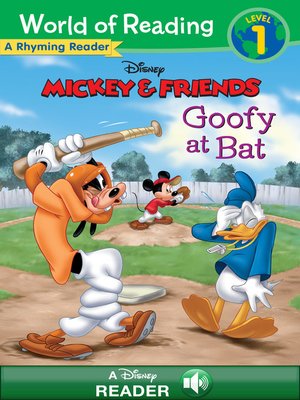 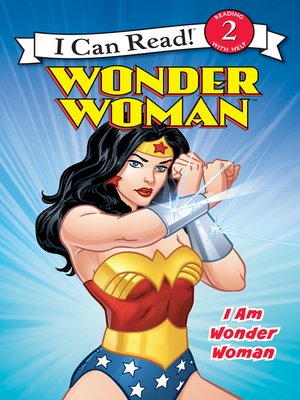 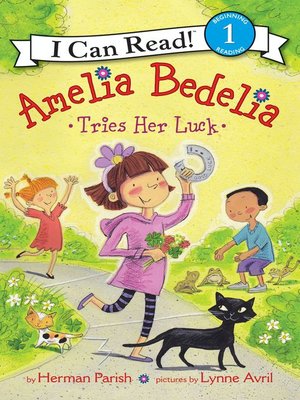 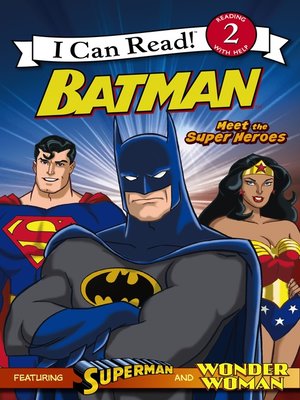  |