| The Kindle Voyage was released on October 21st. I posted a first impressions review the day after it was released, but I wanted to use it for a few weeks before posting a full review to get a better feel of the new features. It’s been just over three weeks now, and I’ve finally got […] |
Thursday, November 13, 2014
Kindle Voyage Review

Adventures in Minecraft
| Martin O’Hanlon and David Whale will be familiar to many readers of this blog, whether from the excellent Raspberry Pi and Minecraft resources they’ve authored or from their work with schools, code clubs and Raspberry Jams. Now they’ve teamed up to write a fantastic new book, hot off the press this week. Adventures in Minecraft teaches young people to customise their Minecraft world with amazing structures and new gaming experiences, developing Python programming skills along the way. Nine self-contained projects introduce readers with no programming experience to the basics and then move on to increasingly sophisticated mods, and eventually to controlling and sensing real-world objects from within Minecraft! Made for Minecraft Pi or for Minecraft on a PC or Apple Mac, the book is written especially for 11-15-year-olds, although we’ve already come across rave reviews from both younger and older readers. It has a companion website full of extras and video tutorials, as well as a mini-site created by Martin, with a forum where readers can discuss their projects and ask for help. Martin has also made a video montage of some of the adventures in the book: Carrie Anne Philbin, our Education Pioneer, says, “It’s excellent that kids have a dedicated, full-colour book like this to help them get into programming with Minecraft, and it will make a great companion to Adventures in Raspberry Pi!” You can buy Adventures in Minecraft now from Wiley and other book sellers. Why not treat the Minecraft fan in your life? |

Why you Should Buy Indie eBooks and Avoid Traditional Publishers
| Reading is making a comeback around the world due to new technology in a variety of ebook readers and apps for cell phones, tablets, and computers. Ebook sales are growing every day. People who would never have considered writing a book are giving it a shot, adding ever more choices to a crowded marketplace. Even authors from traditional publishing are fighting to provide the next ebook “bestseller”. Sadly, there are some readers, reviewers, and columnists who refuse to give Indie Authors a fair trial and continue to support traditional publishing as the only way to find a well-written book. Happily, there are innumerable readers who disagree and are not only buying books written by Indie Authors, but refuse to purchase books from traditional publishers any longer. Let’s explore why. Traditionally published ebooks are expensive. Even though printing, shipping, storage, and buy-backs are no longer part of the cost, traditional publishers are charging premium prices for their ebooks. In our current economy, it is hard for a single mom, student, average employee, or senior citizen to pay from $9.99 to $19.99 for one ebook download – even one written by a famous author. For $19.99, a reader of Indie Authors can buy several ebooks in a variety of genres, and possibly find the next “NY bestseller” among them. Another reason to avoid traditional publishers is they tend to follow the leader in choosing what to publish, regardless of what readers are buying or requesting. They have flooded the market with erotic thrillers, vampires, quests, tell-all memoirs, how-to this or that, and most recently non-fiction political ramblings. Based on expensive market analysis, of course, but their market must be in downtown New York or San Francisco, when it should be on Average Street. Indie Authors, on the other hand, live on Average Street in Small Town. They know what their neighbors, friends, and blog followers are reading. They spend hours online, studying what is selling versus what is not, they join groups and blogs and take classes to learn more, they research their topic, and then they spend hour upon hour writing. They are connected to real life, which brings emotion, depth of character, and the need to tell a story from deep inside. Then the serious ones pull money from their own pockets to pay for a book cover, edits, and formatting, or they find an Indie Publisher willing to accept their work. Has it occurred to most readers who refuse to touch an Indie Author ebook that famous traditionally published authors had to start somewhere? Not all of them were perfect when they began, either. Surprisingly, they still aren’t perfect after all these years, and neither are the teams of editors, proofers, and formatters who work on their books. [Another surprise, the teams don't have nearly the members working on a book as when it went to print.] Chances are, yes, a reader will get a poorly written or unedited book from time to time when trying Indie Authors, but it’s also likely in a traditionally published ebook. And, which would you rather throw away, $3.99 or $19.99? Many Indie Authors now have beautiful ebook covers designed by talented artists, which are much more appealing than a multi-color background with a white text title, or a hatchet in a wall on a traditionally published cover. Indie Author covers also more closely describe the story than traditional publisher covers, particularly in Romance, Thrillers, and Suspense. The most important reason to buy Indie Author ebooks is the majority of what readers spend actually goes to the author rather than to a publishing conglomerate. [Our Indie publishing company pays cover designers, editors, and formatters, and still pays the lion share of royalties to our authors. Traditional publishers have kept the majority of the money, and yet, some are struggling to remain in business and still others have gone under. Wonder why? Could it be lavish executive offices, huge exec salaries, and all those benefits?] To select a well-written Indie Authored or Indie Published ebook, look at the cover to see if it is well designed. Read the description and check the front few pages. Read a sample if you have time. If any of this appears sloppy or contains spelling errors, move on to another book. But, maybe it will be neat, concise, and the cover, description, and first few pages will grab you and draw you into a story you would have otherwise missed – just because it is by an Indie Author. Readers should be the ones to decide what is well-written, what books to avoid, and tell others through reviews and ratings. Free marketing should set ebook prices. Join those of us who are tired of being dictated to by a few large traditional publishers, snobbish reviewers, and uninformed columnists, and buy ebooks published by real people for real people – Indie Authors. by Rebecca J. Vickery Why you Should Buy Indie eBooks and Avoid Traditional Publishers is a post from: Good e-Reader |

Economist Launches Espresso Daily News App
| The Economist has launched a new mobile app that provides a curated news briefing from the editors. Published each weekday morning in three editions for the Americas, Europe and Asia, Espresso brings you up to speed in just a couple of minutes at the start of your day. The Economist Espresso offers eight articles each morning and the app is optimized primarily for smartphones. This is actually the first time in the companies 171 year history that they have offered a daily edition, so this is pretty big news. The Economist is offering non-subscribers a one-month free trial and full access will cost £2.49/$3.99 a month. If you are already a digital subscriber to The Economist, then full access to Espresso is now included with your subscription. Simply log in to the app using your registered e-mail address and password for Economist.com or, for delivery direct to your inbox, opt in to receive Espresso via e-mail, starting next week. For more information about accessing your digital subscription benefits visit economist.com/digital You can download the Economist Espresso for Android from the Good e-Reader App Store.
Economist Launches Espresso Daily News App is a post from: Good e-Reader |

Wednesday, November 12, 2014
ExaGear Strategies Delivers Desktop Applications to Mobile Devices
| The cool thing about the developers at Eltechs is that they understand we have strong attachments to our old-school PC strategy games. They also understand that in this modern world, our mobile devices rule and we don’t turn to games on those desktop systems the same way anymore. Now, with their ExaGear Strategies app, we can emulate these favourite games on Android devices. Using ExaGear Strategies is simple, but does require a little bit of set-up as the app itself is basically just a launcher (meaning you will need to insert your games –in a manner of speaking). It is important to understand that you will also need a licensed copy of any PC game that you are going to run. Don’t forget that gameplay is going to be a little different when migrating to a touch-screen, but it’s a really cool concept that means you don’t need to choose between traditional and mobile gaming. If you’d like to give it a try, download ExaGear Strategies for free now. Currently the controls (which aren’t free, and must be purchased in-app) in the game are adapted for use with Heroes 3, Disciples 2, and Civilication 3, but more cool games are promised soon!
ExaGear Strategies Delivers Desktop Applications to Mobile Devices is a post from: Good e-Reader |

World of Tanks Blitz MMO Action Game Arrives on Android
| Anybody who knows about MMO action games on the PC will be thrilled to hear that the developers at Wargaming have brought World of Tanks to Android and iOS. There are plenty of MMO options out there, but few are as successful as World of Tanks –boasting a roster with over 100 million players worldwide. The mobile game draws heavily from the PC version, with “over 100 massive tanks, stunning graphics, and intuitive touch-screen controls.” If you are looking for a simple little game, World of Tanks Blitz probably isn’t what you are looking for (although it is shockingly easy to learn and to get the hang of). Take one of 4 tank classes (light, medium, heavy, an destroyers) into one of 10 unique battle arenas or out for strategic 7v7 multiplayer gameplay, complete with in-game chat functionality and real-life physics that demonstrate realistic tank movement and damage mechanics. It’s all about strategy in the end –choosing agile tanks that move quickly, or looking to the serious firepower found in heavy tanks… unless you appreciate specialized tank destroyers that let you launch more focused attacks. Whether you are new to this title, or already addicted to the PC version, download World of Tanks Blitz for your Android device now. The game is free, but you can enhance your experience (and your equipment) with more than a few in-app purchases (so be ready).
World of Tanks Blitz MMO Action Game Arrives on Android is a post from: Good e-Reader |

Amazon wins Online Auction for .Book Domain
| ICANN has been running a series of auctions over the course of the last year for a new series of custom domain names. Amazon has been battling it out against rival publishing and self-publishing companies in an effort to attain the lucrative .book TLD. Amazon has just won the auction despite a filing by the Association of American Publishers in 2013 that opposed its bid, and described the possible control of the .book TLD by the retailer, or by any private company, to be counter to the public interest. Reportedly Amazon won the domain with a closing bid of $10 million dollars and was competing against Google and Bowker in the late stages. There is no knowledge currently if Amazon gave an incentive to these two companies to dropout or if they did it willingly. It will be interesting to see what Amazon intends on doing with the .book domain name, if they intend on providing vanity URL’s for authors who self-publish under the KDP program. Amazon wins Online Auction for .Book Domain is a post from: Good e-Reader |

WHSmith Extends Kobo Contract 4 More Years
| UK bookseller WHSmith has been carrying Kobo e-Readers since 2011. Sales have been brisk and the two sides have reached a new agreement that will extend the partnership until 2018. During a recent earnings call, the bookseller has acknowledged that eBook sales have not seen the dramatic gains they have in years past. "According to publishers the rate of growth and penetration of eBooks has slowed with value penetration estimated to be around 15% – 18%, with growth closer to 20% than the 100% we have seen in recent years." Dispute the nominal growth potential of the eBook industry in the UK, WHSmith and Kobo are both bullish about the success of e-readers and multi-function tablet reading apps for the foreseeable future. WHSmith Extends Kobo Contract 4 More Years is a post from: Good e-Reader |

Barnes and Noble Experiments with Discounted eBooks when you Buy Print
| Barnes and Noble is experimenting with a new initiative this holiday season called Sync Up. There will be a special curated section of paperback books in each bookstore location and upon purchase you can also elect to buy the Nook eBook edition for up to 70%. The B&N Sync Up! program will only be in effect until the end of the year at 650 stores nationwide. Here is how the program works, you want to look for the new B&N Sync Up! display in any store and chose one or more of the select paperbacks. Simply bring it to the register, and the clerk will activate the NOOK Book offer upon checkout and a unique access code will be printed on the customer's store receipt. For additional convenience, customers can also choose to have the code printed on a gift receipt or emailed to them. To redeem the offer, the customer or the gift recipient can visit www.BN.com/redeem, enter their code and download the digital edition within seconds. Through the new program, customers can choose paperbacks from a collection of perennial favorites and bestsellers including Doctor Sleep by Stephen King, Outlander (Outlander Series #1) by Diana Gabaldon, The Secret Life of Bees by Sue Monk Kidd, The Kite Runner by Khaled Hosseini, Life of Pi by Yann Martel, plus many more fantastic reads. More details are available at BN.com/sync-up. I think this new sync up program is a tremendous idea and something they should have tried a long time ago. Barnes and Noble is in the perfect position to try out pilot projects like this, to distinguish themselves from Amazon and Kobo. Could you imagine a future where this is the norm? Walk into any B&N bookstore, buy any book and get the eBook for a huge discount? I for one, love the sync up idea. Barnes and Noble Experiments with Discounted eBooks when you Buy Print is a post from: Good e-Reader |

On Books and family…
|
It’s because of this that going through my grandmother’s things was so moving. Having an affinity for reading, I wanted to take some of the books she had read when she was growing up. One thing I did know was that Grandma Lilian also loved to read. I was excited to see what dusty treasures I might find in her small collection. I’ve always loved Russian literature and so it took my breath away when I came across tattered copies of Anna Karenina, War and Peace and collections of plays by Chekov and Ibsen. Suddenly I had a connection with my grandmother I never new existed. Despite never getting to talk about literature, never getting to hear even a single book recommendation, I had come to love Tolstoy, Dostoyevsky and Ibsen just as she had. When I got home, I sat down on my couch and couldn’t put down these new heirlooms. It was so moving to think that these books, simple pages of ink and words, were held by my grandmother. I got the urge to reread A Doll’s House but as my new copy was over 100 years old, I hesitated to leaf through it, fearful it would come apart in my hands. Instead, I grabbed my iPad and went to my local library’s digital collection and sure enough, there it was. With my grandmother’s copy looking down on me, safely nestled on our bookshelf, I began to read the digital copy. The same words Lilian had read so long ago. The only difference is this ink will never fade, these pages will never tear. People love to write articles with flashy headlines about why eBooks will never beat out physical copies or how eBooks will lead to the end of the paper book. Neither of these types of articles are true. Physical and digital books coexist beautifully and this is a perfect example. The physical books I now cherish are a connection to the grandmother I barely knew. It’s something I can hold in my hand that she did as well. The eBooks of these titles hold special meaning because anywhere I go in the world now I can bring with me the stories my grandmother loved that I do too, without ruining a century’s worth of memories by ripping a page. Books have the power to move us, to connect us in ways we never thought possible. The format is inconsequential, it’s the stories that truly matter. Adam Sockel is a Marketing Specialist at OverDrive.  |

Amazon Brings Kindle Store to the Netherlands
| Today Amazon launched a localized Kindle store in the form of a dedicated website, Amazon.nl, specifically for residents of the Netherlands. The new Dutch Kindle store features a selection of over 3 million ebooks, but only about 20,000 are Dutch-language ebooks, and of those just 1221 were written by Dutch authors. Amazon is also advertising […] |
Let the BattlePi commence…
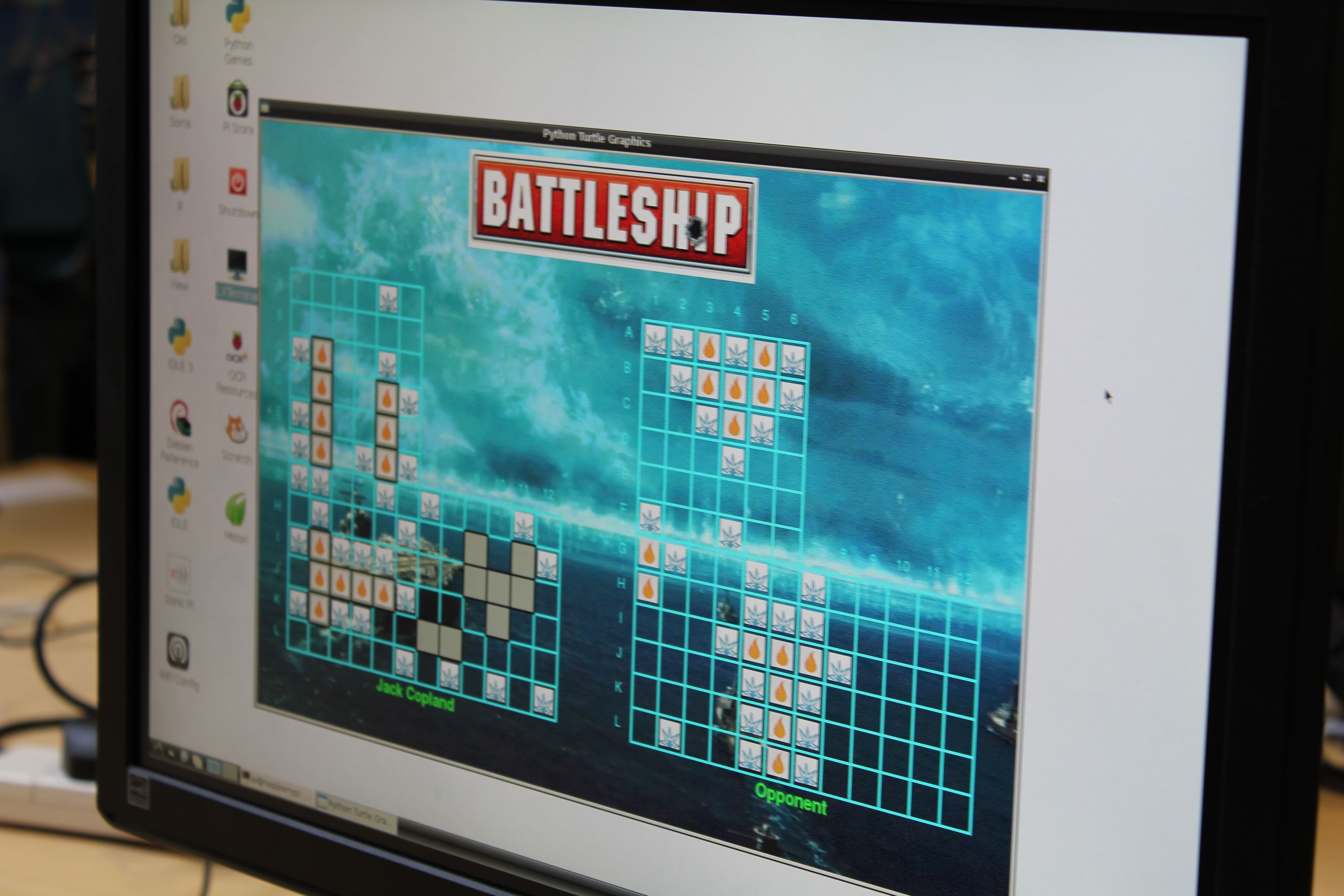
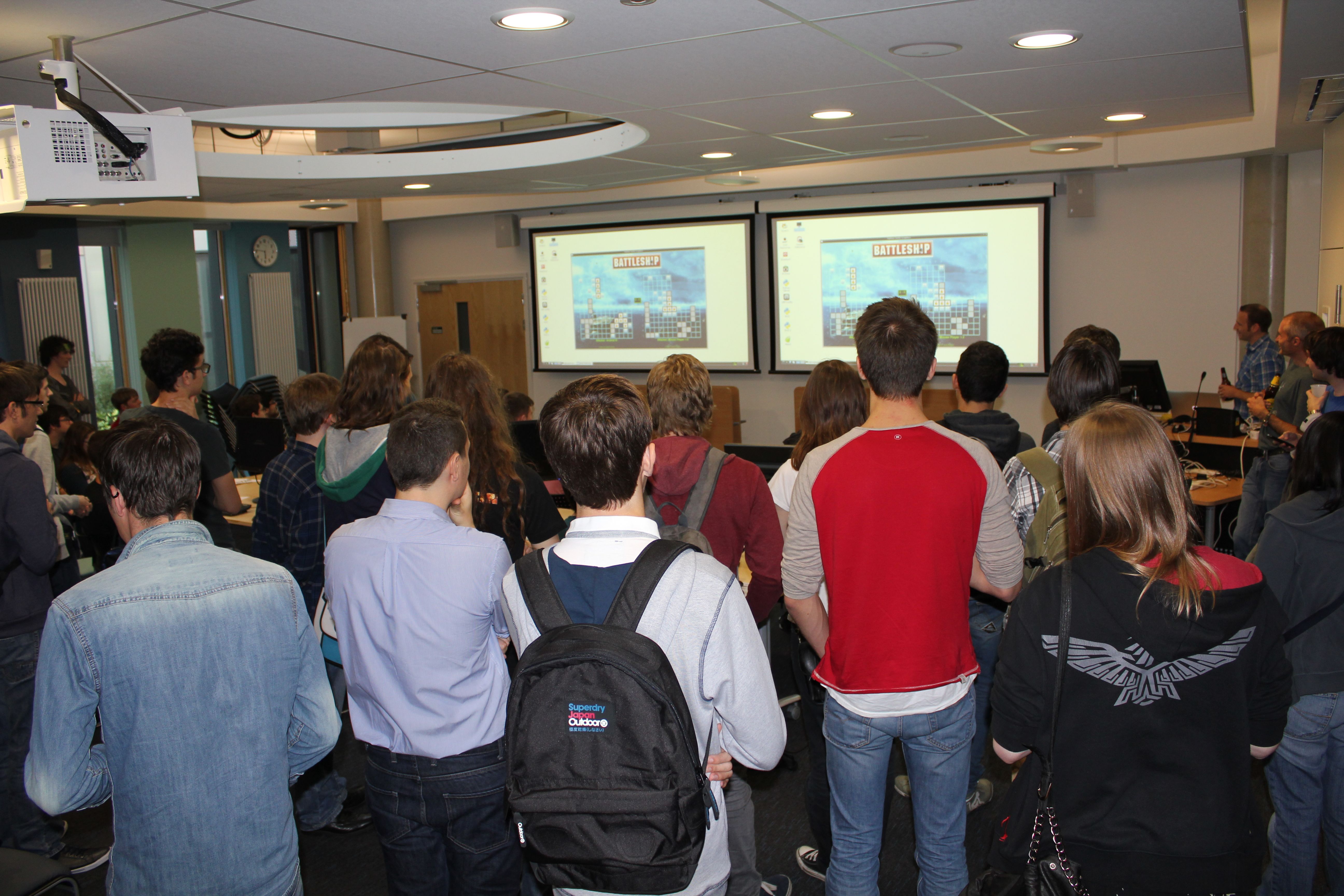
| Recently I visited the University of York Computer Science department for the second year running to see the Raspberry Pi being used to great effect on the new intake of students. Last year I visited to judge Blue Pi Thinking, and since it was such a great success they decided to repeat the exercise this year. The students are sent a Raspberry Pi before they come to university, with a special build and a document that describes the challenge. There are three main reasons for doing this. The first is to give the students a common computing platform that they can use throughout the year to base different projects/assignments on. Secondly, the students will learn a great amount and will kick start their education; and finally it becomes a real social event for the students to get together (some actually help each other out) with beer and competition (which of course go hand in hand!) There are two elements to the challenge and the students can choose either (or both or neither!) The first is Blue Pi Thinking, where the challenge is to develop something creative; the second is BattlePi. BattlePi is a game of battleships played automatically by the Raspberry Pi with a server through which two Raspberry Pis can communicate. The students are given the (well commented Python) software which initially just chooses random positions to make shots at. The student then has to modify the python code to implement better AI in both firing position and ship placement. At the end of freshers’ week the students all come together (with beer of course) to test their creations. The Blue Pi Thinking creative competition whose aim is basically to create something was run as a judged event. The following are examples of projects that were created:
Throughout the year the students will be using their Raspberry Pis to continue their education, and help develop next years BattlePi competition. Will Smith and Emma Hogson, who are in charge of undergraduate admissions have offered Raspberry Pi their complete BattlePi materials including all the software and instructions so we can give it to other universities…something we’re looking into with great interest. May the worldwide BattlePi commence – watch this space! |
Tuesday, November 11, 2014
How Readers can Avoid Buying Bad eBooks by Indie Authors
| Digital Readers come in all shapes and forms. Some of them are brand new to the process of reading eBooks and just picked up their first Kindle. Others, are a more tech savvy bunch who have been reading on their smartphone, tablet or e-reader for years. We have all been looking for new books to read and stumble across numerous titles that are poorly edited, have abysmal cover art and overall are a wretched read. These certainly do not come from big publishing companies and instead are written by anyone who clicks submit on their Microsoft Word Document. As a reader, how do you avoid falling prey to indie writers and what can you do about it? Amazon, Barnes and Noble and Kobo all have self-publishing programs where any writer can submit an eBook and have it instantly visible in their stores. There is no editorial curation or anyone vetting out books that have overt sexual themes, bestiality or are rift with spelling mistakes, or poor grammar. Unsuspecting customers are duped into purchasing them because they might have a similar name to a bestselling title, or come up in the “if you liked book X, try book Y and Z.) Indie titles are stocked side by side alongside books that are submitted by traditional publishers. There is no way to actually vet out “books” written by indie authors and companies like Kobo say that they do not want to implement policies of segregation. Segregation is what we need, but many authors have been crying foul saying that if there is a dedicated indie author section in major online bookstores, no one would browse it. They are right. So as a reader, how do you insure that you do not fall into the trap of unwittenly purchasing indie eBooks and only buy from reputable publishers? The first, check out who actually published the book. If it has an authors name or says “published by Smashwords, or Published by LULU” avoid it at all costs. Smashwords is notorious for having a laissez faire acceptance policy and distributes thousands of poorly written titles to every major bookstore every month. Things have gotten so out of hand with Smashwords titles, that Apple suspended their relationship with them and abandoned the “Breakout Books” section on the iBookstore. Why does looking at the publisher matter to the readers? Well, traditionally published authors normally have a team backing them up to insure a respectable level of quality and control. An author certainly does not go it alone, but has an agent in their corner, lending the assist on PR and book tours. Trade authors also have a cadre of editors and cover art designers to insure the book is polished and read for the prime time. When you walk into your local bookstore, you certainly aren’t greeted by a wall of books written by people you never heard of people, why should shopping online be any different? Another way to vet out indie authors is to see if the book is also available in hardcover or paperback. Normally indie authors are too cheap to use Createspace or Ingram Lightning Source to make physical copies of their books available. If a book is only available as a Kindle Edition, this should raise some serious red flags. Indie authors traditionally rely on bargain level pricing in order to appeal to readers. The average indie title ranged from .99 to $3.99, whereas the average price of traditionally published material is $9.99 to $18.99. My advice, if you are looking for new books is try and browse from the most expensive books to the least. This might not work in all cases, but should avoid the hundreds of thousands of self-published titles on Amazon, Barnes and Noble or Kobo. Instead of browsing for books on Amazon or another online bookstore try checking out the publishers websites directly. They often hype up new releases or books coming out in the near future. You can find direct links to the online ecosystem of your choice or buy from them directly. Finally, there are lots of online bookclubs and author communities out there, such as GoodReads. You can find out a lot about new and upcoming books to see what type of interest there is. A indie title you have never heard about, will likely not be found and the books that matter will be. In a pinch, visit your local bookstore for ideas and recommendations, or talk to a friend. By 2020, the eBook industry will be valued at over $16 billion dollars and more indie books will be stacked alongside traditionally published editions in every major online bookstore in the world. It is important to learn how to vet books yourself, instead of relying on the search algorithms. Most bookstores don’t offer refunds easily if you buy something you hate. They have certain window periods in which you can get a refund, but the level of customer service in digital bookstores is severely lacking. Hopefully this little guide assisted some of you in avoiding horrendously written indie author books. How Readers can Avoid Buying Bad eBooks by Indie Authors is a post from: Good e-Reader |

Global eBook Market to reach $16.7 billion in 2020
| A new report by Strategy Analytics predicts that the global consumer eBook market will more than double from $7 billion in 2013 to $16.7 billion in 2020. eBook subscription websites and emerging markets such as China are the two main facets contributing to the dramatic increase. Currently less than 10% of the population reads eBooks in 2013, but in 2020 this figure is set to increase to 25%. One of the big reasons is the shift towards reading on smartphones and tablets over dedicated e-readers and desktop computers. Wei Shi, an analyst at Strategy Analytics' wireless media strategies division, said that a significant development in the eBook market is subscription-based services launched by platforms like Amazon Unlimited, which have a model similar to how Spotify and Pandora work in the music industry. "We expect to see subscription services gaining more momentum in the second half of this decade, and contributing to close to a fifth of the total market by 2020," she said. Global eBook Market to reach $16.7 billion in 2020 is a post from: Good e-Reader |

Amazon Now Selling eBooks and e-Readers in the Netherlands
| Amazon will be opening up their online bookstore and selling e-readers in the Netherlands this coming Wednesday. Over 20,000 eBooks will be available in Dutch and 2 million in English, giving readers a ton of content to be able to devour. In the Netherlands Amazon will be competing primarily against BOL.COM, the largest online bookstore. 60% of all eBooks currently being sold are via this website and they have a larger library, that includes 30,000 titles. The primary advantage BOL has, is that they sell their content with Social DRM and Digital Watermarks, thereby making the EPUB files able to be loaded on any e-reader, tablet or smartphone. Amazon will be fighting an uphill battle to get market share in the Netherlands and they are hoping cheap e-readers will pave the way. The Kindle Basic will be available for €59, Kindle Paperwhite, €109, and the new Kindle Voyage will cost €189. Amazon Now Selling eBooks and e-Readers in the Netherlands is a post from: Good e-Reader |

BooXtream Talks Digital Watermarks and Social DRM
| Digital Watermarks or Social DRM is starting to catch on in Europe in a very big way. This new system of encryption makes loading eBooks on other devices or loaning them how to friends quick and intuitive. There are not special programs or tools needed to do any of this, which makes it quite attractive to publishers and online bookstores looking to sell books and still maintain a degree of security. BooXtream is one of the largest companies who are involved in watermark technology and CEO Huub van de Pol sat down with Good e-Reader to talk how it all fundamentally works and provides an eye opening introspective into the world of digital watermarks and social DRM. When did you guys seriously start to focus on digital watermarks as a viable business model? Since 1993, Icontact develops bespoke software solutions for the book and library industry in The Netherlands and Belgium. The very first start with digital watermarks was in 2006, when Icontact developed a custom digital distribution and fulfilment platform for audio books to be used by a Dutch audio book web shop and distributor. The music industry was still using DRM at that time, and we all knew the problems with DRM. So to be customer friendly we decided that the shop needed to deliver MP3 audio files instead of one (or more) platform specific audio formats with DRM. As you know, MP3 cannot be copy protected and doesn’t support DRM. Instead, we developed a simple but effective way to personalize each MP3 file with info about the transaction, the name of the end user and the web shop that sold the audio book. This enabled us to locate the end user when an audio book is found on an illegal site or CD-ROM. The end users knew it worked like this and had no problem with it, so it worked like a reasonable deterrent. We used all available tricks to add extra data in the mp3 file while keeping it compatible with the standard. Some data was visible (when you checked the file properties), but most were invisible to the end user. All personalisation took place dynamically after a valid order was registered. All mp3 files where then stored in a single ZIP container and a download link to this ZIP was presented to the end user. So essentially, every end user received a unique file with a personalized audio book. We registered the brand name BooXtream for this concept and technology. After a couple of years, only very few of these audio books were found 'in the wild'. 99.9% of all pirated content was ripped from CD's. We presented this experience on a national eBook conference in 2010. After our keynote "Lessons learned with Social DRM", several publishers not only liked the idea, they also asked us if we could do the same with eBooks instead of audio books. At that time there were only a few 'serious' eBook shops in The Netherlands, but we saw the potential. We were excited by the possibilities and opportunities of the market. We decided to create an SDK to watermark ePub eBooks, which evolved into the web service as we are now offering. We built BooXtream for eBooks based on the idea (concept) of adding as much 'invisible' data as possible to the files in an ePub, tightly integrated with a digital distribution and fulfillment platform, an easy to integrate web service (RESTful) and an attractive and simple price model (no upfront costs, only pay by use). BooXtream for eBooks 1.0 was released in fall 2010 and was offered as a web service based standard solution. (FYI: Icontact still develops custom software solutions. The BooXtream brand and product was bootstrapped, like an internally funded start-up.) Our launching customer was a small forward looking publisher in the Netherlands, but eBook watermarking really took off when UK based Pottermore decided to use it for the Harry Potter eBooks in 2012. This really created headlines all over the industry. How does the essence of your technology work? The essence is that we add 'hidden' data to all files in an ePub eBook file while keeping the eBook 100% valid, using several different proprietary algorithms. Our technology offers two basic features: adding invisible watermarks and adding visible extra's like a personalized ex libris page, a personalized footer text at the end of every chapter or a personalized chapter at the end of the eBook. The invisible part is essentially a transactional watermark, creating unique files for every eBook and every end user.. Everything is configurable by our customers. BooXtream operates in real time, on transaction level, so our technology has to be integrated at the point of sale (where the actual distribution to the end user takes place). There is no need to update any 'client software' when we update and improve our algorithms (as with Adobe DRM), which is possible because the eBooks are 100% valid and ePub compliant. In a technical sense, they are DRM free so they can be read by every e-reader and e-reading device out there. One of the essential characteristics of eBooks with watermarks is that there is no need to remove watermarks to make a backup, read it on multiple devices or share it with someone you trust (casual sharing). This isn’t the case with DRM, which is one of the reasons a lot of people that have no intention to pirate or hack do use DRM removal tools. Who would you say are your largest clients right now? Our technology is used worldwide by 2 of the Big 5 publishers, some very large independent D2C publishers, several hundreds of medium sized publishers selling D2C, quite a few independent eBook web shops and also numerous web shops of smaller publishers, self publishing authors and systems integration. Some publishers like to keep their name under the radar, but to name a few: Verso Books (US, UK), Cappelen Damm (largest publisher in Norway), Elly's Choice (largest eBook subscription service in The Netherlands), Firsty Group (large solutions provider for the publishing industry in the UK), Profile Books (UK); web shops from Finland to Spain and from Peru to Colombia. I saw you guys are a member of the IDPF, we sponsor many of their events, such as the main conference at Book Expo America. How has being a member affected your business? We are big fan of Bill McCoy. He is doing a marvelous job with IDPF, creating and maintaining the ePub standards, Readium, EduPub and basically uniting the eBook publishing world. I think it was Bill who coined the term 'Social DRM' which we adopted for our original BooXtream tagline. Being a member gives us insight in the working groups and future developments, but it also helps us to be found by potential customers. What are the main benefits as you see it, between watermarks and ADOBE DRM. The only benefit of Adobe DRM is that it can be used for library lending purposes. You cannot use watermarking for this, as watermarking is not able to disable an eBook after a certain amount of time. The few libraries that are using watermarking do this as a 'second line of defense in a closed ecosystems with apps. There are quite a few benefits of watermarking: With watermarked eBooks there is no need to use a specific (proprietary) e-reading client. Watermarked eBooks can be read on any device, with any software, as long as they are ePub compatible. This is a huge advantage, because it's both user friendly and support desk friendly. An eBook with watermarks can be read on different devices simultaneously. There is no need to remove DRM to do this. As an aside, there are plenty of DRM removal tools out there, but quite a few are Trojans or might contain a virus. The computer illiterate end user is far better off when he doesn’t need these tools, apart from the question if it's legal or not to use them. An eBook with watermarks can be backed-up using standard backup software. Again, there is no need to remove DRM to do this. This is very important because eBooks with DRM might get inaccessible when the web shop is getting out of business. This happened more than once. Our watermarking tools also offers visible personalisation, which creates new business possibilities and makes the eBook really personal. It is being used to personalize review copies, it is used to personalize course guides and business reports (even those that are distributed for free). One of our customers allow their end users to customer the ex libris in their own eBooks, like the personal stamp from earlier times. Others insert personalized messages or dynamically add some banner links in the eBook. If people started to pirate books via BooXtream, what do you guys do about it, if anything? Tracking and tracing illegal uploads is not our primary business. Sometimes pirated eBooks are discovered by our customers (publishers) when they search for their own titles. Part of our standard service is to help them decode the watermarks (if any, because the bulk of all pirated books are titles with DRM removed, not watermarked titles), so they can decide what to do. For larger-scale and automated discovery and enforcement we offer tools to anti-piracy third parties like MarkMonitor and Muso that are specialised in tracing copyright infringements, crawling the web, sending notice-and-take-down letters etc. Our tools enable them to look for the hidden watermarks within eBooks, decode them and take appropriate measures. They can use these tools as part of our and their arrangement with a publisher. BooXtream Talks Digital Watermarks and Social DRM is a post from: Good e-Reader |

Barnes and Noble Unveils Print on Demand for Indie Authors
| Barnes and Noble Nook Press is geared towards indie authors and allows them to self-publish their titles and sell them in the Nook online bookstore. The company has developed a new print on demand service that will allow their cadre of authors to print physical books. Designed to be simple and provide a high level of customization, the NOOK Press print service provides customers with a complete do-it-yourself experience for creating a hardcover or paperback book. The new service offers black and white or color printing, high-quality paper choices, multiple trim sizes and cover treatments. Additionally, with NOOK Press Author Services, authors can now choose from a variety of packages and a la carte services to receive professional assistance making their book. Authors and aspiring writers can use the new print service to create books for personalized gifting and keepsakes, and self-published authors can create promotional, review and personal resale copies. "With the introduction of the NOOK Press print service, we're providing authors, creators, crafters and more with a powerful new tool to bring their writing to print," said Theresa Horner, General Manager of NOOK Press & Vice President of Content Acquisition at NOOK Media. "It is very exciting to have the NOOK Press platform supporting authors in multiple formats." "NOOK Press is proud to add print books to its portfolio of services. As the world of self-publishing grows, NOOK Press will continue to expand its easy-to-use content creation services in support of all authors, writers and creators," said Doug Carlson, Executive Vice President of Digital Content and Chief Marketing Officer at NOOK Media LLC. "The NOOK Press team has created another outstanding experience for authors to showcase their content." It is important to note that the POD service will not get your book in Barnes and Noble bookstores. Amazon Createspace and Ingram Lightningsource will get your books on the main book lists that stores get and allow them to order the books to stock on their shelves. Barnes and Noble also has not fully developed this system in-house and instead is relying on a yet unnamed 3rd party to provide the POD service. There is a rumor going on right now that this company is Author Solutions is providing the POD conversions. This POD service is horrendously expensive, you are going to be paying $999 minimum and ranges in price to $2,199. You will get the assist though in creating illustrations and cover art though. Barnes and Noble Unveils Print on Demand for Indie Authors is a post from: Good e-Reader |

Kindle Tips and Tricks Advanced User Guide
| Today I’m proud to announce the release of my first ebook on the Kindle store. It’s called Kindle Tips and Tricks Advanced User Guide, and as the name suggest it’s a tips guide for Kindle ebook readers. The ebook is designed specifically for the Kindle Voyage, Kindle Paperwhite, and 2014 entry-level Kindle. It contains basic […] |
WiFi-controlled pottery kiln
| I’ve always fantasised about having a kiln in the garage (Eben wants a pick and place machine; we need another garage). Kilns, though, are expensive. And where do you start if you want to refurbish a broken or old one safely? James Huang has an answer, and it’s got a Raspberry Pi in it. (Well, not in it, but attached very firmly to it. James’s girlfriend is an enthusiastic potter, and James is an equally enthusiastic hacker. They came together and made  Stepper motor and propane regulator The kiln operates via a PID, which controls the temperature taking closed-loop feedback from the thermocouple to the regulator. Adjustments can be made remotely; the kiln controller system has WiFi. James has a really interesting series of photographs, with explanatory text and some examples of test firings, over at imgur; he also answers questions about the project at Reddit.  Results of two test firings – the variously floppy things are pyrometric cones, used to measure temperature in different parts of the kiln. There are so many reasons I love this project. It’s a wonderful demonstration of what can be done with no specialised experience (James had never worked with kilns before starting this project, and neither he nor his girlfriend had any knowledge about firing pottery). The ingenuity on show is just brilliant (3d-printed gears!), the pottery that comes out of the end is immensely satisfying – and face it; there’s something very thrilling about flames. On top of all this, the whole project came in at less than $200. All James’s control software, along with a BOM, is open-source, and available on GitHub. |

Tolino Vision 2 Now Available – Bertelsmann has the Best Deal
| The Tolino Vision 2 was announced at the Frankfurt Book Fair and the e-reader is now available at Worldview, Thalia, Club Bertelsmann and Hugendubel. The mantra of the Tolino Alliance is to battle Amazon in Germany, and not let a big company dominate the market. The Tolino Vision 2 features the latest in e-Paper innovation, e Ink Carta. This is the exact screen technology found on the Kindle Paperwhite 2 and Kobo Aura H2O. This will not only provide higher contrast, but also eliminate the full page refresh issues that have plagued e-readers since the very beginning. The overall resolution is a very respectable 1024 × 758 pixels and has 212 PPI. It is also being billed as splash proof, so you can dump your coffee on it, and it won’t destroy the device, its not quite waterproof though. The actual selling of the e-reader is actually quite interesting. Each Tolino partner has the freedom to establish their own pricing. The Vision 2 is currently retailing for 149€, but Club Bertelsmann is currently offering the best deal in the country, only charging 129€. This holiday season you can expect the price will likely fall between 105€ to 99€. The Vision 2 has experienced a high level of demand this year, pre-orders had reached over 10,000 units. This has created a supply problem with Thalia and eBook.de who are all estimating two weeks of delivery time. Part of the reason why the supplies are stretched so thin is because the Alliance has expanded the sale of the e-reader to railway station bookstores and independent booksellers via Libri. I think the Vision 2 is a really good e-reader if you speak German. The online bookstore mainly just stocks titles in that language but it does have an English mode for advanced users that know how to load in their own books and have no problem using Calibre and Adobe Digital Editions. Tolino Vision 2 Now Available – Bertelsmann has the Best Deal is a post from: Good e-Reader |

Subscribe to:
Posts (Atom)