| James Joyce’s Ulysses is one of the most important books to be written by a biped. It is on many peoples reading list, but seldom completed. The novel is fairly daunting and this is prompting Dublin filmmaker Eoghan Kidney to develop a 3D immersive experience using Oculus Rift. The filmmaker is looking to raise $5,000 to turn the chapter Proteus into a visual Cliff’s Notes. In this installment Dedalus wanders across a desolate beach, closes his eyes, and ponders the shifting nature of reality and the disconnect between his inner self and the external world. The intention behind this project is to make the book more accessible, even if the crowdfunding initiative is for a single chapter. The filmmaker has disclosed that if this is successful, he will make a playable, immersive world of the entire novel.
Don’t have Time to Read Ulysses? Play the Game is a post from: Good e-Reader |
Friday, July 25, 2014
Don’t have Time to Read Ulysses? Play the Game


Is Blackberry Developing a BBM App for Tizen?
| Blackberry has been focused on developing software and expanding the reach of their seminal messaging client. In recent weeks they released a BETA app for Windows phones and they might be soon releasing a new client for Tizen based smartwatches. Tizen is a new OS that was developed by Intel and a series of mobile phone operators. Samsung has been the only company to employ it in a commercially viable product, with their Galaxy Gear 2. BBM was seen recently on the new Samsung branded watch, which is leading industry experts to interpret that Blackbery may be developing their client for the wearables market, a segment that is growing. Is Blackberry Developing a BBM App for Tizen? is a post from: Good e-Reader |

Pi in the Sky: hardware for high-altitude balloonists from Dave Akerman
| Liz: Regular readers will be very familiar with the name Dave Akerman. Dave has been sending Raspberry Pis to the stratosphere under weather balloons since we launched the Pi in 2012, and his work in helping schools develop their own in-house space programs has been fantastic to watch. He and his friend Anthony Stirk have just produced a telemetry add-on board for the Raspberry Pi to help schools (and everybody else) reproduce the sort of spectacular results you’ve seen from him before. Here he is to introduce it: over to you, Dave! High Altitude Ballooning is an increasingly popular hobby (I nearly said that interest has been “ballooning”, but fortunately I stopped myself just in time …), bringing what is termed “near space” within the reach of pretty much anyone who is willing to put in the effort and spend a moderate amount of money.
Although it’s possible to successfully fly and retrieve a balloon with a simple GSM/GPS tracker, the chances are that this will end in failure and tears. GSM coverage in the UK is nowhere near 100%, especially in rural areas which is where we want (and aim) the flights to land. The next step up, in reliability and price, is a “Spot” tracker which works solely via satellites, but those don’t work if they land upside down. Also, neither of these solutions will tell you how high the flight got, or record any science data (e.g. temperature, pressure), or indeed tell you anything about the flight until they land. If you’re lucky. A lost flight is a sad thing indeed.
For some countries (e.g. USA, but not the UK), if you are a licensed amateur radio operator you can fly an APRS tracker, in which case the flight will be tracked for you via the ground-based APRS network run by other radio hams. Sadly UK laws prohibit radio hams transmitting from an airborne vehicle, so APRS is out for us. For these reasons, pretty much everyone involved in the hobby in the UK, and many other countries, uses radio trackers operating in an ISM (Industrial, Scientific and Medical) band where airborne usage is allowed. These work throughout the flight, transmitting GPS co-ordinates plus temperature and anything else that you can add a sensor for. Many radio trackers can also send down live images, meaning that you can see what your flight is seeing without having to wait for it to land. Here’s a diagram showing how telemetry from the flight ends up as a balloon icon on a Google map:
What’s not shown here is that, provided you tell them, the other balloonists will help track for you. So not only will you be receiving telemetry and images directly via your own radio receiver, but others will do to. All received data is collated on a server so if you do lose contact with the flight briefly then it doesn’t matter. However, this does not mean you can leave the tracking up to others! You’ll need to receive at the launch site (you have to make sure it’s working!) and also in the chase car once it lands. The expense of doing this is small – a TV dongle for £12 or so will do it, with a £15 aerial and a laptop, ideally with a 3G dongle or tethered to a phone. Traditionally, balloonists build their own radio trackers, and for anyone with the skills or the time and ability to learn programming and some digital electronics, this is definitely the most rewarding route to take. Imagine receiving pictures of the Earth from 30km up, using a piece of kit that you designed and built and programmed! So if you are up to this challenge (and I suspect that most people reading are) then I recommend that you do just that. It takes a while, but during the development you’ll have plenty of time to research other aspects of the hobby (how to predict the flight path, and obtain permission, and fill the balloon, etc.). And when you’re done, you can hold in your hand something that is all your own work and has, to all intents and purposes, been to space.
For some though, it’s just not practical to develop a new tracker. Or you might be a programming whizz, but not know which end of a soldering iron to pick up. It was with these people in mind that we (myself and Anthony Stirk – another high altitude balloonist) developed our “Pi In The Sky” telemetry board. Our principle aim is to enable schools to launch balloon flights with radio trackers, without having to develop the hardware and software first. It is also our hope that older children and students will write their own software or at least modify the provided (open source) software, perhaps connecting and writing code for extra sensors (the board has an i2c connection for add-ons). The board and software are based on what I’ve been flying since my first “Pi In The Sky” flight over 2 years ago, so the technology has been very well proven (approximately 18 flights and no losses other than deliberate ones!). So far the board itself has clocked up 5 successful flights, with the released open-source software on 3 of those. Here’s the board mounted to a model B (though we very strongly recommend use of a model A, which consumes less power and weighs less): It comes in a kit complete with a GPS antenna, SMA pigtail (from which you can easily make your own radio aerial), stand-offs for a rigid mounting to the Pi board, and battery connectors. Software is on https://github.com/piinthesky, with installation instructions at http://www.pi-in-the-sky.com/index.php?id=support, or there is a pre-built SD card image for the tragically lazy. We do recommend manual installation as you’ll learn a lot. By now you’re probably itching to buy a board and go fly it next weekend. Please don’t. Well, buy the board by all means, but from the moment you decide that this is the project for you, you should task yourself with finding out all you can about how to make your flight a safe success. For a start, this means learning about applying for flight permission (which, if you want to launch from your garden at the end of an airport runway, isn’t going to be given). Permission is provided together with a NOTAM (NOtice To AirMen) which tells said pilots what/where/when your launch will be, so they can take a different path. You also need to learn about predicting the flight path so that it lands well away from towns or cities or motorways or airports. I hope I don’t need to explain how important all of this is.
There’s lots more to learn about too, for example:
None of this is complicated (it’s not, ahem “rocket science”), but there is a lot to know. Don’t be surprised if the time between “I’ll do it!” and “Wow, I did it!” is measured in months. Several of them. In fact, worry if it’s less than that – this research takes time. We will be producing some teaching materials, but meantime please see the following links:
As for the board, it provides a number of features borne out of a large number of successful flights:
The open-source software provides these features:
Finally, anyone interested in high altitude ballooning, using our board or not, should come to the UKHAS Conference on 16th August 2014 at the University of Greenwich. Anthony and I will be presenting our board during the morning sessions, and will run a workshop on the board in the afternoon. For tickets click here. |


Thursday, July 24, 2014
Politicians Go Digital with Bitcoin, Paystand
|
The state of New Hampshire, long considered one of the key states in the national election process, happens to also have more Bitcoin transactions than any other state per capita; given that fact, New Hampshire politicians will be accepting campaign contributions in this so-called “cryptocurrency,” the form of digital currency who most noteworthy example may be Bitcoin. Ensuring the seamless nature of making this type of contribution with e-currency is PayStand, who spoke with Good e-Reader about the viability of this measure. "It's important for government leaders to listen to their constituency," states Andrew Hemingway, a New Hampshire Republican gubernatorial candidate, in a press release. "New Hampshire is known as the Live Free or Die State and we have always been very strong in our independent ideals. The state has spoken – they want the opportunity to use innovative and convenient payment alternatives. I am happy to accept Bitcoin as political donations and want to make it as simple a process as possible for my supporters to do that. Cryptocurrency like Bitcoin is the wave of the future and I want to do everything I can to allow people to use it – including for political donations of all sorts." Bitcoin may very well be a misunderstood object of fear, the stuff of science fiction, to those who were already leery of it. The US government’s seizure of more than 150,000 Bitcoins, nearly 30,000 of which have already been auctioned off for around $17 million, didn’t do anything to endear the currency to its critics. The fact that it was seized during the arrest and shutdown of the internet’s biggest black market site all but sealed its fate for some consumers. Which could very well be why Bitcoin campaign contributions could change that. Where many people think of political contributions as the realm of corporate fat cats’ efforts to buy politicians, Bitcoin and PayStand could actually level the playing field to some extent, by offering a seamless and simple process for everyday citizens to support the candidates they care about more feasible. "Bitcoin is absolutely moving quickly into all facets of our lives. This election cycle is really the first where Bitcoin is talked about and used for donations, now that the FEC has approved it. And with more and more businesses – and even now the State of California – accepting Bitcoin as a form of currency, it is becoming essential to include cryptocurrencies as a payment option," said Jeremy Almond, CEO, PayStand. "From day one PayStand has included Bitcoin among all other forms of payment and we are thrilled to be on the leading edge in the political donation process in New Hampshire and throughout the country." Other major players in the online transaction sphere, including eBay and PayPal, are working on process to accept Bitcoin payments in a wide variety of denominations. Politicians Go Digital with Bitcoin, Paystand is a post from: Good e-Reader |

Weekly eHighlights: Video Edition

Click to view the Marketplace cart of the titles in this newsletter plus more great picks.
Feature Films and TV Father's Little Dividend Stanley Banks has barely recovered from his daughter's wedding when he learns that she is going to have a baby. Disputes arise between the paternal and maternal grandparents. Sequel to Father of the Bride. Spencer Tracy, Joan Bennett, Elizabeth Taylor, Billie Burke.
Hellboy: Blood and Iron Hellboy has to fight harpies, hellhounds, a giant werewolf, and a goddess to prevent the resurrection of a beautiful vampire. Ron Perlman, Selma Blair, Doug Jones.
McLintock! George Washington McLintock is a cattle baron and the richest man in the territory. He's anxiously awaiting his daughter's return from school in the east, and is surprised to find her accompanied by his wife, who left him years before for reasons he can't understand. Now he's trying to keep the peace, not only in his family, but in dealing with a crooked land agent and a thieving Indian agent. John Wayne, Maureen O'Hara, Stephanie Powers, Chill Wills, Yvonne DeCarlo.
Night of the Living Dead A group of people hide from bloodthirsty zombies in a farmhouse. This is the classic 1968 version.
The Over-The-Hill Gang A retired Texas Ranger and his three aging pals are hired to clean up a town. Walter Brennan, Edgar Buchanan, Andy Devine, Jack Elam, Gypsy Rose Lee, Chill Wills.
Pure After his father's death, 10-year-old Paul becomes the caretaker of his younger brother and his drug-addicted mother. His only friend is a flighty waitress played by Keira Knightley. Molly Parker, David Wenham.
Righteous Kill Al Pacino and Robert De Niro star as retirement-aged police detectives tasked with tracking down a serial killer.
Royal Wedding A brother and sister dance act are booked in London at the same time as the royal wedding. On their way to England, the sister has a shipboard romance and misses a rehearsal, which leads to the famous Fred Astaire scene where he dances with gym equipment and a hat rack. Fred Astaire, Jane Powell, Peter Lawford, Keenan Wynn. 1951.
A Star Is Born The 1937 original version of this film tells the story of a North Dakota farm girl who wants to become a movie star. With the help of a has-been alcoholic actor, she gets her chance and makes the most of it. They fall in love and marry after he promises to stop drinking, but as her career skyrockets, his declines. Janet Gaynor, Fredric March, Adolphe Menjou.
While She Was Out Kim Basinger is a suburban housewife determined to survive the night as she is stalked by a group of teenage thugs led by a psychopath. Craig Sheffer, Lukas Haas.
Young Bill Hickok A 1940 film starring young Roy Rogers as Wild Bill Hickok in his early years, who along with Calamity Jane, protects a gold shipment from thieves bent on stealing it while the rest of the country is preoccupied by the Civil War. Gabby Hayes, Julie Bishop, Sally Payne.
Your Love Never Fails Divorced mother Lisa just wants to spend more time with her daughter, but her demanding job is getting in the way. When Dylan, her ex-husband, files for joint custody, she is forced to move to Texas where, with the help of the local pastor, she and Dylan work to do what is right for Kelsey…and themselves. Elisa Donovan, John Schneider, Brad Rowe, Tom Skerritt.
Zorro's Black Whip, Chapters 1-6and Chapters 7-12 A 1944 movie starring Linda Stirling as Barbara Meredith. When Barbara's brother, the local newspaper editor, is killed by a local leading citizen who is opposed to Idaho becoming a state, she dons a mask and cape and becomes the "Black Whip." She thwarts the bad guys at every turn until a final showdown just as the town is ready to vote.
Documentary and Instructional The American Hobo Hear tales of such noted hobos as James Michener and Merle Haggard, in this exploration of the uniquely American free spirits who traveled the rails looking for work.
Cinema Is Everywhere This international documentary weaves together the stories of actors, filmmakers, and film festival producers from three countries—India, Scotland, and Tunisia—to show the power of movies to shape our world.
Day of Miracles Actual survivors of the 9/11 tragedy tell their stories.
Downtown 81 A virtually "lost" film, shot in 1981 and not released until 20 years later. Legendary painter, graffiti artist, poet, and musician Jean-Michel Basquiat (1960-1988) must sell a painting to reclaim the apartment after being evicted. He carries the painting through New York City, encountering models, musicians, rappers, and painters, portraying a great picture of the early 1980s art and music scene. Includes music by Tuxedomoon, Kid Creole and the Coconuts, the Lounge Lizards, DNA, and others.
The Last Mile Filmmaker John Burkett led a destructive, unhealthy and sedimentary life. After getting sober, one day walking his dog he decided to take the first run out of mental anguish. A two-mile loop soon became part of his daily routine. Then came a small local race, and a half marathon, and finally the marathon.
Tornado Chronicles On one day in 1978, 147 tornadoes swept through Ohio, Kentucky, and Alabama, killing over 300 people. This documentary includes eyewitness accounts.
The Viking Maid Despite record salmon runs in the state of Alaska, wild salmon fishermen struggle to stay afloat in the flooded salmon markets of the world. Find out why you should ask "Is this salmon farmed or wild?"
Click to view the Marketplace cart of the titles in this newsletter plus more great picks. *Geographical rights may vary by title.
 |
Amazon Offers Ups Its Percentage of Sales to Charity
|
Interestingly, despite insisting publicly that Amazon’s ongoing inability to accept the new publisher terms is hurting its authors, Hachette turned down Amazon’s suggestion and dismissed it as simply a ploy. Other entities like the Authors Guild followed suit, quickly spurning Amazon’s offer. Now, Amazon has offered to take its percentage and Hachette’s percentage and offer those to literacy charities, while still giving the authors their royalty. While the intention is still to ensure that authors are not affected by the drama, the retailer feels like this will force the two parties involved to come to terms that both can agree on. According to an article in The Bookseller, author Douglas Preston informed Publisher’s Weekly about the offer from Amazon, but said that it has already been rejected by Authors United, the group which penned the open letter and has promised a forthcoming letter to be published as a full-page ad in the New York Times. What is truly interesting is the coverage that this announcement has received, including headlines like this one, and the noticeable reduction in anti-Amazon sentiment in the comments sections of these posts.
Amazon Offers Ups Its Percentage of Sales to Charity is a post from: Good e-Reader |

Oyster Adds Web-Based Mobile Reading to Its Platform
|
Oyster announced today that it is now including web-based reading in its platform, meaning users no longer have to rely on the mobile app for content. While the Android and iOS apps are still fully operative, Oyster added a new layer of accessibility to the platform in a throwback move to browser-based reading. "Knowing that about a third of ebook readers regularly read on the web, we've had our sights set on this launch for some time," said Eric Stromberg, Co-Founder and CEO of Oyster. "This marks an important next step on our mission to provide the best product on as many devices as possible." Billed as the Netflix of reading, ebook subscriptions have kept a similar pricepoint–Oyster’s is $9.95 a month for both the app-based and web-based option to read unlimited numbers of ebooks–while trying to offer compelling content. Oyster has had a measure of success in signing two of the largest publishers in the world to provide some of their content to the growing catalog, and has agreements with more than 1,600 publishers overall. Oyster’s CEO had some welcoming remarks for the introduction of Amazon’s service into the ebook subscription sphere, seeing the launch of KU as yet another sign that reading consumers are responding to this model. "We're not surprised. [Amazon has] pivoted from transactional to subscription-based in other media, and had limited success. They really paved the way in ebooks, and it's exciting to see them embrace the market we created as the future of books." New members can sign up for a free 30-day trial of Oyster by clicking HERE. Oyster Adds Web-Based Mobile Reading to Its Platform is a post from: Good e-Reader |

Scheduling an Event? Find a Date/Time that Works for Everyone!
Scheduling meetings and other types of events can be difficult when there are lots of people involved. Doodle can help you find the best time to do it based on everyone's schedules. |
Exploring computing education in rural schools in India
| Earlier this year, the Raspberry Pi Foundation supported a University of Cambridge team of two researchers, Dr Maximilian Bock and Aftab Jalia, in a pilot project exploring the possibilities of providing computing access and education in rural schools in India. Working with local organisations and using an adaptable three-day programme, they led two workshops in June 2014 introducing students and teachers to computing with the Raspberry Pi. The workshops used specially designed electronics kits, including Raspberry Pis and peripherals, that were handed over to the partner organisations.
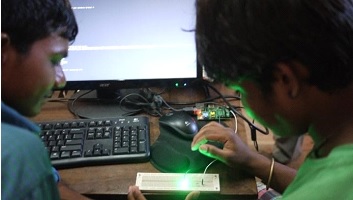 Karigarshala students mastering hardware control of an LED via the Raspberry Pi GPIO Students chose to spend their evenings revisiting what they had learned during the day, and by the end of the course all the students could write programs to draw shapes, create digital documents, connect electronic circuits, and control components such as LEDs using the Raspberry Pi. 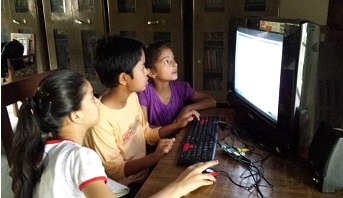 Chamoli students practise on their own using a TV as a monitor The second workshop welcomed six- to twelve-year-old pupils of the Langasu Primary School in the remote Chamoli district, Uttarakhand, along with three of their teachers. This younger group of students followed a programme with more focus on activities featuring immediate feedback — for example, Sonic Pi for live-coding music — alongside programming and electronics tasks. As they learned, students soon began teaching other students.    In an Ideas Competition held at the end of the workshop, entries reflected students’ engagement with the Raspberry Pi as a device with which to build solutions: an inverter system to deal with frequent power outages, a weather station that gives warnings, a robot to assist with menial chores. The Cambridge team’s “Frugal Engineering” approach, delivering computing education without the need for elaborate infrastructure, proved very successful in both schools. Hunnarshala Foundation has decided to integrate the Raspberry Pi into its vocational training curriculum, while students at Langasu Primary School will not only carry on learning with Raspberry Pis at school but will be able to borrow self-contained Raspberry Pi Loan Kits to use at home. The Cambridge team remains in touch with the schools and continues to provide off-site support. September 2014 and February 2015 will see the team build on this successful pilot with induction workshops in three new schools, as well as follow-up visits to evaluate the use of Raspberry Pi in past project sites and to provide support and resources for expanding the programmes. |
Marvel Unlimited Access Discounted to .99 cents
| Marvel has discounted their Unlimited subscription program to 99 cents for your first month. Readers will have access to over 13,000 digital comics to read on their smartphone, tablet or PC. Unlimited is a Marvel exclusive and was designed to give the comic company more flexibility in their content distribution. Originally, it was a simple Netflix for comics proposition, pay a monthly rate and read all the comics you want. In the last few months they have adopted AR, motion comics and even comics with their own soundtracks. Marvel Unlimited boasts a fairly large catalog of content and new issues are added weekly. It is important to note that most comics have a six month hold, before they can be brought over to Unlimited. So, its not a service to read the newest stuff, but catch up on the stuff you might have missed over the years. The .99 deal is going live when the Comic Con in San Diego starts. It is a limited time offer, so its worth checking out. Marvel Unlimited Access Discounted to .99 cents is a post from: Good e-Reader |

Wednesday, July 23, 2014
The Man Booker Prize Longlist Announced
| The Man Booker Prize for literature is one of the most prestigious awards in publishing and very often the winners go on to critical success. Any author can be considered, as long as their work is in English and published in the UK. Today, the longlist of the class of 2014 have been unveiled, and gives us an indication on some of the most essential reads of the year. The 13 books themselves are selected by six judges chaired by philosopher Anthony Grayling. They selected four books by Americans, six Britons, two Irish writers and one Australian. One of the most interesting books on the list was The Wake by Paul Kingsnorth. The premise of The Wake is a historical novel set in 1066 and written in what the author calls "shadow tongue", a mix of modern and Old English. It follows a band of English resistance fighters battling the invaders in the decade following the Norman Conquest. The Wake has a very compelling premise, but what it took to get it published was Man Booker first. Paul took to a new literary service called UNBOUND, which allows authors to pitch their books to the crowd and people can kick in in sums of £5 to £300. Think of it as the Kickstarter of book publishing. The author raised £14,000, and Unbound markets, distributes and handles the book being in your local store, taking a 50/50 cut with the author. In its three years, Unbound has successfully funded 65 books and 40 of those have so far been published. The biggest hit to date has been Letters of Note, a UK best-seller. To Rise Again at a Decent Hour, Joshua Ferris (Viking) The Man Booker, which is awarded to the best novel of the year in the opinion of the judges, is worth £50,000 to the winner. Previous winners include Hilary Mantel for Wolf Hall and its sequel Bring up the Bodies, and two novels where sales have topped two million copies each, Schindler's Ark by Thomas Keneally and Life of Pi by Yann Martel. The judges will meet again to reduce their longlist to a shortlist of six titles which will be announced on Tuesday 9th September. The winning novel will be revealed on the BBC television's Ten O'Clock News direct from a black-tie dinner in London's Guildhall on October 14.
The Man Booker Prize Longlist Announced is a post from: Good e-Reader |

Bublish Secures New Round of Investment Funding
|
That’s where sites like Bublish come in, bringing with them the opportunities for authors and readers to connect over like content and common interests in reading material. But more than just a place for discussion to happen, Bublish is also building author tools, like the ability to build an email list for targeted announcements and the chance to offer pre-orders. Bublish, who’s known for its targeted social interaction in which authors and readers connect through book “bubbles,” recently announced it had secured a $300,000 investment in its latest round of private funding, which will allow the company to expand its current features while exploring new capabilities that put control in the authors’ hands. According to the company, this funding round will be earmarked for projects that include “developing a suite of powerful creation and book promotion tools for publishers, additional social media integrations and book distribution services, expanding marketing capabilities and reach, and increasing business development partnerships with key publishers and industry influencers.” "This investment is a huge endorsement of the Bublish platform," said Kathy Meis, Bublish Bublish has operated under its concept of “authorpreneurship,” meaning their focus is to empower authors with the equipment to not only be writers, but to be businessmen in charge of their own products as well. Bublish Secures New Round of Investment Funding is a post from: Good e-Reader |

Comixology Offers Publishers a DRM-Free Digital Comic Strategy
| When you pay for comics via Comixology there actually is no ownership. In effect, you are merely paying a licensing agreement to read the comics on your computer, tablet or ereader. The comics are not stored locally, but instead need internet access to download from the server and read them on their official apps. This might change, as Comixology is rumored to be talking with publishers to incorporate DRM-Free comics into their ecosystem. The clear path of ownership is a big deal with digital comic book fans. Image Comics was one company that went completely DRM-Free and has been a big hit. Ownership of the comic you purchased is very real and tangible, giving readers the ability to back them up locally or use another app to read them on. When Amazon purchased Comixology earlier in the year, the mandate was to make it the most dominant distribution platform in the world. This has been somewhat hampered with in-app purchases being removed from their iOS app and Android app changed from using Google, to Comixologies own e-commerce solution. Madefire is quickly gaining traction with their free motion comics and even Image Comics have created their own distribution system. In order to get more publishers into the fold, Comixology is said to be shopping around the DRM-Free solution to companies wanting to opt into it. Image would obviously be on board, although DC and Marvel would be likely holdouts. The intention is to appeal to publishers who either don’t deal with DRM, or want to abandon it altogether. The San Diego Comic Con is transpiring really soon, and likely more news will service as Comixology has meetings with the whose who of the comics industry. Comixology Offers Publishers a DRM-Free Digital Comic Strategy is a post from: Good e-Reader |

Apple iPad Dominates North America
| The complete line of Apple iPads are totally dominating North America. It is said that they control %78 of the total market and everyone elses market share is fairly negligible. Chitika Insights published its latest figures on the tablet market in Canada and the United States. The firm basically tracks internet traffic from tablets to gauge what devices are the most popular for mobile web browsing. The report also notes that the Amazon Kindle Fire, has an abysmal one tenth the share of iPad, has moved into second place ahead of Samsung and Google, both of whom are selling ‘pure Android’ tablets. Apple’s iPad share is only down slightly from peak figures from last year, despite relentless discounting by competitors and frequent promotions that give tablets away. Amazon frequently mentions their monthly payment program, where customers can pay off their device a few dollars at a time, in monthly installments. IBM and Apple recently reached an agreement to co-develop a series of next generation business apps. This should appeal more to the corporate crowd and should further cement Apples market position. Apple iPad Dominates North America is a post from: Good e-Reader |

REVIEW: Liberio eBook Publication Platform
|
Unfortunately, the reality was a little less exciting. Heading over to liber.io only a little while ago, the very first issue was that Mozilla freaked out about letting me use the site. Two different warning screens came up telling me that Mozilla couldn’t verify the security of the site, and even after telling Mozilla, “It’s okay, I got this,” it was slow and iffy-looking. I logged in with my Google+ account and established a new password, and I appreciated the fact that Liberio pointed out this new password would in no way affect my Google+ password. After giving Liberio permission to access my contacts list, my email, my DNA sample, and my second grade report card, I was in. Unfortunately, clicking on the only thing that looked like an “Add new file” option didn’t do anything for the first five minutes or so. I finally refreshed the screen twice and it came to life. The interface is very intuitive, I must say, but it’s not very functional. By clicking on the very large icon that resembles a piece of paper with a plus sign in it, I was finally given a box that let me choose a file from my Google Drive account or directly uploads from my computer. I chose the upload option, selected a manuscript I’ve been playing around with, and waited. Then complete code filled the box on the screen. Instead of seeing my ebook, absolute gibberish took over. Unfortunately, despite the presence of a trash folder, I can’t see any way to remove the file I uploaded. I right-clicked, I dragged, I sacrificed a small woodland creature…nothing. As an author who now has an unpublished manuscript floating around the internet with no discernible way to remove it, I’m more than a little put out right now. Now some of you may be chuckling to yourselves and shaking your head at my own ebook incompetence, and I welcome your laughter. It’s quite obvious that either Liberio or I didn’t do something right. Given that Liberio just moved out of private beta per TechCrunch’s announcement, there are kinks that are possibly still being worked out, but if my own misunderstanding of the system was at fault, then I have to say it’s not as intuitive as I thought. My final assessment is that it will be a powerful tool when it works correctly, and anything that gives authors even better tools is fantastic. I also see tremendous potential for the educational arena, both higher ed and the K12 sectors, as teachers could easily create ebooks of content for their students. And with more and more schools instituting Bring Your Own Device initiatives, ereading is gaining a lot of traction in public schools, meaning teachers can incorporate a lot of original content in the process. Overall, when it works perfectly, this could be something of a game changer. REVIEW: Liberio eBook Publication Platform is a post from: Good e-Reader |

YRS Festival of Code 2014 – around the UK and at Pi Towers
| Young Rewired State is a network of coders around the world. Every year an event is held in the UK to give young people the opportunity to collaborative while working on a project to make something interesting with open data, and to learn skills while exposed to new technologies. The Festival of Code is a week where volunteer-led centres around the country play host to local kids (18 and under) who work in teams, guided by mentors from industry, to create a software application, a web app, a game, a phone app or even a hardware hack that utilises an open data set to provide a solution to a real world problem. It takes place next week: 28 July – 3 August 2014. Participants spend most of the week at their local centre where they’re introduced to each other and to the mentors, they’re shown some data sets they have available, they get in to teams and start working on their project. Throughout the week they are introduced to new technologies and given short talks from mentors and other volunteers to help them find the right tech to solve their problems. On Friday all centres travel to Plymouth for the weekend where they present their projects. Last year the overall winners of the Festival of Code were Tom Hartley and Louis Brent-Carpenter, whose hack was a service to provide navigational and other information to cyclists using a series of handlebar-mounted LEDs – powered by a Raspberry Pi – known as PiCycle. Alongside Best in show there are other categories: Best example of code, Best example of design, Code a better country, and the Should exist award. I’d just like to point out that the winners of last year’s Best example of code were mentored by me in Manchester: contag.io. Here’s a video showing my centre’s experience:
If you’re 18 or under and want to participate, sign up at festivalofco.de now. We’re running a centre at Pi Towers in Cambridge – so if you’re local to us you’ll be assigned to our centre and you’ll be lucky enough to spend a week at our offices! If you’re over 18 (even quite a lot over 18) you can sign up as a mentor - centres can always use an extra pair of hands, and you’ll have a great time! Oh, and Stephen Fry is a fan: There are also YRS events in Berlin, New York City, Singapore and elsewhere! |


Win a Sony PRS-350 with Good e-Reader
| Welcome back to another Good e-Reader exclusive contest. Today we are giving away an e-reader we just found in our review labs, the Sony PRS-350. The Sony PRS-350 and 650 were the most popular Sony e-readers the company ever produced. When they were first released on August 2010, they couldn’t keep them in stock on the retail level, due to ravenous demand. I really liked the five inch display because it made it really pocket friendly. The resolution is 800×600 and features a touchscreen to flip the pages of your favorite book. There is no WIFI built into it, so you will have to load in your own PDF or EPUB books. The 350 is in fairly great condition, as it was just used for the purposes of unboxing, reviewing and comparing against other readers on the market. In order to enter, you merely have to subscribe and like our YouTube channel and comment on the video, letting us know you have done all of the above.
Win a Sony PRS-350 with Good e-Reader is a post from: Good e-Reader |

Companies and Users Flocking Back to Blackberry
| Blackberry is betting big on their new line of smartphones, headlined by the Passport. It bears a resemblance to the Bold, but with a larger screen and a more intuitive keyboard. The Waterloo company is also winning back corporate clients who are disenchanted with the entire concept of bring your own device. One of the big concerns over Blackberry and the primary reason many corporations have switched away was due to the app ecosystem. Many of the top apps like SalesForce and Teamviewer do not have native apps and these are essential to doing business. In order to win back customers Blackberry signed a new agreement with Amazon to bundle their phones with the Amazon Appstore, as the primary destination to download content. This will open up the availability of a wider selection of apps and make it easier for your average user to install what they want, without having to sideload anything. At a well-known investment firm in New York City, something strange is happening: Mobile app performance issues and privacy concerns have sparked a Bring Your Own Device (BYOD) revolt, and now many employees are asking for their corporate BlackBerry back. “It’s a nightmare,” says an IT executive speaking on condition of anonymity. Battery draining, stress on the corporate servers from many different devices are hindering app updates and providing security. “Things like this drove a wedge between IT and the users,” says the IT executive. “We became Big Brother. Everyone was convinced that we were doing this because we wanted to see what the hell they’re doing. In reality, it’s all about protecting the data.” There is a movement now to step away from Android, iOS and Windows and embrace Blackberry once more. BlackBerry’s new BES10 and soon to be BES12 really takes care of many issues I.T departments are having now. Blackberry Balance helps segregate the work and personal life and new firmware updates will make them more viable. Companies and Users Flocking Back to Blackberry is a post from: Good e-Reader |

Tuesday, July 22, 2014
Amazon Unveils PDF Preview Pane on New Paperwhite Update
| Amazon has just released a new firmware update for the second generation Kindle Paperwhite. One of the big enhancements is for the PDF experience and now users will see a small preview pane on the top lefthand corner. This helps orient you when you are pinching and zooming, to insure you know were you are in the document. When you buy physical books from Amazon, you normally have to wait a few days for it to be shipped out. Now, whenever you purchase a book, the sample eBook version will be automatically added to your library, so you can read the first few chapters. Finally, Amazon has unveiled cross platform syncing on the last page read. This has been on their Android and iOS apps for sometime, but is now available additionally on the Paperwhite 2. Amazon Unveils PDF Preview Pane on New Paperwhite Update is a post from: Good e-Reader |

Art Showcase: Escape III
| Hey all! It’s Rachel again. I have another amazing Art Showcase for you. This time Neil Mendoza explains how he and Anthony Goh brought these animated bird sculptures to life with the help of a Raspberry Pi, some Arduinos and lots of old mobile phone parts. I really love this one XD – read right to the bottom if you want to see the birds in action. Over to Neil…
Escape III is on display at Digital Revolution until 14th September at the Barbican in London – I’m so excited, I’m going next week! If you can’t make it, you can see the birds here: |


