| Findaway World made waves a few weeks ago about their new NERD e-Reader that was embraced by the US Navy. The premise of this new device is a severely locked down reader that ships with a full library of books and has no WIFI internet connection and no way to copy the books. You can think of it as a dumb terminal that displays data only. Findaway fresh from the massive media blitz campaign is releasing the NERD to schools, companies and government. The new e-Reader is called Lock and it will come bundled with 100 eBooks selected by the companies wanting to deploy them. It has no USB port, no internet access and is purely designed for reading content. Businesses can use Lock to curate and safely house proprietary information and documents. Lock can also be used by schools and public libraries interested in offering a mobile, manipulation-free, digital content hub. Lock's preloaded nature and "black box" design eliminates potential misuse and ensures that only approved digital content will be accessible. Lock's portability also allows easy sharing and distribution, making it the ideal choice for multi-user lending environments, whether in education, government or enterprise. Lock customers can choose from thousands of eBook and audiobook titles spanning best-sellers to classics to professional development and Common Core. Findaway has deep relationships with the biggest publishers in the world to secure requested titles, including Simon & Schuster, Hachette, Penguin Random House, and Harpercollins. Having an e-reader with the barebones of specs, months of battery life and a wide array of eBooks and audiobooks is a compelling value proposition. New Locked Down e-Reader Appeals to Schools and Businesses is a post from: Good e-Reader |
Tuesday, May 27, 2014
New Locked Down e-Reader Appeals to Schools and Businesses


Samsung Galaxy S5
|
The display is 5.1 inches, making this one of the larger phones out there not quite big enough to be called a "phablet" (ugh, I hate that portmanteau). Under the hood fires a 2.5 GHz Quad core processor, 2 GB of memory, 16 or 32 GB of storage for apps or OverDrive titles (to use with the OverDrive app, of course), and it runs Android 4.4.2, affectionately dubbed Kitkat. This makes for a responsive device, able to open apps quickly and prevent lag. From the general specs, it's a very nice smart phone. What makes it even nicer are some of the additional bells and whistles like the fingerprint scanner, HD camera on the back, Kids Mode, and the Ultra Power Saving Mode. The only things I'm not fully sold on are the My Magazine section of the home screen (it seems like a pale imitation of Google's "Google Now" function), and the updated Touchwiz launcher, which seems to conceal all of the wonder of the "vanilla" version of Android with cutesy icons and bright colors. My final verdict here is that if I had the chance to do it again, I'd probably have a hard time deciding between my Droid Maxx and the Galaxy S5. The Galaxy S5 is a little pocket-sized beast and boasts about as much power as any other high-end smart phone. I'd just stick a different launcher on it to get around Touchwiz. I'd say this phone measures up.  |

WattPad Expands Exterior Publishing Ambitions
| WattPad has started to transcend their own digital publishing platform and has started to distribute their books through numerous exterior sources. The Canadian based company took two of their most popular titles in early May and made them available through Amazon, Kobo and iBooks. Today, WattPad is taking one of their most popular Series and distributing them in print and digitally though Gallery Press. Gallery Books will publish the Wattpad phenomenon After as a New Adult series, in both eBook and print editions. Originally serialized on Wattpad, the world's largest community of readers and writers, the first book in the After series is scheduled to publish in Fall 2014; the second and third books will be published in early 2015. The three part After series has been read almost 800 million times since it started to be serialized on WattPad. As the book is being written, chapter by chapter, readers weigh in on the plot, characters and what direction they want the book to take. Authors often take the feedback to better themselves as an author and a good book will have a copious amount of reads due to people continuing to hunt around for an update. After, written by Anna Todd, is one of the most talked about stories on the internet and has become an online phenomenon with more than 800 million reads of the three-part Wattpad series. Written serially with daily updates to meet reader demand, After became Wattpad's most shared story of 2013. In addition to the massive popularity of After on Wattpad, the story regularly trends on other social networks, including Twitter, YouTube, and Instagram. The success also caught the attention of United Talent Agency, which is now handling the film and television representation of After. The original fanfiction will remain on Wattpad. WattPad Expands Exterior Publishing Ambitions is a post from: Good e-Reader |

Comixology Giving Away 20 Free Digital Comics
| Comixology has unveiled their summer reading program where they are giving away 20 assorted comics and graphic novels away for free. All you have to do is visit their Tumblr account to download your daily free comics. You only have 24 hours to grab it, so check back often. You obviously need a Comixology account and to download the free content you are basically “buying” it. Since its free, you don’t need to spend any money, but you are going through the shopping card system. Comixology Giving Away 20 Free Digital Comics is a post from: Good e-Reader |

Onyx Boox T76SML Nefertiti Has 6.8″ E Ink Screen and Android 4.0
| A new ebook reader from Onyx is now available on the Russian market, the Onyx Boox T76SML Nefertiti. The name may be a bit confusing (what does 76 have to do with anything) but the device has some interesting specs, no doubt. The T76SML Nefertiti appears to be a trimmed-down version of the newly-revealed Onyx […] |
New Author Earnings Report Examines Revenue of Startup Authors
|
A new report has been released that takes a look at how long-standing authors’ works are faring against debut authors’ titles, and the information it presents is somewhat staggering. “We began looking more deeply at authors from two different camps: those who debuted prior to the explosion of self-publishing and those who debuted after. Authors getting their start today will of course be joining the latter camp. And we believe those authors will want to know the following:
The most recent report compares what authors need to know about ebook sales in the traditional industry, to those sales among self-published authors. While print sales are an important revenue source for publishers and traditional authors, indie authors and debut traditional authors are showing an even bigger lag behind their ebook sales in terms of income. “Total revenue from e-books is already 29% at Simon & Schuster and 34% of overall trade revenue for Hachette (40% in the UK for Hachette), making 32% a fair industry-wide estimate for the portion of trade-publishing revenue from e-books. But what does that 32% really mean for the author with a manuscript in-hand and a decision to make? It's important for authors to understand that publisher earnings should not factor into their decision on how to publish. What we should consider foremost is how much of our earnings have gone digital. This is a difficult question to answer, but we believe we're in a position to give a rough estimate.” Decision making for authors who are interested in either route to publication is a daunting concept, especially since knowing that a traditional deal comes with the prestige factor of being signed, but that there are absolutely no guarantees as to how a book will fare in a crowded marketplace. Add to that the fact that even traditional publishers don’t spend nearly the advertising budget on debut authors that they put into their established breadwinners, and the decision becomes even harder. “If the Big 5 hadn't signed a new author since 2009, and simply released new works from their long-established authors, they would still be making 63% of the e-book revenue that they are making today. Ownership of backlist and long-tenured authors is quite clearly big publishing's most powerful commodity. This goes a long way toward explaining ever more restrictive reversion and non-compete clauses in publishing contracts. It also lends credence to rumors that some top-name authors are already receiving ebook royalties higher than 25% of net. Publishers rely heavily on these established authors and may be willing to violate their own most favored nation clauses in an attempt to retain them.” The full details of the report and a breakdown of all of the analyses can be found HERE.
New Author Earnings Report Examines Revenue of Startup Authors is a post from: Good e-Reader |

Aldiko Acquired by FeedBooks, Aldiko iPad and iPhone Apps on the Way
| Today the folks at Feedbooks made an official announcement, declaring the acquisition of Aldiko, one of the leading ePub reading apps for Android tablets and phones. This is a natural fit, of course, since Feedbooks has a catalog of over 800,000 ePub ebooks, both free and paid, and have been in the ebook industry since […] |
Groups Advocate for Fair-Use Access to Orphaned Works
|
Orphan works are those whose rights holders cannot be located, meaning the works are still restricted for use by academic institutions, authors, and even the public because licensing is impossible to secure. Current copyright law hasn’t met the needs of the public on these works, and essentially assumes that the rights holders–if they were to be located–would not allow their works to be used. “As we explain, the best way to facilitate that access is to make sure the public can rely on a robust fair use doctrine. The Copyright Office can help by issuing a report that explains the many reasons why uses of orphan works are likely to be fair ones. That solution is far preferable to some of the other proposals, such as the collective licensing option that has met widespread opposition,” explained the EFF on this issue. After a productive roundtable discussion on the issue, EFF and Public Knowledge drafted a five-page breakdown of the issue and their suggestions for a resolution that does not involve simply extending some version of collective licensing. The document, available HERE, outlines not only the benefits to establishing copyright guidelines for these estimated millions of writings, recordings, and photographs whose rights holders are currently unlocated, but also points out some faulty assumptions that current mandate the use of these works. This document was created at the request of the US Copyright Office, who has asked for more information and public comments on the issue before working to establish protocols for these situations.
Groups Advocate for Fair-Use Access to Orphaned Works is a post from: Good e-Reader |

Smashwords Wins Inaugural Self-Publishing Service Award from ALLi
|
"When doing this job, it can sometimes seem as if the entire industry is rife with charlatans, and so it's nice to find companies like Smashwords whose goals are in total sync with authors. Their philosophy is simple and their motivation is clear. In order for them to make money, authors have to make money. They don't charge for anything except selling your book… What they do…what they are driven by…is the same thing that drives you, as an author. Their goal is to deliver the best product and negotiate the most favorable deal for authors," explained one of Alli’s industry watchdogs, Giacomo Giammatteo, in a blog post. Orna Ross, Alli’s founder, added, “I'd like to personally congratulate Mark Coker and the Smashwords team and I look forward to presenting this award to Mark at Book Expo America next week.This award is an acknowledgement of excellent service to writers and will be given annually, its key criterion being that the service puts the needs of authors and readers first, unfortunately a missing component for too many services in the sector.” Smashwords has arguably been one of the largest driving forces in the current state of indie authorship. By establishing distribution deals with not only all of the major ebook retailers and a host of often overlooked, lesser known retail platforms, Smashwords has also inked distribution deals with Scrib, Oyster, and OverDrive, giving indie authors the chance to put their works in subscription-based and public library lending opportunities. Mark Coker, CEO and founder of Smashwords, will be presented with this award on Friday, May 30th, at the BookExpo Author Hub in New York.
Smashwords Wins Inaugural Self-Publishing Service Award from ALLi is a post from: Good e-Reader |

BookCon Aims to Connect Readers Directly with Publishers
 Photo courtesy of screencrush.com The publishing industry has put forth a focused effort in the last few years to try to engage directly with readers in order to not have to rely on major retailers to sell their content. So far, those efforts have lagged, largely due to the effort already involved in book discovery. Finding great new reads is already a chore for consumers, but efforts such as having publisher websites to sell their content directly have failed because readers don’t automatically connect the publisher with the book. To be fair, readers often struggle to come up with the exact title or author name of a new book generating buzz, so expecting them to remember the publisher as well might be asking a lot. But at this year’s BookExpo America event, the largest book industry event in North America, publishers will be working to engage directly with their target audiences through an incorporated one-day event, BookCon. Logistically handled by the same company that hosts ComicCons around the country, BookCon is an attempt to generate branded interest in publishers at the consumer level. “Taking place in New York City—the publishing and cultural capital of the world—BookCon is the event where storytelling and pop culture collide. Consumers and brands will experience the origin of the story in all its forms by interacting with the authors, publishers, celebrities and creators of content that influence everything we read, hear and see. BookCon is an immersive experience that features interactive, forward thinking content including Q+A's with the hottest talent, autographing sessions, storytelling podcasts, special screenings, literary quiz shows and so much more. BookCon is the ultimate celebration of books, where your favorite stories come to life.” Billing itself as this collision of books and fandom means Javits Center is already in preparation for an interesting and lively day. Coinciding with the one-day large-scale self-publishing event uPublishU, the venue is expected to be overrun with people who simply love books. This love affair with reading has led to the event organizers creating a website specifically for BookCon, found HERE, but which includes a very interesting list of forbidden items: “The following items are forbidden at BookCon: Functional firearms (including air soft guns, BB guns, cap guns, paintball guns and pellet guns) With a list like that, expect it to be a real party. Hopefully, events like this will serve their intended purpose of helping readers feel more connected to the developers of their favorite content. BookCon Aims to Connect Readers Directly with Publishers is a post from: Good e-Reader |
Monday, May 26, 2014
Will the Hachette/Amazon Battle Encourage Authors to Self-Publish?
| Amazon and Hachette are currently doing battle in establishing a new publishing contract. This is preventing pre-orders from upcoming titles from being processed and hundreds of current books have five week delivery dates. Authors rely on digital distribution from Amazon to garner book sales and sometimes their livelihood depends on it. Self-publishers do not have to normally worry about this sort of drama, whether they are printing physical copies of their books via Createspace or selling their digital book. Will the Hachette and Amazon dispute encourage established authors to self-publish? Traditionally published authors are paying attention to the pricing battle between Amazon and Hachette. Hachette gets paid a set discount on the digital MSRP, just like bookstores pay a set discount for physical books. This is why Hachette sets the MSRP for eBooks at high prices, such as $14.99. If Amazon is getting a 40% wholesale discount, their wholesale cost for that e-book is $8.99. They then sell the e-book to the customer for $9.99 and making a dollar, in most cases they are selling them a loss. The problem is, Amazon wants lower MSRP of the books, which means the author and publisher will make less money. This will make a world of difference because Hachette garners 25% of their entire revenue stream from eBooks and Amazon accounts for 75% of their total digital distribution. The James Pattersons of the world rely on a major publisher to have their books translated in a myriad of languages and flood the bookstores with each new title. The average author who might write one or two books a year is not as dependant on this mechanism. In many cases, if you are a first time author or don’t have the bankable established name the publishers often mandate authors promote the book themselves. Twitter, Facebook, Pinterest, YouTube Book Trailers and Blogs are often the avenues to expand the fanbase. So, emerging authors and established players will find themselves having to self-promote, but not make the high profits indies are getting. Agents, editors and writers are losing confidence in Hachette and the publishishing industry in general. If Amazon manages to strongarm the publisher, it will create a domino effect of changing the established status quo of eBook pricing and fully abolish the agency model for good. Everyone will make less money, except Amazon. Will authors think twice about signing a publishing contract with Hachette and elect to self-publish? The landscape of the entire industry is changing, Sony and Samsung are getting out of the eBook selling game and Barnes and Noble is losing billions. Amazon and Kobo are the only ones left, and Amazon has the dominant marketshare by a longshot. If anything, it might not be a foregone conclusion anymore that the only way to make a viable living is getting signed by a major publisher. Will the Hachette/Amazon Battle Encourage Authors to Self-Publish? is a post from: Good e-Reader |

Online Guide Helps You Quit Your iPhone and Switch to Android
|
The problem stems from how Apple activates iMessage using your telephone number –but really doesn’t offer any way to deactivate your account (while making it seem like turning off iMessage on your device is actually doing much of anything). Of course, the problem goes a little deeper… but the result is that your friends can’t always reach you by text message anymore (and they don’t even know their messages aren’t being received by way of an error). If nothing else, this guide gives a list of the things you should do if and when you decide to move from your iPhone to an Android device. Online Guide Helps You Quit Your iPhone and Switch to Android is a post from: Good e-Reader |

The Evolution of the Kobo e-Reader – In Pictures
| Kobo has been making e-readers since 2010 and diversified into tablets in 2011. Their earliest e-ink devices were fairly basic and through dedication to reading their latest models are very solid. Today, we look at the evolution of the Kobo brand and how their e-Readers have changed overtime.
The first Kobo e-Reader became available in Canada and the US on May 1 2010. It featured a 6 inch with a resolution of 600 x 800 pixels. This translates to a display pixel density of 170 (dpi), which is quite impressive at the time. It did not have WIFI or a built in store. Customers were encouraged to load in their own books manually, which hampered its ability to compete against Amazon. The pricing strategy of the original Kobo, at USD$ 149, was to rival the Amazon Kindle, which was USD$ 110 more expensive. However, in June 2010, just after the Kobo was released, Amazon dropped the price of the Kindle to USD$189. Chapters Indigo was an early investor of Kobo, contributing close to $150 million to assist them in developing e-readers and an online bookstore.
The Kobo WIFI edition was released on October 15th 2010. This was only a few months after the original Kobo e-Reader launched and the company had to bow to customer demands to buy eBooks right on the device. It featured a slightly improved processor and support for a 32 GB SD Card. This marked the first time Kobo experimented with different colors, offering a white, black and lilac version with a quilted cover on the back. The e-reader visually was a carbon copy of their first e-reader. It had a rather flimsy D-Pad that was used to navigate settings menus. It also had physical buttons all over the unit. The addition of wireless internet access allowed people to buy books from Kobo directly, which simplified the process. When I reviewed this unit the week it came out I summarized “The one drawback of this device, is that it feels sluggish and unresponsive when you are navigating all of the menus and eBook store. You might click down, and it won't refresh for over 8 seconds. This makes it so you end up double clicking, then your e-reader will jump menu to menu or screen to screen. This is one of the most frustrating aspects of both iterations of the Kobo reader. For us, its a deal breaker.”
Aside from the touchscreen which was the major selling point of the Touch, a number of software improvements were quite evident. Kobo really marketed their new social media platform called Reading life. It allowed you to share book passages via Twitter and Facebook. It also gives you statistics of your reading patterns, how much you read, how often, and how many books you have read. There was also a reward system where you earned badges and achievements for reading. When the Touch first came out my summary of the hardware review stated “Kobo hit a homerun with the Kobo Touch due to the quality build design and the robust functionality! I had the original Kobo e-Reader and the Kobo Wireless. This model seriously puts those two to shame! The touchscreen display should be easier for your average user to wrap their heads around, since almost all hand held mobile devices are touch screen. I found the older Kobo models to have flimsy design and the DPAD was awful, not to mention you would hit a key and 12 seconds later the command would go through. I hardly experienced ANY LAG at all when using this e-reader extensively. The Kobo GLO was released in September of 2012. This was the first e-reader that really really hit the mainstream. It surpassed their prior models in responsiveness and design. The big selling point was the illuminated display screen, which borrowed a page of the Nook Simple Touch with Glowlight and the Kindle Paperwhite. The Kobo Glo eliminated all physical buttons and relied in a capacitive touchscreen with a resolution of 1024 x 758.. This marked the first major advancement in resolution, which really made text and PDF files look amazing. It was hampered a bit by the same processor used on the Kobo Touch, a year prior. Kobo also amped up the processor, which raised it to 1 GHZ, over the 800 MHZ of the Touch model. When this first came out, my review summarized “This e-reader feels like a modern device and has solid hardware. The back of the unit has a different quilted pattern than previous models. Advanced users may dig the fact that there is a ton of control over your reading experience and it allows you to load in your own fonts. The Kobo development team is also fairly active on the MobileRead forums and often directly answers questions and employs many people in testing out beta firmware builds. They also use this fiendishly obsessed e-Reader community to farm ideas on future features they might employ in automatic firmware updates.”
The Kobo Mini was originally launched the exact same day as the Kobo Glo at the first major unveiling Kobo produced in Toronto. In 2012 Kobo really stepped up their promotional and marketing campaign as the intention was to be the #2 ereader and eBook company in the world, next to Amazon. The Mini bucked the trend of the standard six inch e-Reader and instead went with a more pocket friendly five inch model. It used e Ink Vizplex technology and had a resolution of of 800×600 pixels. Underneath the hood was a 800 MHZ processor, which was the exact same as the Kobo Touch employed years prior. The intention behind the Mini was to offer a cheap and cheerful device at $99 and was discounted heavily during its lifecycle to $29.99. When the e-reader first came out I mentioned “It will be interesting to see how the market responds to a strongly marketed five inch ereader. For the last four years all of the major players have released six inch or larger e-readers. Other companies have released smaller models, but never saw any traction because of poor retail distribution channels and brand awareness. The Kobo Mini is one of the best bangs for your buck if you are on a budget and still want a fully featured e-reader. The company does a great job in appealing to international customers, something the other major players don't do very well. Most lock you into specific regional variants of their stores and exclude anyone living outside a specific geographical region.” Kobo Aura HDThe Kobo Aura HD was billed as a limited edition e-reader that was released April 25th 2013. It featured a 6.8 inch screen with a tremendous resolution of 1440×1080 with 265 ppi. The front-lite technology also received an elevated boost and put Kobo on par with Kindle in terms of screen technology. The Aura HD was a runaway success and quickly accounted for 25% of Kobos international hardware sales. Readers loved the fact they had almost an extra inch to read their eBooks, magazines, newspapers or PDF content. One of the best aspects of the Aura HD was the responsive main menu. The new screen has three main segments that displays icons for everything you have done in the last 12 processes. This gives you shortcuts to your most commonly accessed features, such as the web-browser, custom shelves, Reading Life, and ebooks. The Sync feature to fetch new content is now on the main screen, too, which is the only element that remains persistent. I actually like the more effective use of screen real estate. Rather than browsing four different sub-menus to access the internet browser, it will appear on your main screen if you have recently used it. When this first came out, I mentioned during my review “When it comes to high resolution displays, customers often gravitate towards full color tablets instead of e-readers. This has been the growing trend in the last few years, and it's completely amazing to see a brand stay loyal and committed to its e-ink line of devices. Simply put, the Kobo Aura HD has the highest resolution out of any six or seven inch tablet or e-reader in the world. If images and clarity of text matter to you, this is a must purchase.” The AURA HD is still currently the flagship e-reader from Kobo and is currently my favorite dedicated e-reader on the market. It taps into an ecosystem of over 3 million eBooks and is relevant in every major country in the world. Simply put, this was the best, most complete product Kobo produced in their entire company history.
In September 2013 Kobo released a six inch iteration of the Kobo Aura. It featured a 6-inch e-ink ClarityScreen display with 1014×758 resolution, 16 level grey scale and a built-in LED front-light. It has 4 GB of storage, weighs 6.1 ounces, has 2 months of battery life, a Freescale i.MX507 1 GHz processor, and a microSD expansion slot. Kobo employed a new PDF rendering engine in the Aura HD and the Aura. It allowed readers to have better navigation on the document by giving a small preview window to help keep you oriented. When the Kobo Aura was released I stated “The Aura is amazing, one of the best e-readers ever released. One of the best features is the capacitive multi-touch display and the ability to really make reading shine. The screen is flush with the bezel and not sunken like every other e-reader currently on the market. The internet and PDF experience is the best you will get on a six inch device, trouncing Sony.” The Evolution of the Kobo e-Reader – In Pictures is a post from: Good e-Reader |


Use Daily by Buffer to Discover and Share New Social Media Content
|
The concept is simple: every day you are presented with a selection of articles and posts that the app feels you would enjoy. If you like them, swipe right… if you aren’t so keen, swipe left. After you go through all of your picks, review your Buffer queue and share them out across your connected social media accounts. Daily by Buffer currently offers five to sex stories each day and a lot of the content is being reused from the main Buffer app, but in time this offering should improve. So far the app is only available for iOS devices –but with any lucky there will be an Android version available soon. Use Daily by Buffer to Discover and Share New Social Media Content is a post from: Good e-Reader |

Kindle Comparison Table Updated
| This is a quick note to mention that I’ve finally updated the Kindle Comparison Table to reflect the current status of available Kindles (in the US, at least). I should have updated the page a long time ago, but it’s always hard to keep up with updating older pages, so I guess it’s better late […] |
Samsung Files Suite of Patents for Next Generation of Android Wear
|
In the latest round of patent filings, Samsung suggests you could “move your wrist to call up different features, or tap on the screen to interact with remote controls for devices around your house” or that the device may ” display the time when at rest inactive on your wrist, and it would be laden with sensors, including an optical one for monitoring pulse.” Even more amazing is the idea that a smartwatch could “recognize barcodes, images, objects and do optical character recognition (plus translation) for printed text.” Of course, Samsung ups the ridiculous ante when they also suggest the circular face is their invention –but it is hard to blame them when you consider the lawsuits Apple has filed against them for ideas based on shapes. Nonetheless, all of these patent applications mean the wearable Android market is alive, evolving and still very exciting for those of us staying tuned. Samsung Files Suite of Patents for Next Generation of Android Wear is a post from: Good e-Reader |

Onyx Boox i86 Runs Android 4.0 and Has 8-inch 1600 x 1200 E Ink Screen
| Onyx international has some ambitious plans for 2014. They just released the Boox i63ML Newton with a 6-inch E Ink Carta display and Android 2.3. Onyx also demoed the Boox T68 and M96 ebook readers at the Hong Kong Electronics Fair earlier this month—they both run Android 4.0 and have 6.8-inch and 9.7-inch screen respectively. […] |
Important Holiday Reads in Remembrance
|
As more and more individuals have become aware of the need to keep the holiday focused on its original mission, a variety of real-time and virtual observance events have been established. For example, in every local time zone across the US, three pm has been declared a moment of observance. Social media traffic and hashtags have been devoted to remembering soldiers from every war who lost their lives in battle, while many other members of the online community are calling for better treatment and government benefits for those soldiers who were willing to sacrifice but ultimately are our proud veterans. Below is a curated list of great books to help readers spend some time today remembering what others have sacrificed, whether at home or abroad. We can argue the merits, criticisms, or political ramifications of any US conflict some other day, but these books will shed light on what US citizens endured for the cause of freedom. Abandoned in Place – Lynn M. O’Shea (POWs in Viet Nam) American Trophies – Mark Sauter and John Zimmerlee (POWs in Korea) No Easy Day – Mark Owen and Kevin Maurer (SEAL Team Mission) A Higher Call – Adam Makos and Larry Alexander (WWII Air Battle) Sergeant Rex – Mike Dowling and Damien Lewis (Military Working Dogs)
Important Holiday Reads in Remembrance is a post from: Good e-Reader |

BookExpo Kicks Off This Week with the IDPF Conference
|
This year, the IDPF Digital Book conference has grown into a two-day event and will feature an entirely new track from the Book Industry Study Group, “Making Information Pay.” “The IDPF has partnered with BISG to bring its attendees the highly-acclaimed BISG Making Information Pay conference. Co-located for the first time with IDPF, BISG’s Making Information Pay is an annual half-day conference for senior executives in operations, sales, and marketing, providing trendable information and insights about the best practices driving the success of today’s industry leaders.” With a full line-up of industry experts covering everything from marketing, digital standards, library lending, social media promotion, and more, this event is a catch-all for anyone remotely involved in the book industry. Moreover, this event has in the past been associated with product launches, innovation announcements, and the adoption of standards such as EPUB3, and this year is expected to be no different; one tracked session will even examine the emergence of EDUPUB as a standard for educational publishing and e-learning.Good e-Reader is an official media sponsor of the event and will post updates and live tweets throughout the two-day conference.
BookExpo Kicks Off This Week with the IDPF Conference is a post from: Good e-Reader |

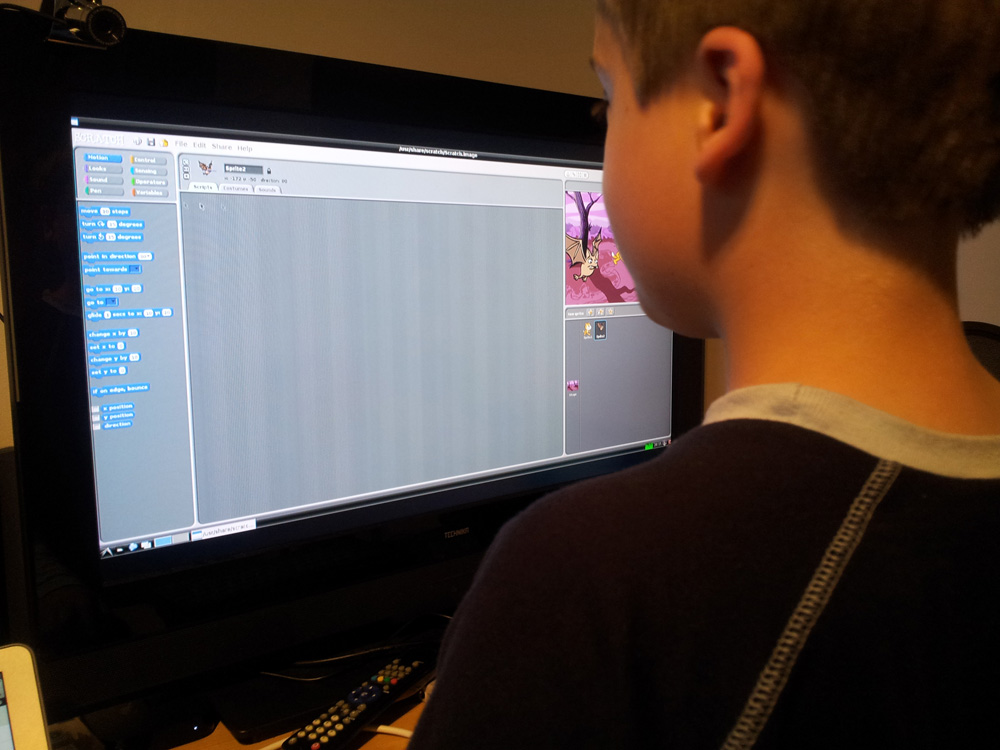
Test Tim’s New Scratch Beta
| Since we wrote about our efforts to port Scratch to modern version of the Squeak VM back in January, Tim Rowledge has been beavering away, fixing the bugs you found and adding in the remaining features. We now have something which we feel is very nearly ready for release, and we’d like your help in shaking out any remaining issues: this will be the version of Scratch that ships with the Raspberry Pi in the next academic year, so it’s critical we find these issues now. We are particularly interested in any internationalisation bugs that may have been introduced, or any incompatibilities with the old version. If you’d like to have a play, you can download the beta here. From the shell, decompress the archive by typing:
and run Scratch by typing:
If you find any bugs please leave a comment under this post – we’ll get right on them. Thank you! |