|
This week, Scholastic announced the launch of two new subscription services for school libraries, both aimed at providing engaging material in a cost-effective and convenient way. First, Scholastic’s existing award-winning Storia ebook platform has been released as the Storia School Edition, which is now available by subscription, allowing schools to purchase a license for access to the catalog of titles for one school year. “A one-year subscription to Storia School Edition grants a school access to a carefully curated library of 2,000 well-known fiction and nonfiction ebooks for Pre-K-Grade 6,” the company stated in a press release. “Titles cover an optimal range of Guided Reading and Lexile Levels for each grade and include recognizable fiction, award-winning literary classics, and engaging nonfiction to meet every student's reading level and interests. Storia School Edition supports concurrent usage within a school, allowing multiple students to access the same titles simultaneously.” And while students and teachers may think of Scholastic’s bestselling fiction titles for kids, especially series like The 39 Clues or the Hunger Games trilogy, the publisher actually has a strong background in delivering nonfiction curricular content. The second new subscription model, Core Clicks, will allow schools to tap into a full catalog of nonfiction material. “Drawing on the vast nonfiction resources of Scholastic News and Weekly Reader, Core Clicks presents leveled informational texts on 18 topics per grade, all designed to provide content area reading in science and social studies while explicitly teaching Common Core Language Arts standards at each grade level. Detailed teaching of 13 key Spotlight Skills through lively starter videos and computer-based informational text analysis provides a complete nonfiction curriculum with a carefully curated collection of informational text for each grade level, K to 5. Core Clicks was developed in consultation with Nell K. Duke, Ed.D., a professor of literacy, language, and culture at the University of Michigan, who worked closely with the editorial team on the program's adherence to best practices in literacy development and in addressing the Common Core State Standards.”
Scholastic Unveils Two Subscription Reading Programs for K12 Libraries is a post from: Good e-Reader |
Wednesday, April 30, 2014
Scholastic Unveils Two Subscription Reading Programs for K12 Libraries


SciFi Genre: Does Hugh Howey Control the Future?
 Image courtesy of birdhouse.org It’s a long-held and possibly undocumented belief that the man who invented the flip phone designed it in such a way as to look like one of the original Star Trek communicators. Accordingly, the Star Trek franchise has actually been responsible for a number of design features–and political changes, if credit be given to its multi-racial and gender equal cast–that currently complement our lives. But since not all science fiction paints as rosy a picture of the utopian future that the Federation offered, should we be concerned that science fiction has a wonderful habit of becoming science fact? In a very telling article by Eileen Gunn for Smithsonian.com, the future apparently could go either way. We could all enjoy the benefits of a peaceful, equality-driven society where self-betterment is the goal and harmonious co-existence is the reality, or we could end up cleaning the cameras outside our communal silos before suffocating on noxious gases. “Because science fiction spans the spectrum from the plausible to the fanciful, its relationship with science has been both nurturing and contentious,” wrote Gunn. “For every author who meticulously examines the latest developments in physics or computing, there are other authors who invent "impossible" technology to serve as a plot device (like Le Guin's faster-than-light communicator, the ansible) or to enable social commentary, the way H. G. Wells uses his time machine to take the reader to the far future to witness the calamitous destiny of the human race.” According to Gunn, science fiction is not only a fun genre, but actually a pathway to innovation by inspiring readers to think, “What if?” While society wrestles with a good-versus-bad, Star Trek-versus-Hunger Games existence for ourselves in the future, these concepts and ideas put out today can help readers–from top innovators to every day citizen voters–develop the future they want to see.
SciFi Genre: Does Hugh Howey Control the Future? is a post from: Good e-Reader |
Kobo Giving Away Free Kids eBooks with Happy Meals in the UK
| Kobo announced today a new partnership with McDonald’s fast-food restaurants in the UK to give away free children’s ebooks with the purchase of every happy meal. I hope they are still giving out toys because can you imagine the look on a little kid’s face when he/she pulls out a coupon for an ebook download […] |
YUDUD’s BookSnacking Revamps Bookstore Browsing for eBooks
|
But digital solutions company YUDU has a new feature that hopes to return some of that discovery and interaction to readers, despite the adoption of digital reading. With its new BookSnacking feature, authors and publishers can release portions of their works for readers regardless of device compatibility, share those sections through social media or in conjunction with promotions, and track the metrics of reader involvement with those work samples through YUDU’s integrated analytics. “Ultimately what we want to provide publishers and authors with using BookSnacking is the opportunity to provide readers with sample chapters and other such things that increase their likelihood of purchasing the book, either in a digital or physical format,” explained Nicholas Kleanthous, Marketing Analyst & Webmaster, YUDU Media. “In this sense it can be a complementary marketing tool. Suppose a publisher wants to, in the run up to the release of new book, have an author perform live readings of that book, they can then follow that up with a release of the particular chapter or part he read through social media using BookSnacking.” A number of tools that claim to help authors and publishers increase the effectiveness of their promotions and overcome that continuing book discovery problem actually are simply repeats of other tools. BookSnacking, on the surface, would seem to be a parallel to the option to read a sample chapter on a retailer’s website, but it actually provides more than that. Unlike conventional approaches to sample chapters of ebooks, BookSnacking makes the process of book discovery not only more streamlined for the readers but also more informational for the rights holders. “It differs from existing preview options in that a lot of those aren't necessarily responsive. Our BookSnacking product reacts to the device to render using the best performing reader for that device (either HTML or Flash). As mentioned, it's also completely platform agnostic and provides the opportunity for publishers and authors to gather in-depth analytics on usage, so they can tailor their marketing and PR strategies surrounding certain books and authors accordingly. There's also a range of new more technical features, such as progressive rendering, which means resolution increases with zoom. While this may sound somewhat esoteric to any publisher, it greatly enhances performance and as we both know, in a Netflix/iTunes world, consumers are going to expect similar levels of performance from streaming in text content as well.”
YUDUD’s BookSnacking Revamps Bookstore Browsing for eBooks is a post from: Good e-Reader |

Sous-vide cooking with the Wolfram Language
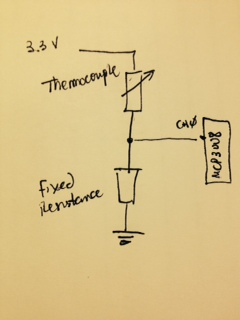
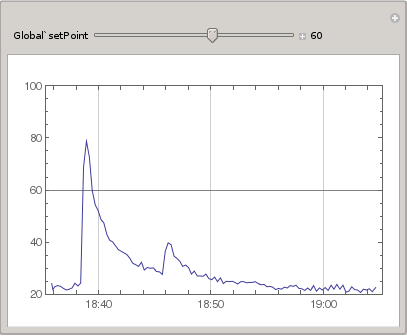
| Here’s another guest post from Allison Taylor at Wolfram Research. We’ve seen sous vide applications before – but we’ve never seen one that uses the Wolfram Language and Mathematica to describe elegant curves while it prepares your dinner. Thanks Allison, and thanks to Diego Zviovich, who came up with this project. Diego Zviovich, another one of our ambitious power-users of Mathematica and the Wolfram Language on the Raspberry Pi, has managed to (affordably) master the science of sous-vide cooking! For those who aren’t familiar, sous vide is a modern cooking practice where the food is first put into airtight bags and then cooked in a water bath at a very precise temperature. The result is perfect, evenly cooked meat or fish, with much greater penetration of flavours from any marinade you might be using. Actual sous-vide cookers cost hundreds (or thousands) of dollars to buy, but with a few sensors, a crock pot, and your Raspberry Pi with Mathematica installed, you can create your very own sous vide at a fraction of the price! What you'll need (along with your Raspberry Pi + Wolfram): The 5V 2-relay control module will be used to control the power to the crock pot. We'll be automating this switch to turn on and off depending on our thermocouple readings, maintaining the appropriate constant temperature that we want. A walk-through for setting up a circuit and connecting the relay from your crock pot to your RPiPi can be found in this handy YouTube tutorial. Once set up, turning the crock pot on and off with the Wolfram Language is very straightforward. To turn it on: DeviceWrite["GPIO",17->1] And to turn it off: DeviceWrite["GPIO",17->0] In order to get the temperature readings using thermocouples, we'll need to set up an analog-to-digital converter—since the GPIO on the RPi does not have analog pins. A wiring diagram for the MCP3008 can be found here. We'll only be using two of the eight analog sensors for our two thermocouples (one for the water bath and one for the food probe). They must be connected to the CH0 and CH1 inputs of the MCP3008 in the following way: Once you've decided at what temperature you want to cook your food, you can conduct a simple experiment to determine the ideal fixed resistance value that you will need to effectively maintain it. Using your thermocouples, a regular thermometer, a voltmeter, and three glasses of water—one iced, one warm, and one hot—take three temperature measurements and three resistance measurements (one from each glass of water) and fit the data to a curve using Mathematica. Using Diego's data as an example: temp = {20.6, 42, 83.3} + 273.15 resistance = {220650., 95800., 26340.} data = Transpose[{Log@resistance, Log@temp}] lm = LinearModelFit[data, x, x] lm[{"RSquared"}] The model above fits very well (R^2=.998), so we can use the curve to find the expected resistance at our desired temperature. For this example, let's say 60 degrees Celsius. invdata = Transpose[{Log@temp, Log@resistance}] Fit[invdata, {1, x}, x] (*74.3895 - 10.9297 x*) f[x_] := 74.38949510675315` - 10.929736543045369` x Exp[f[Log[60 + 273.15]]] (*54344.9*) From these results, using a 56K resistor for the thermocouples will provide the appropriate temperature range we need. To read the temperature values from the thermocouples, we will need to probe the analog inputs from the MCP3008 through the GPIO. We will develop a function to do this, using two libraries — update-rc.d -f gpio defaults after the installation. With these libraries installed, we can now build a function to get the temperature values using MathLink. The two files will be as follows: adc.tm :Begin: adc :Pattern: adc[adc_Integer, clock_Integer, in_Integer, out_Integer, cs_Integer] :Arguments: {adc, clock, in, out, cs} :ArgumentTypes: {Integer, Integer, Integer, Integer, Integer} :ReturnType: Integer :End: adc.c #include #include int adc(int adc, int clock, int in, int out, int cs) { return mcp3008_value(adc, clock, in, out, cs); } int main(int argc, char *argv[]) { return MLMain(argc, argv); } Compile the files by running mcc adc.tm adc.c –o adc And now we can open up the Wolfram Engine or Mathematica and build the sous-vide program! Install["/home/pi/mathematica/adc/adc"]; (*We can now call function adc to read the voltage drop at the thermocouple The voltage reading will be read by the MCP as a value between 0 (0V)to 1023 (3.3V) *) (* Analog Channel = 0, ClockPin = 18, In = 23, Out =24, CS = 25 *) adc[0, 18, 23, 24, 25] (*The following function translates the voltage reading to temperature in Celsius*) temp[channel_] := Module[{R2 = 56000, a = -0.0913946, b = 6.80504, R1, x = adc[channel, 18, 23, 24, 25]}, R1 = (1024 - x) R2/x ; Exp[a Log[R1] + b] - 273.15] (*Function datapoints is used to collect temperature readings in a matrix of length maxPoints. It also controls the relay to turn on the crock pot when the temperature reading is below the setpoint and turn it on when above the set point*) datapoints[myList_List, fn_, maxLength_Integer, setPoint_Integer] := Module[{x, val = fn}, x = Append[myList, {DateList[], fn}]; If[val < setPoint, DeviceWrite["GPIO", 17 -> 0], DeviceWrite["GPIO", 17 -> 1]]; If[Length[x] > maxLength, x = Take[x, -maxLength], x]] data={}; (*Using a Chart to establish the setpoint and graph the temperature trend *) Manipulate[ DateListPlot[Refresh[data = datapoints[data, temp[0], 300, setPoint], UpdateInterval -> 15, TrackedSymbols -> {}], Joined -> True, PlotRange -> {Automatic, {20, 100}}, GridLines -> {Automatic, {setPoint}}], {{setPoint, 60}, 30, 80, 1, Appearance -> "Labeled"}] Check out Diego giving a demo of the program and relay controller! Also, if thermocouples aren't your thing, you can alternatively get your temperature readings using a waterproof digital temperature sensor and following this lovely setup tutorial by Adafruit. Happy cooking! |
Review of the Storybird Kids Reading Service
| Welcome to another Good e-Reader Video Review! Today we look at one of the best e-reading websites for your child, Storybird. This is a free innovative service that allows you to read thousands of books for free and whose core audience ranges from 6 to 14. Storybird features short stories, poetry, longform and a myriad of genres. You can look for content by how old your child is and discovery new featured content everyday. Storybird also lets anyone make free visual stories in seconds. The company curates artwork from illustrators and animators around the world and inspires writers of any age to turn those images into fresh stories. There are over five million stories on the website and lots of interactive features to talk to the writer or just Heart the story.
Review of the Storybird Kids Reading Service is a post from: Good e-Reader |

Barnes and Noble offers Free eBooks and Magazines to European Customers via Windows 8 App
| Barnes and Noble has just unveiled a new campaign for customers in key European markets. Residents in Italy, The Netherlands, Switzerland and Spain will get five free eBooks and magazines who use the Windows 8.1 e-Reading app. The Italian offer includes bestselling titles Il richiamo della foresta by Jack London, Le nove chiavi dell’antiquario by Martin Rua, Alta marea a Cape Love by Viviana Giorgi and Mia madre è un fiume by Donatella Di Pietrantonio, along with current issues of top selling magazines CHIP Italia, L’Espresso, National Geographic Italia, Cosmopolitan and Men’s Health – Edizione per I’italia. The Netherlands gets access to bestselling titles Bij nacht vermoord by J.D. Robb, O, o Olivia by Gillian King, 61 uur by Lee Child, Odessa Star by Herman Koch and Parade's End deel 1 – De ander niet' by Ford Madox Ford, along with current issues of top selling magazines Esquire – Nederlandse versie, Cosmopolitan – Nederlandse versie, Men’s Health – Nederlandse versie, Vrij Nederland and Computer Idee. If you live in Switzerland there are a number of great titles, including L'homme volcan by Malzieu Mathias and Thomas Passe-Mondes, Tomes 1 et 2 by Eric Tasset, along with current issues of top selling magazines Maxim Deutschland, Schweiz, Österreich, PCtipp, Beobachter Natur, Tele and Beobachter. As an added bonus, also featured is an assortment of samples including Le grand livre des idées reçues, Insolite et grandes énigmes and Hôtel – Chambre un. Customers will also get the Serial Lecteurs 2014 Collection, which contains the first chapters of popular thrillers from Harlen Coben, Eric Giacometti, Karine Giebel and Claude Izner. Finally if you are a resident of Spain the gifted books include Los 3 primeros casos del inspector Mascarell by Jordi Sierra I Fabra and Orange is the new black: Crónica de mi año en una prisión federal de mujeres by Piper Kerman, along with current issues of top selling magazines Hola, DeViajes, Elle – Spain edition, Diez Minutos and QUE ME DICES. Barnes & Noble's NOOK App for Windows 8.1 is available to Windows 8.1 PC and tablet customers in 32 countries and in 21 languages through the Windows Store. The free app combines NOOK's award-winning reading experience with shopping directly from the app, so customers from 32 countries around the globe can discover, explore and read a growing and diverse selection of books, magazines, newspapers and comics from any Windows 8.1 tablet or PC. To get started, customers can sign in with a Microsoft account to seamlessly shop and read without having to set up an additional account, providing a dramatically simplified reading and shopping experience. Barnes and Noble offers Free eBooks and Magazines to European Customers via Windows 8 App is a post from: Good e-Reader |

Tuesday, April 29, 2014
Humble Bundle Offers First Digital Comic Collection
| Humble Bundle has a storied history to offering video games in a pay-what-you-want model with incentive bonuses to people who meet a certain dollar threshold. Humble is starting to get away from just being known for video games and has experimented with offering various eBook packages. Now, they are doing something different. In a new deal with Image Comics, we know have the first ever comic Bundle. Customers can name their price for Jonathan Hickman and Nick Dragotta's EAST OF WEST, VOL. 1, Greg Rucka and Michael Lark's LAZARUS, VOL. 1, Nick Spencer and Joe Eisma's MORNING GLORIES, VOL. 1, and Ed Brubaker and Sean Phillips' FATALE, VOL. 1. Those who pay more than the average price will also receive Brian K. Vaughan and Fiona Staples' SAGA, VOL. 1, Tim Seeley and Mike Norton's REVIVAL, VOL. 1, and John Layman and Rob Guillory's CHEW, VOL. 1. Paying $15 or more will unlock Robert Kirkman's THE WALKING DEAD, VOL. 1 and VOL. 20, completing the bundle of nine comic books. Saga, the Walking Dead are the two best known ones on the list, both series have been on various bestseller lists for years. Customers can choose how their payment is allocated: between the comic book creators and/or the Comic Book Legal Defense Fund, a non-profit organization dedicated to the protection of the First Amendment rights of the comics art form and its community. Since Humble Bundle's launch in 2010, $37 million has been raised for more than 20 different charities and non-profit organizations. Humble Bundle Offers First Digital Comic Collection is a post from: Good e-Reader |

List of eBook Subscription Services – Netflix-style Options for eBooks
| Below is a list of ebook subscription services. Instead of buying ebooks at list price, these companies give customers the option to pay a monthly fee, usually in the $5-$10 range, to get access to as many ebooks as they want to read, depending on the individual service (some allow limited ebooks per month, like […] |
Are Kobo and Sony Collaborating on a new e-Reader?
| Kobo and Sony are very strange bedfellows, but they have slowly begun to do more business with each other in the last four months. The Sony Reader Store officially closed and all purchased eBooks are being sent to Kobo. All existing e-Readers issued by Sony will be getting a firmware update so people can buy content directly from the Kobo Store. A leaked document reports that Kobo and Sony are working on a co-branded e-reader that uses e Ink Mobius technology. e Ink Mobius has tremendous benefits for e-readers because of its lightweight nature and super high resolution. Sony and E Ink actually collaborated on developing this new e-Paper and the only commercial release thus far is the 13.3 Sony Digital Paper. The reason why no other company has released a product using this tech is because Sony has an exclusivity agreement with E Ink. Other companies are simply not allowed to use it until the initial contract expires. The leaked document we saw shows a co-branded e-reader that uses e Ink Mobius cut to a six inch display. E Ink had verified with Good e-Reader at SID Display week that Mobius can be cut to any size that the customer wanted. The design of the e-reader is much akin to the Sony PRS-T3 with the physical page turn keys and other buttons. One of the hardware features that is new is that the screen is flush with the bezel, much akin to the Kobo Aura. Although the document did not state it, I have a feeling this device will have both Carta and Regal. E Ink Carta delivers a dramatic 50% increase in contrast over earlier generations of e-Paper, giving e-Readers a contrast ratio close to that of a paperback book. The crisp text and detailed graphics are also highly readable in direct sunlight. Carta’s 16 levels of grey produce the sharpest rendering of images with smooth tones and rich detail. The new e-reader will be made by Sony, in a partnership with Kobo and will be marketed worldwide. The firmware and operating system will be developed and maintained by Sony, allowing them to tie in their own Reader Store in the UK, Europe and Australia. In North America and the greater worldwide audience Sony will be using the Kobo bookstore to deliver content to customers. Beyond this, the document did not really outline how the operating system will work and if the PDF rendering engine will be made by Sony or Kobo. Sony uses the Android operating system, which Kobo e-readers have been traditionally Linux based. The core belief is that this will be a Sony thing, with a small assist from Kobo. Will this be called the Sony PRS-T4 or under a new name? Will it have the consistent September release date as prior Sony models? This might be a good play for Sony. They could make some solid margins on selling the hardware through other retailers, much like they are doing with the Digital Paper. When the T1, T2, and T3 e-readers get the Kobo store built into them, Kobo will be paying Sony a commission for each book sold. This cuts down the costs of maintaining a separate store in North America and advertising it to publishers. Also, no other Sony e-reader in recent memory has created the type of buzz that their 13.3 model has garnered. This has prompted Sony to make a six inch consumer model that will read the ePub format, instead of PDF exclusively. Are Kobo and Sony Collaborating on a new e-Reader? is a post from: Good e-Reader |

Smaller Publishers Now Benefit from Zinio
| Zinio has just acquired Audience Media and the marriage between the two companies marks an industry-first in the space between a company focusing on consumers merging with one that focuses on business relationships in the magazine publishing industry. This acquisition will make Zinio the dominant player in magazine content for mobile devices, as well as expanding their footprint into the digital publishing services space by creating a mobile first experience for consumers that prefer a dedicated magazine app. Zinio will be the industry's first magazine content aggregator to make white label branded apps for consumers. The move into white labeling will allow Zinio to leverage their massive experience with developing apps for Android, Blackberry, iOS and Windows 8 to allow other companies to make their own digital storefront. This is similar to what Overdrive has accomplished in the digital book field. The acquisition of Audience Media will also enable Zinio to expand its publisher service offerings. With the cross-platform editorial content management system (CMS) capabilities enabled by Audience Media, publishers who have struggled to address the software challenges and cost implications of the move from print to digital will now have a seamless way to manage their content and publishing experience across multiple platforms, countries and languages. The digital magazine market is anticipated to represent a whopping 25% of total circulation by 2016. The Zinio app enables readers to access more than 5,000 digital magazines from titles such as GQ, Wired, Fast Company, National Geographic and many more. Smaller Publishers Now Benefit from Zinio is a post from: Good e-Reader |

Kobo Mini e-Reader Officially Discontinued
| In 2012 Kobo released their first five inch e-reader, the Kobo Mini. This was the first time the Canadian based company deviated from the standard six inch screen size to a five inch model. This allowed it to be more lightweight and pocket friendly to carry it on the go. According to the Kobo website and various retail partners it seems to be officially discontinued. The main Kobo website has a featured images area where their entire product lineup of e-readers are listed. The Kobo Mini is now absent from this list and is unavailable to order directly from the online store. Major retail partners such as Chapters Indigo, Future Shop, Staples and Toys R US no longer list the Mini on their product pages. In rare cases you might still find one in the retail shops, but once they are sold out, no more will be incoming. The Mini e-Reader when released was sold for $79.99, which made it one of the most affordable devices around. Around the holiday season and beyond the reader was dramatically discounted to $49.99 Is it possible that Kobo is working on a second generation Mini e-reader? Will we maybe see a Mobius display screen or front-lite technology that will allow you to read in the dark? Only time will tell, the company is seeing critical success with their Aura HD e-reader which nearly accounts for 25% of their e-reader sales. Kobo Mini e-Reader Officially Discontinued is a post from: Good e-Reader |

Microsoft Office Suite for iPad Gains Printing Functionality
| Microsoft Word, Excel, and Powerpoint were one of the most eagerly anticipated apps to hit the iPad in quite sometime. Today, the entire suite of apps have received a new update that allow them to print over the air. According to a Microsoft Office Blog post “Your top request is here! You can now print Word documents, Excel spreadsheets, and PowerPoint presentations to an AirPrint printer. In Word for iPad, you can choose to print a document with or without markup. In Excel, print a selected range, a single worksheet or an entire spreadsheet. Of course, you can select the pages or slides you want to print.” You can read Word documents, view Excel data, present with PowerPoint, and print your documents with the free iPad apps. With an optional Office 365 subscription1 starting at $6.99 per month, you can edit and create documents on the iPad. Microsoft Office Suite for iPad Gains Printing Functionality is a post from: Good e-Reader |

The Kobo Mini Appears to Have Been Quietly Discontinued
| The Kindle DX isn’t the only ebook reader that has gone missing recently. The Kobo Mini has also seemingly been discontinued, without a word as to why. A complete opposite of the large-screen Kindle DX, the Kobo Mini is a diminutive ebook reader with a small 5-inch screen. I reviewed it back in November 2012 […] |
So you like Divergent…
| With the dystopian-genre dominating books and films, chances are your readers have already checked out The Hunger Games, Divergent, and The Maze Runner. For those readers looking for their next dystopian fix, here are a few recommendations from our team:  Dystopian fans also tend to enjoy “It’s-the-end-of-the-world” disaster novels like these:  Finally, in these selections the world hasn’t ended yet, but it’s definitely in danger: 
You can find all of these fast-paced adventures in the OverDrive Marketplace. *Some titles may have limited regional or platform availability.
Laura Ruttig is an Account Executive at OverDrive.  |
OverDrive APIs deliver new opportunities for discovery and circulation through BiblioCommons
| The OverDrive APIs have been designed to help libraries increase discovery and circulation of their OverDrive Digital Catalog through as many outlets as possible. OverDrive APIs are currently being used by several partners, and libraries now have numerous opportunities to share their OverDrive Digital Catalog alongside all of their other materials and services. The OverDrive APIs allow approved partners to search and check availability of items and to authenticate patrons to borrow, hold, and download items from the OverDrive Digital Catalog. BiblioCommons, a provider of solutions for "social discovery" of online library catalogs, has integrated the OverDrive APIs to provide eBook discovery and circulation to their customers. Some of the many OverDrive libraries that have taken advantage of this new opportunity include Seattle Public Library, New York Public Library, King County Library System, Brooklyn Public Library, Vancouver Public Library, and Boston Public Library. To illustrate the potential of integrating with the OverDrive APIs, we examined the activity of checkouts through OverDrive APIs before and after implementing the OverDrive-BiblioCommons integration. Our subjects were libraries that did not previously offer OverDrive checkouts via BiblioCommons but have started with the OverDrive APIs in either March or April: Tulsa City-County Library, Vancouver Public Library, Brooklyn Public Library, and Hamilton Public Library of Ontario. After integrating with the OverDrive APIs, all four libraries are now seeing 1,000 to 3,000 "BiblioCommons" checkouts per month. That's 30 to 100 new checkouts per day in just one month. In April, after just one month, an average of 5 percent of all of these libraries' OverDrive checkouts were being circulated via the OverDrive APIs. And the number of new patrons in April who discovered each library's OverDrive catalog through the BiblioCommons application was more than the number of each library's new OverDrive users in the previous five months combined. Libraries wanting to take advantage of the OverDrive integration with BiblioCommons should apply for the OverDrive APIs and indicate their intended integration with BiblioCommons. Once approved, BiblioCommons will use the details of the library's OverDrive Developer/API account, along with the details of their OverDrive Digital Collection and Patron authentication settings, to begin the integration of their library with BiblioCommons and their OverDrive API services. Start giving your patrons more opportunities to find, share, borrow, and enjoy your digital collection with OverDrive. Apply for the OverDrive APIs today at https://developer.overdrive.com/application.
Clay White is a Product Owner at OverDrive.
 |
How Long Before Amazon Buys Zinio?
| Amazon is taking large strides toward acquiring all angles of the ereading market. Amazon has a long history of buying companies involved in the digital book industry, and I think it’s just a matter of time before they purchase Zinio, a leading digital magazine retailer. Amazon already has their own Kindle Newsstand that offers magazines […] |
Magic Mirror
| Michael Teeuw was out shopping with his girlfriend, when he noticed a display mirror with illuminated lighting. Being one of those people whose minds tends to wander in the frocks department, he decided he’d go home and make a better one. With one-way mirror glass (the sort they use in TV-show and, for all I know, real-life police interrogation rooms) mounted over a flat display device, outputting white text on a black background, the effects you can achieve are rather special, especially if, like Michael, you really care about typography.
Best of all, for most people the hardest bit of reproducing this project at home won’t be the Raspberry Pi end – frankly, the bit we’d expect you to find most tricky is making the wooden frame. Michael has done all the hard work with the interface, and integrating all the information he needs when gazing at his own beauteous visage: namely a nice uplifting compliment, the weather, clock and calendar, and a news feed. He’s also made detailed wiring instructions available, along with all of his code. (I’m noticing some additions to the codebase have been made since he put the project on his blog, most notably an alert that tells him to empty the dishwasher.) Visit Michael’s website to see a step-by-step guide to replicating this project at home. |

Small Legal Victory for Apple’s Antitrust Battle
|
Essentially, the grounds for Apple’s motion stems from its pending appeals. If it should win the appeal on its damages amount or on the class certification of the suit–two decisions handed down by Cote that Apple is fighting–then this current decision would cause expensive attorneys’ fees to accumulate for nothing, as well as cause severe and irreversible damage to Apple’s reputation, again only to have them emerge victorious. For now, the Second Circuit panel has granted the stay, meaning that Apple can temporarily hold off on following through with some of the decisions that Cote ordered last year. This recent motion for a stay follows another stay that took place in January, but the three-judge panel in that instance ended up siding with Cote over Apple’s refusal to cooperate with its court-appointed external monitor. All of these proceedings are leading to the damages phase of the trail. Should things go as legal experts and industry watchers have speculated, Apple could be responsible for more than $800 million in damages for its role in a price fixing scandal involving five of the then-Big Six publishers.
Small Legal Victory for Apple’s Antitrust Battle is a post from: Good e-Reader |

Buy Mom a Cheap Kindle for Mothers Day
| Amazon is having a big sale with their two current e-readers, just in time for Mothers Day. The basic Kindle is now available at a very respectable $49 and the new Kindle Paperwhite 2 costs a paltry $99.This is basically a savings of $20 on both models. The 5th generation basic Kindles big selling point is the unit is now black and boasts 15% faster page turns. The text is noticeably crisper when comparing it to the previous Kindle 4. It features a six ink e-ink Pearl display with a resolution of 600×800 pixels. There is no touchscreen controls and everything is navigated with the D-Pad. It has 167 PPI and 16 levels of greyscale. It has 2 GB of internal memory, but only has 1.25 GB of available space, once you account for the OS and default books. There is no expandable memory via SD or MicroSD. The Paperwhite 2 is likely the best e-reader on the market. It features a six inch e-Ink display screen with a resolution of 1024×768. The front-lit display has received a small upgrade from the Paperwhite 1 and gives a better illumination experience than the previous model. These Kindle deals are worthy to pick your mom up one. They both allow you to buy eBooks right on the device. The Paperwhite 2 is a bit more intuitive with the touchscreen display, but the basic model has a super sweet price point. Buy Mom a Cheap Kindle for Mothers Day is a post from: Good e-Reader |
