| The British Library has entered into a decade long partnership with the Qatar National Library aimed at digitizing archival and manuscript material that number more than half a million. Such an effort when completed will yield a rich source of information of the history and culture of the regions that date back to centuries. Once completed, the digitized material can be availed of from the Qatar National Library though the initial fruits of the efforts will be there to be savored from 2014 itself. The ultimate aim at such an endeavor is to bring to a world audience the history of the middle east region that has been the hot bed of Islamic activities for centuries. The digital resource will also serve as a boon for those researching Arabic history and culture what with over half a million pages consisting of photographs, maps, sound clippings as well as other data such as politics, customs and rituals, trade, places and so on pertaining to the period from mid-18th to the mid-20th century expected to undergo the digitization process. Of the half a million pages, the majority or 475,000 pages will comes from the archives of the East India Company and India Office while the remaining 25,000 pages deal with Arabic manuscripts from the medieval era. The site though will also include the provision for others to add to the resource by adding their information which can be old photographs or even stories that they have heard from their forefathers. As such, the site is likely to function as a comprehensive source of information related to the region. The digitization effort which began in 2014 is expected to be completed towards end 2014 and will incur a cost of £8.7 million. British Library Partners With Qatar National Library For Digitization of Middle Eastern Historical Records is a post from: E-Reader News |
Wednesday, August 7, 2013
British Library Partners With Qatar National Library For Digitization of Middle Eastern Historical Records


Tuesday, August 6, 2013
Publishing Without Barnes & Noble
| Since Barnes & Noble announced that the company is sinking faster than a swimmer with cement shoes, there have been a myriad of articles written on what Mr. Riggio and his golfing buddies should do to right the ship. It's an important question, but possibly the wrong one. Instead of focusing all of our attention on the retail train wreck, we should be working to ensure a long, prosperous future for those most impacted by Barnes & Noble's demise – those who create the books. Instead, we should be asking ourselves, "What should publishers do to survive and take control of their own futures?" In a twisted, drug-induced type of way, the Barnes & Noble debacle could be good news for the publishing world. Necessity is the mother of innovation and adaptation. Over the last few years, many publishers have passively hung their proverbial hats on the progress of B&N and Apple. But the one-two punch of declining sales numbers and the DOJ have hampered these two companies, respectively. Sure, Apple will continue to plod away and grow, but will they grow faster than B&N falls? And does Apple care enough about books to make great strides? Ironically, the one thing the DOJ says it doesn't want to happen – one company having monopolistic control over the industry – is beginning to happen. Amazon is in the driver's seat. And the passenger's seat. And it's also taking up most of the back seat and trunk. But it doesn't have to be this way. Publishers have one unquestionably strong bargaining chip – and that is, content. And they can use it to get back in the game if they make the following moves: Go on the Offensive – Too many publishers have been playing defense, if you can even call it that. They have watched the industry change. Now they must make the industry change. Amazon has roughly 70% retail market share of digital books in the U.S. But in the technology space, they are slow to innovate and books aren't their core business. Just like time is not a friend to the publishers, speed is not a friend to Amazon. It's hard to steer a ship that is selling televisions, cars, the latest game console, and oh yeah, books. But to date, we've given them all the time they've needed and more. Publishers need to act, not react, in the digital space. Take a nod from the startup community. Not every decision will be the right one, but if a decision is made, it can be quickly implemented, tested and measured to determine if it needs to be tweaked. We need agile publishers, and in all fairness to the industry, there are more and more being created every day. An agile publisher would have realized when Goodreads was only a million users that the wave was coming their way . . . and could have built or bought the surfboard to ride it. But publishers don't need to create all new things to be on offense. They can also . . . Set the Standard – Like a unicorn or a troll, nobody has actually seen a major publishing contract with Amazon. But apparently they exist. Every time someone wants to try a new idea, marketing strategy or promotion, the sales prevention team – otherwise known as "legal" – steps in and says, "We can't do it". If we did, we'd have to offer it to all our retailers, including Amazon." Then the conversation stops. But there's an easy solution to this – abide by the contract. Offer it to Amazon. Just set the terms with which all retailers have to play. Want to bundle the digital version with the physical sale? Fine, but the publisher requires email addresses of all digital downloads. Want to sell ebooks in bulk to corporations and institutions? Okay, but all corporate accounts require a white-labeled redemption page and reporting. Want to create special promotions and flash sales for a day? Great, but data sharing is required for joint transparency. If the publishers don't set the standard for how to conduct business with their content, they will be manipulated by whatever outlets possess the most power. This isn't healthy for the publisher or the author. There are dozens of areas in the digital space that have yet to be defined. Set the standard now on how content can be utilized. If Amazon doesn't like it, then other companies will step up and fill the void. Play to Your Strengths – You can't be all things to all people. The power of digital is that a publisher or author can carve out a very specific niche – tall Norwegians who like fuzzy bunny slippers, Winnebago owners with bumper stickers, Windows Surface owners who drive Volvos (ok, I'll admit that last one is a bit of a stretch). Whether these are referred to as content communities, tribes or sales verticals, it is important to clearly define what you will do. And just as important, what you won't do. It's doubtful that any of this is earth-shaking wisdom for publishers. But hopefully it's a gentle reminder to keep it simple. Move fast. And view your content and experience from a user's perspective. No single sales outlet or distribution channel should determine the fate of a company. The best way to figure out what the future holds is to proactively be part of the defining process. Publishing Without Barnes & Noble is a post from: E-Reader News |

Sony Reader Store Unveils Emotion Match Ups and Pre-orders
| The Sony Reader Store has unveiled two new features today that are sure to impress people who shop there. The company has finally unveiled their new pre-order system, that allows readers to buy books in advance. They also released a new eBook discovery tool called Emotion Match Ups. The Emotion Match-Ups Discover Tool prompts readers to choose from a list of thirty emotions and feelings to help them uncover a new read. From everyday feelings—alone, wild, etc.—to the more "out there" —undead, dreamy, fashionable—there's a book to match every mood. Simply visit their link HERE and check out what eBooks are recommended for you. The Reader Store has been adding new Discovery Tools regularly to aid readers in finding new titles and this new one is the latest. It seems as though Sony was the last of the major eBook markets to adopt the ability for readers to pre-order titles. Sony has now added the functionality to buy upcoming eBooks from favorite authors before the set on-sale date. Once a reader pre-orders a title via Reader Store, the eBook will be waiting to be downloaded immediately upon availability across all Reader libraries. There is a new category available now, that is available that will show you the books coming out in the near future. Sony Reader Store Unveils Emotion Match Ups and Pre-orders is a post from: E-Reader News |

Dallas Middaugh on Kodansha’s E-Book Program
| Last month, Kodansha Comics, the publisher of two of the most popular manga in English, Sailor Moon and Attack on Titan, announced they were beginning an e-book program and would make their manga available on multiple e-book platforms. At the same time, they quietly stopped adding new material to their dedicated iOS app. I talked to Dallas Middaugh, director of publishing services for Kodansha Comics and a manga publishing veteran, about why they chose e-books over apps and what we can expect from them in the future. Kodansha offers two free e-book samplers, both of which can be downloaded for Kindle and Nook from this page. So you are going strictly with e-book platforms and no longer supporting the app? Why is that? That’s correct. We feel at this point the Kodansha Comics app is a little bit redundant, since we are able to distribute these books in the iBookstore, the Kindle and Nook stores, and we have plans to launch on Google Play and Kobo as well. We’re currently available on three platforms, an that is going to expand. What happens to the app, and those of us who bought books through it? Will you continue to support it as iOS goes through future upgrades or will it eventually become obsolete? That’s a really good question. It’s going to depend. Our goal is to keep the app alive forever. We don’t want to do anything with it. We don’t want the app to go away. Even if we took the app off the app store now, it would have no effect on the books you have downloaded on your iPad, but our goal is to keep it up there as long as possible. We don’t want people to lose the books they purchased. Have you considered offering DRM-free downloads? All I can say to you is that there are no plans for that. Is there a chance? I certainly see the merit. You have to bear in mind that we had the app for a while, and we are stepping into broad e-book distribution. DRM-free is something we would consider, but we need to get more experience under our belt. Our primary goal is to see what books from our catalog can we get into digital distribution. The key title is Sailor Moon. The way digital distribution works in Japan, especially for older series, is it comes down to each individual author and their choice regarding digital. Currently, [Sailor Moon creator] Naoko Takeuchi has not approved digital distribution. She is certainly not the only person who has had concerns about that; for example, Naoki Urasawa has been very public in that he doesn’t like digital. For authors with newer works, Kodansha has started to work digital distribution into the contract up front. Older works are taking more time, but I’m convinced for a lot of this stuff it will happen eventually. While we have had e-books for about five years, since the debut of the Kindle, in Japan e-books have only started to take off this last fall, less than a year ago. So they have a very different experience of digital book distribution over there. For the past several years, most e-books in Japan have been read on cell phones. I’m not going to pretend to understand that market; that’s a very unique and different market. The Kindle and Kindle e-book store only made their debut in Japan this October, and iBookstore is also very recent. Those things are starting to have an effect in Japan. They are bringing e-books to the fore in a way not considered before, and manga is a big part of that, because it is 25% of all publishing [in Japan]. On the e-book distribution front in Japan, it is kind of just now starting to become a big deal. Your digital prices are close to the print price. Why are you going with that rather than pricing your books at $4.99 or $5.99, as other publishers, such as Viz, do? The app was an experiment for us, and what we did at the time was we went with the prevailing market price, and Viz had done a good job of setting that price at $4.99. We are now selling to our retail customers who already carry our print books, so we price those at the same price at the print and leave it to the retail partner to discount. When you go to Amazon to look up a copy of Attack on Titan 1, you are now given the option of buying digital or print. We feel it is best for that pricing to be similar. Do the Japanese licensors have particular preferences as to what platforms you use? No. I know with other manga companies there are multiple licensors, but in our case it is our parent company, and their requirement of us is we provide the best reading experience in the local market. What are the e-book platforms offering that app didn’t? A much broader reach. When you have an app, you have to work very hard to market to people who want to buy your books. Let’s take Attack on Titan. People started watching the anime, and sales went up. Our anecdotal experience at conventions is a lot of people didn’t even realize there was a manga, and we were about to publish our fifth volume. Those people might go to a website like Amazon or Barnes and Noble and type in “Attack on Titan” looking for the anime, and they will find the books. We can reach the consumer so much easier that way. By keeping it in the app, we can only reach people who have the app. I think you can see logically our reach on these major e-book platforms is dramatically higher than it ever can be in a dedicated app, plus the reading experience is on a par with what it is in the app. If our app delivered a substantially better reading experience, there would be an argument for keeping the app, but that’s not the case. Have you considered making your books available via Comixology? We would consider that. What about Google Play? When we announced, we said we would, but at the eleventh hour there were a few issues with file format. We are working through it. Given that you are releasing your print books as omnibus editions, would you consider doing digital omnibuses or bundles to give readers a better deal? We do digital omnibuses now. Genshiken and Kitchen Princess are both available digitally now, and the digital version is identical to the current edition. So if you want Genshiken digitally, the only way to buy it is our three-volume omnibus. Do you have digital rights for these books for North America only or worldwide? World English rights. We have had a couple of technical glitches getting them set up everywhere, but we will be available all over the world. Why wouldn’t we? The only reason not to do it is if we are materially competing with somebody who has licensed the book in that territory, and we don’t want to do that. If Kodansha has licensed the book to someone in that territory in English, we don’t want to compete with them, but Kodansha has granted us world English rights and we want to sell them everywhere. They will even be available in Japan, where we clearly are not competing with English editions. Dallas Middaugh on Kodansha’s E-Book Program is a post from: E-Reader News |

Digipalooza Conference Sets Agenda for Library eBook and Digital Media Lending
| This past weekend over 550 public, school, and special librarians from around the world gathered in Cleveland for Digipalooza 2013 to discover what's next in the world of digital media. Representatives from major publishing houses HarperCollins, Penguin Random House, AudioGo/Blackstone and others presented their upcoming titles and participated in panels about the future of digital lending models. Skip Dye discussed the merger of Random House and Penguin, and eBook, video, and audiobook suppliers discussed plans for simultaneous use models and classroom sets for the school market.
OverDrive CEO Steve Potash's opening and closing remarks previewed coming initiatives and explained how deeper engagement with patrons will lead to better content becoming available. Steve stressed that opt-in "permissions based" programs, in which users could provide detail about reading preferences will offer the ability to sync devices as well as offer valuable information to libraries to maximize circulation and discoverability.
Hot button presentations covered topics including consortium sharing, content restricting for school partners, collection discovery (both in-library through OverDrive Media Station and via library website OPACs using OverDrive APIs) as well as browser-based reading via OverDrive Read. Attendees had the opportunity to share their thoughts during town hall round table discussions with members of Team OverDrive, providing invaluable feedback that will help shape the roadmap of our products and services.
The conference was full of fun highlights as well: the opening session began with a 'Glee moment" when the Garfield Heights High School drama club performed a rousing rendition of 'Be Our Guest'. Attendees were treated to a Friday night out at the Rock & Roll Hall of Fame and Museum complete with dinner, drinks and live entertainment and had the opportunity to discover Cleveland on Saturday night as well. Before Steve Potash closed out the events with his Crystal Ball Report, ten librarians took place in a 'Family Feud' type showdown for a chance to win Google Nexus 7 tablets!
Digipalooza offers a unique opportunity for industry leaders in the library, publishing and vending worlds to gather and continue to shape the digital world. Follow OverDrive on Facebook and Twitter to see more highlights from the thrilling weekend!
Adam Sockel is a Marketing Communications Specialist with OverDrive
 |
 Keynote speaker Mitch Albom told the story of his journey from college student to sportswriter to best-selling author when he detailed his experience with his professor that would become 'Tuesdays with Morrie.' Mitch previewed his upcoming book 'The First Phone Call from Heaven' by reading the opening pages to a captivated audience. He closed with two remarks that will surely appeal to librarians everywhere when he said "I fervently believe in the importance of libraries" and that it is essential to "Never tell a child a book is too hard for them to read!"

Sage: Academic Libraries Need Publisher Support
| While all public libraries have felt the frustration of working with publishers at one time or another, a new report from Sage on the importance of publishers working with strictly academic libraries revealed some of the interesting points behind that frustration. The report, based on a six-month study and commissioned by an academic publisher, demonstrated that the areas hardest hit by any breakdowns between the publishers and academic or research libraries were those in developing countries where access to up-to-date materials and a wide variety of content can be limited by circumstances beyond the institutions’ control. According to the report based on Sage’s study, faculty members in these areas were asked to rate how high their reliance is upon their libraries, and they scored the libraries as vital. One key area that the study targeted was in the use of and access to online information, especially in developing countries. This access may be easily taken for granted by academic library patrons, and therefore simply not a focus for publishers. Another major focus was for the role of librarian to garner more much-needed understanding or respect from library users, and respondents sought ways to communicate their effectiveness to the patrons. Survey respondents cited the importance of university support for professional development and for fostering the relationships between publishers and academic staff as a means to grow their libraries.
Sage: Academic Libraries Need Publisher Support is a post from: E-Reader News |

Recent Good e-Reader Downtime Explained
| Hey everyone! I wanted to bring everyone up to speed on why Good e-Reader, our App Store and many of our online properties have been down lately. We had a server fire at our main data center last Thursday and it toasted a bunch of machines, including ours. This resulted in total server failure and our off-site backups were apparently corrupted and the data was irretrievable. We had a new server established for us and our website and App store were restored to a late May 2013 build. I managed to save almost 100% of all the news items our staff have written from May until August 2nd, although some might have slipped through the cracks. The Good e-Reader App Store for Android and Blackberry took the largest hit, with thousands of apps and games now gone! The Good news is, we have an internal list of everything we uploaded are are spending the next few weeks manually fixing everything! We are back to normal now and are publishing a bunch of news items every single day. Our entire store ecosystem is also back to normal and our official Kids APP Store, News App, Android App Store and Blackberry App Store client are once again operational! There were some causalities of a war we never understood and upon reflection we have suspended operations of our Forum, Lending eBook Club, eBook Cloud Locker and many smaller projects. We are exclusively focusing from now on, only on Good e-Reader News and our App Store! This entire server business was the motivation we needed to cancel projects that were either money pits or time wasters. We want to thank everyone for baring with us during this transnational period! It took 4 solid days of hard work and no sleep to bring everything back up online. Recent Good e-Reader Downtime Explained is a post from: E-Reader News |

Kepub to Launch the Crema Shine in Korea August 26th
| There is a new e-Reader that is hitting the South Korean market at the end of August. The Crema Shine maintains the cutting edge of e-Ink reader technology and draws many parallels with the Tolino Shine from Germany. The Crema Shine features a six inch e-Ink display with a resolution of 1024×758. It has front-lit technology, that mirrors the same type of illuminated experience that the Kobo Aura HD and Kindle Paperwhite bring to the table. You have 8 GB of storage capacity, 512 MB of RAM and a 1 GHZ CPU processor. One of the most exciting elements is the inclusion of Android 4.0 as the core operating system. Android driven e-Readers are nothing new, Barnes and Noble and Sony have both been running it on their entire line of devices for years. This is the first e-Reader though that is running a more modern OS, which should give hackers the motivation to root it, and allow people to load in their own reading apps. You can pre-order it through various booksellers and channels like Yes 24 and Aladin. We will be reviewing this unit fairly soon, so if you want to get a sense on how it performs under real world circumstances, keep your internet browsers locked to Good e-Reader. Kepub to Launch the Crema Shine in Korea August 26th is a post from: E-Reader News |

Review: 2nd Gen Google Nexus 7 Tablet (Video)
| I decided to pick up a new Nexus 7 from Best Buy right after it was announced the last week of July. After the details were revealed about the specs for the screen, I thought the 2nd gen Nexus 7 had the potential to be one of the best tablets for ereading, so I wanted […] |
Buy a Pi, get an 8GB NOOBS SD card for $5
| By now I hope many of you have had a chance to play with NOOBS, the new out of box software we released back at the start of June. Although originally aimed at providing a better experience for newcomers to the Pi, we now reckon NOOBS is the best way for almost everyone to get the most out of their Pi. With this in mind, from today our partners RS Components and element14 will be offering an optional 8GB NOOBS SD card with every new Model A or Model B Raspberry Pi, for only $5. 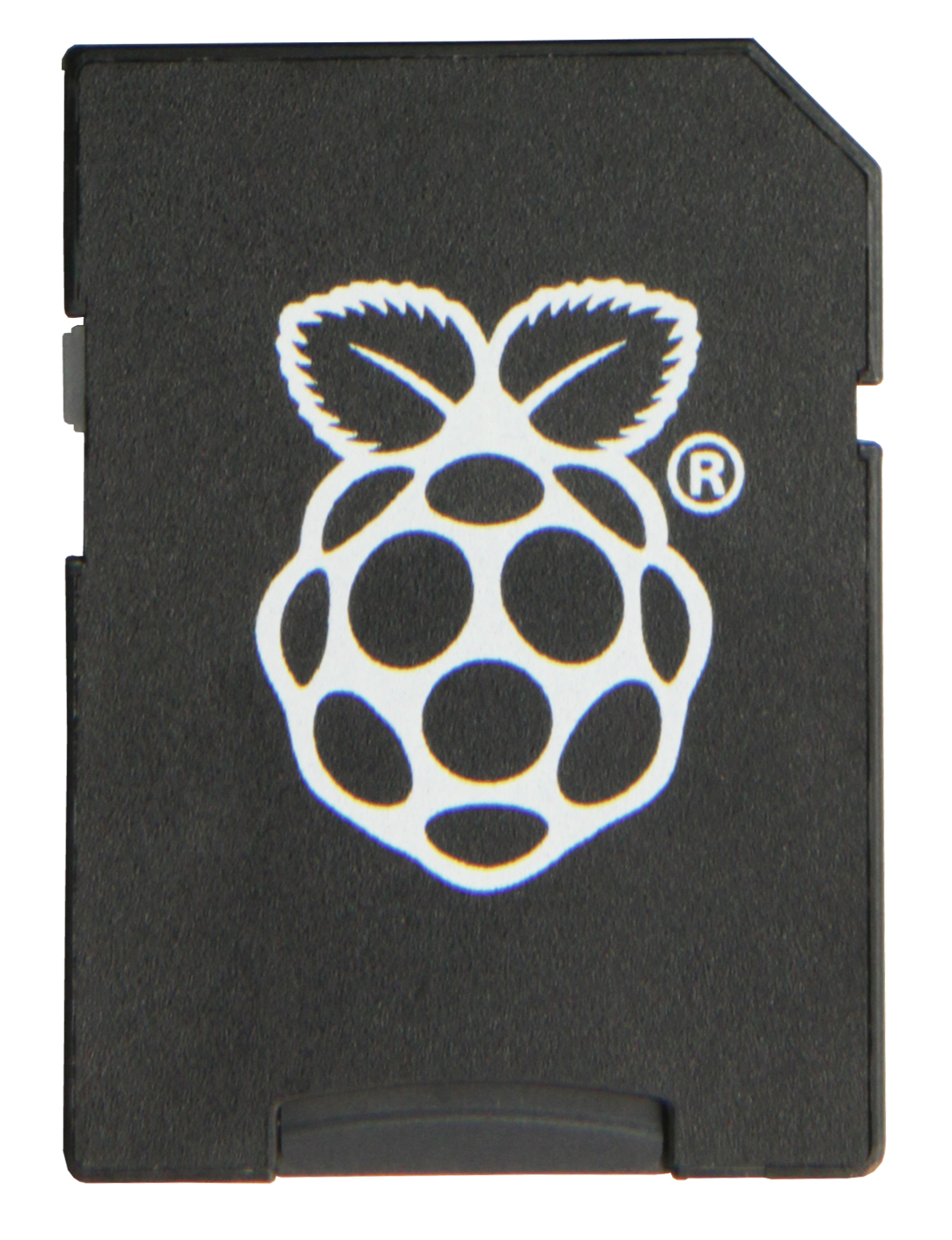 The NOOBS SD card in all its glory. We designed the Pi so that pretty much all the extras you need can be found around the house: there’s not much point in making a $25 computer if your customers need to go out and buy $100 of accessories to use it. Most people can rustle up an old TV, a small SD card and a mobile phone charger. But we’ve noticed that not everybody has access to a large enough card to take advantage of NOOBS, or to a device which can write to SD cards. Fast, pre-programmed, high-capacity cards like the Samsung ones we’re bundling (and which have turned out to be our favourite cards in testing; they’re optimised for random read/write behaviour, unlike many cards which are designed for the large continuous reads and writes that digital cameras make) have been the best-selling Pi accessory offered by our partners since launch, so we’re expecting a lot of you to take us up on this offer. 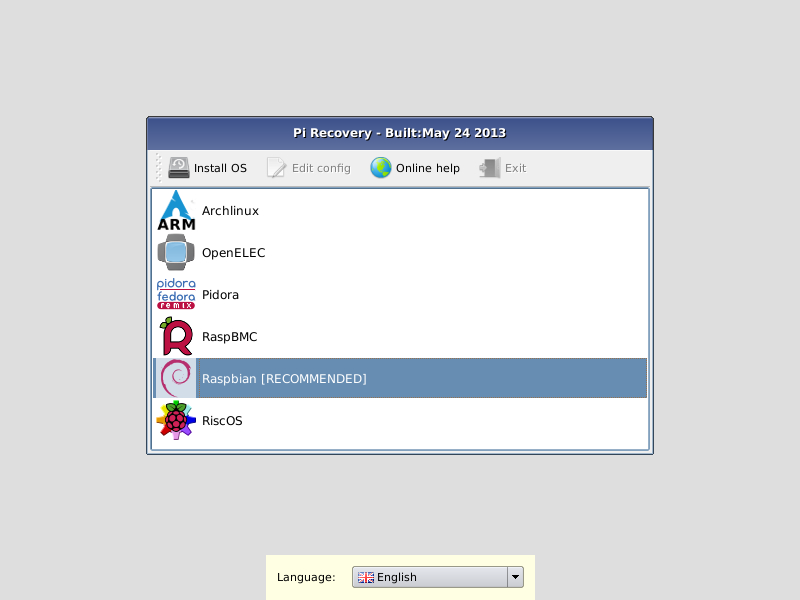 NOOBS in action. $5 is an incredible deal for a fast 8GB card. (Just Google how much these cards usually sell for with nothing on them.) We’d like to thank our partners, and our friends at Samsung, xel and Cardwave for pulling out all the stops to make this happen. A note on SD card nomenclature. The card we’re offering here is rated as Class 4 – in some metrics, Class 4 means slow. This is not the case with this card, which has outperformed many Class 6 and Class 10 cards in our tests – classification seems not to correlate well with random read/write performance. Samsung’s unusual focus on random-access performance on their SD memory means that this card performs very fast and very reliably: we think you’ll be pleasantly surprised! |
Monday, August 5, 2013
Top 5 e-Reading Apps for Windows Phone 8
| Welcome to another Good e-Reader Video Review! Today we take a look at the top 5 e-Reading apps for Windows Phone 8! Obviously, the mobile Windows OS is a bit different from iOS and Android. You won’t find the same mainstream apps available, so we offer advice on the most essential. Over the course of the review, we extensively document; Bookvisor, eBook Reader, Kindle, Legimi and a few others! We give you hands on, to show you everything from the loading time to the core features. You can get a strong sense of what app might be better for you, whether you want to buy books or load your own in.
Top 5 e-Reading Apps for Windows Phone 8 is a post from: E-Reader News |

Students Return to School with Credo’s Homework Help
| Credo, the solutions provider for research, reference, and learning help with strategic platforms aimed at different types of student learners, announced recently that its Credo Homework Help platform would now be available to users as a stand-alone tool, rather than requiring a full subscription to Credo Literati. "On-demand homework assistance can mean the difference between simply passing and thriving for many students," said Mike Sweet, Credo's CEO. in a press release on the announcement of this newly enhanced availability. "With our acquisition of OnlineTutorSolutions.com, we're in the prime position to help students thrive and expanding Homework Help to make our in-house team of state-certified teachers more accessible to students is our first step towards this goal." While some of the greatest value comes for schools and libraries that bundle Homework Help with Literati, individual users can still access Homework Help, which matches students up with state-certified teachers at their time of need. The virtual classroom environment that learners can access includes interactive features like virtual whiteboards to help maximize instruction. Credo’s offerings within Literati have already provided students with learning and reference tools that many digital services neglect to consider. These offerings include things like a scholarship search feature to help students locate accessible tuition assistance, and Literati Student Athlete, an interactive platform that works to help student athletes who may be underprepared for the demands of college academics.
Students Return to School with Credo’s Homework Help is a post from: E-Reader News |

Scholastic Book Clubs Get Redesign in Time for Back-to-School
| Anyone who has been a public school student in the past 60+ years is probably familiar with the monthly Scholastic book clubs. Some of the best moments in book discovery happened when the teacher passed out those crinckly colorful pages to browse. Now, though, Scholastic is making some major upgrades to the beloved school book clubs, just in time for back-to-school. Some of the changes address two concerns that have been raised by both parents and educators. The first change is aimed at helping teachers gear their book offerings to the much-touted Common Core standards by pointing out which standards are met through various titles. The other change to the book club flyers, though, addresses a much longer-running issue, namely trying to meet the reading needs of a wide variety of classroom learners, all in one monthly book club flyer. Now, each flyer will be labelled as to the grade level the books are appropriate for, as well as having a separate and more comprehensive catalog each month for middle grade readers. "We've heard the growing concerns of teachers and parents about the higher standards that kids need to meet with the Common Core State Standards and, with input from our teacher advisors, we've created a practical solution. The grade-leveled flyers allow families to choose appropriate books that will encourage daily independent reading practice which is critical for children to build fluency and confidence and ultimately to improve reading proficiency," said Judy Newman, EVP, Scholastic and President, Scholastic Reading Club, in a press release. "Equally important is the excitement of ordering from the Scholastic book flyer where kids get to choose and own the books they want to read and the thrill when the book box arrives in the classroom." Along with new features like parent and teacher labelled leveled readers, books that are intentionally designed for short daily bursts of reading consumption, and ebooks through the Scholastic Storia book club, Scholastic is not making a change to one key aspect of the book clubs that readers from as far back as 1948 will remember and appreciate: price. Scholastic’s goal continues to be providing reading material at an affordable price in order to encourage long-term literacy and love of reading.
Scholastic Book Clubs Get Redesign in Time for Back-to-School is a post from: E-Reader News |

Amazon Germany Faces Opposition from Some Locals
| Amazon has expanded globally into markets that have now seen the benefits of e-reading. One such global branch, Germany, is now Amazon’s second largest retail market, which is interesting considering that only a few years ago Germany was considered a slow adopter of ebooks due to strange legal ramifications that taxes ebooks at a much higher percentage than print. But now that Amazon has expanded into Germany and has even opened retail distribution centers in the country, the retailer faces some local opposition from a few people disgruntled with Amazon’s practices. Unlike here in the US where Amazon seems to be everyone’s favorite whipping boy–while many of those same naysayers have turned Amazon into the empire that it is today–for it’s massive growth and the blame for the death of brick-and-mortar bookstores, German critics are taking issue with Amazon’s labor practices, many of which fly in the face of the way working citizens are used to doing business. According to a statement that appeared in a New York Times article on the struggles Amazon has faced with locals, "In Germany, the idea that warehouse workers are going to be getting opposition from an employer when it comes to the right to organize, that's virtually unheard-of," said Marcus Courtney, a technology and communications department head at Uni Global Union, a federation of trade unions based in Nyon, Switzerland. "It puts Amazon out in left field." This would hardly be the first time that Amazon has been accused of mistreating its warehouse workers, even in the US. For its part, Amazon is working around things like the definition of a “retail” worker and a slow adoption of changes to how the German warehouses send out customer orders, both of which are fairly universal concepts for Amazon markets. Some of this criticism might seem frivolous, and it might have more to do with EU citizens who are angered over the tax situation that major companies like Amazon, Google, and Apple have all had their names dragged through the mud in various European news outlets for what many feel is skirting local tax laws and driving competitors who have to pay the full tax rates out of business.
Amazon Germany Faces Opposition from Some Locals is a post from: E-Reader News |

2nd Raspberry Pi US Roadshow is go!
| Here’s Rob’s final route and itinerary for his heroic 2nd Raspberry Pi US Roadshow.  We spent weeks trying arrange the route so that it looked like a caffeine molecule– even making Rob take arbitrary day trips to add on the CH3 groups–to no avail.
Rob will present a talk entitled “Raspberry Pi – One Year On” that will cover both the origin story of the Raspberry Pi as well as outlining recent developments. The talk will present technical information about the Raspberry Pi alongside a discussion of the Foundation’s educational aims. Following the presentation, there will be an opportunity for an in-depth Q&A on both educational and technical matters. Rob would also like to invite anyone who is working on a Raspberry Pi project to come along and share their work with the rest of the group as part of a “Show & Tell” section. No project is too small and if you need a bit of encouragement Rob will be showering gifts down from the skies like Raspberry flavoured ambrosia–well, stickers and stuff. The best project at each event will be rewarded with an official Raspberry Pi t-shirt and the best project of the whole tour will win a huge and super Grand Prize. So come along to a venue near you, bring your Pi and say ‘Hi’. Rob — we salute you! P.S. Giz your Airmiles. |
Jeff Bezos Purchases the Washington Post
| Amazon CEO Jeff Bezos has entered into an agreement to purchase the Washington Post. He is putting down close to $250 million dollars for the acquisition, and its a personal investment. Amazon has nothing to do with the sale right now, and Jeff seems to be enamored with news. Recently he made a $5 million investment in Business Insider earlier this year, and Amazon last week published a long-form Q&A with President Barack Obama on its Kindle Singles platform. According to a recent article on the Washington Post they mentioned “The deal represents a sudden and stunning turn of events for The Post, Washington's leading newspaper for decades and a powerful force in shaping the nation's politics and policy. Few people were aware that a sale was in the works for the paper, whose reporters have broken such stories as the Watergate scandals and, in May, disclosures about the National Security Administration's surveillance program. ” This is a good time for new ownership as the family run business has suffered a 44% decline in operating revenue over the past six years. Although the paper is one of the most popular news sources online, print circulation has dwindled, too, falling an additional 7%. Jeff mentioned in an email to staff that things are going to dramatically change, but what those changes might be, is anyone’s guess. Jeff Bezos Purchases the Washington Post is a post from: E-Reader News |

Barnes and Noble Raises eBook Prices in the UK
| Barnes and Noble ran a promotion for three days in the UK that saw a number of bestsellers severely discounted. The Hot Summer Books campaign saw almost 100 eBooks come down in price to a very respectable .99p. The promotion is now over and the books are back to normal. The big draws of the promotion were Khaled Hosseini’s And The Mountains Echoed, and Dead Man’s Time by Peter James. These books have normalized, although Amazon is still offering the deals for a limited time. Booksellers had called the discounting “madness”, with Peter Donaldson of Red Lion Books in Colchester describing the promotion as “very short-sighted . . . It’s valuing a short-term gain over long-term stability”. Barnes and Noble Raises eBook Prices in the UK is a post from: E-Reader News |

Apple Tablet Demand Decreases in Q2 2013
| When Apple announces new products and release dates, the entire tablet industry benefits. We have not seen any new devices being issued yet this year from the company that tends to dominate tablet sales. This has decreased demand for the iPad, while Samsung enjoys accelerated demand. Research firm IDC today announced its preliminary estimates of worldwide tablet shipments for the second quarter of 2013, finding that Apple’s share of the market has fallen 1/3. According to IDC’s numbers, Apple held a 32.4% share of the market for quarter, compared to 39.6% in the previous quarter and a 60.3% share in the year-ago quarter. IDC mentioned “In years past, Apple has launched a new tablet heading into the second quarter, which resulted in strong quarter-over-quarter growth. Now, Apple is expected to launch new tablet products in the second half of the year, a move that better positions it to compete during the holiday season. Meanwhile, the other two vendors in the top 3 also saw a decline in their unit shipments during the quarter. Second-place Samsung shipped 8.1 million units, down from 8.6 million in the first quarter of 2013, although up significantly from the 2.1 million units shipped in 2Q12. And third-place ASUS shipped a total of 2.0 million units in 2Q13, down from 2.6 million in 1Q13.” This new report mainly focuses on tablets that have shipped, and not necessary have been sold. It is very hard to track this sort of data, as major corporations tend not to divulge exact figures. It ends up falling to the retail sector on how many they have purchased. Apple Tablet Demand Decreases in Q2 2013 is a post from: E-Reader News |

OverDrive rolls out the next generation school digital library websites
| At the end of July, OverDrive started updating the user experience for all schools. When teachers, students and parents visit their school's OverDrive-powered digital library website they will find a fully updated user interface, created after extensive market research and customer feedback to provide a more informative, user-friendly experience. This post will highlight many of these new features and we will explore more detail in future posts.
Once a title is selected, students can use the one-click checkout feature to begin enjoying their titles immediately. Users will be able to adjust their lending periods and account settings quickly to align with their preferences. The updated digital library websites also use a responsive design, providing the same user experience regardless of what computer, tablet or device is being used.
Students will have the ability to select from three different visual themes. The improved look will provide a cleaner navigational view customized to the user's taste, as well as more detailed title and bibliography information. Students can share what they're reading via social networking tools and easily add titles to their wish lists to read at a later date. Newly designed help pages, created specifically for students, have been added as well. You can view a live version of the updated digital library here.
OverDrive's new digital library for schools is full of next generation features and tools to enhance the user experience. Be sure to look out for our next posts coming soon on the following topics:
Adam Sockel is a Marketing Communications Specialist with OverDrive
 |
 New features include enhanced metadata, search tools and filters to make finding a title easier. Robust search features have been added as well as improved title detail pages and menus, streamlining the process of discovering what to read next. Users will be able to search for titles based on standardized reading level information such as
 Guests blog #3: This kind of sums it up for me….
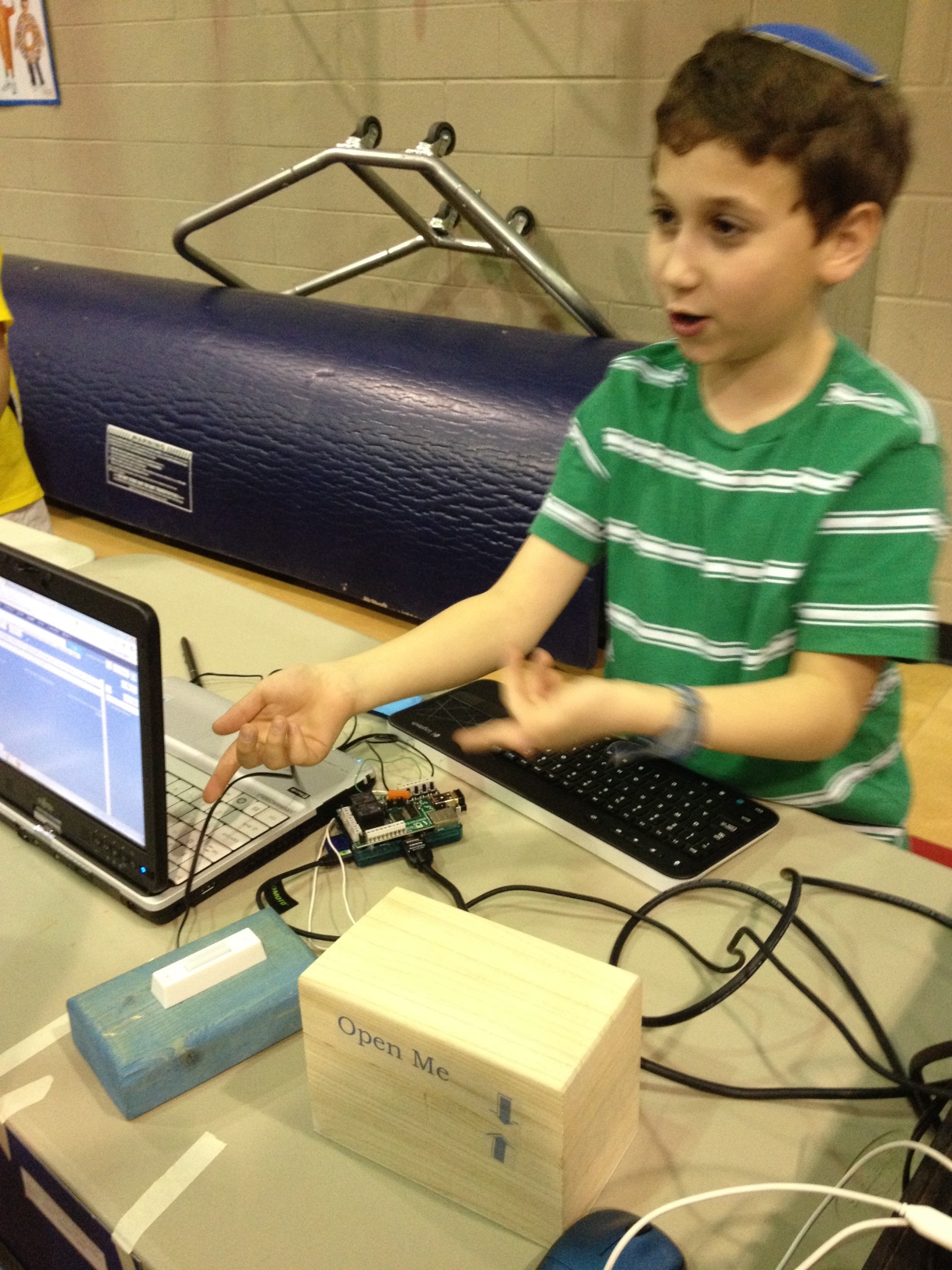
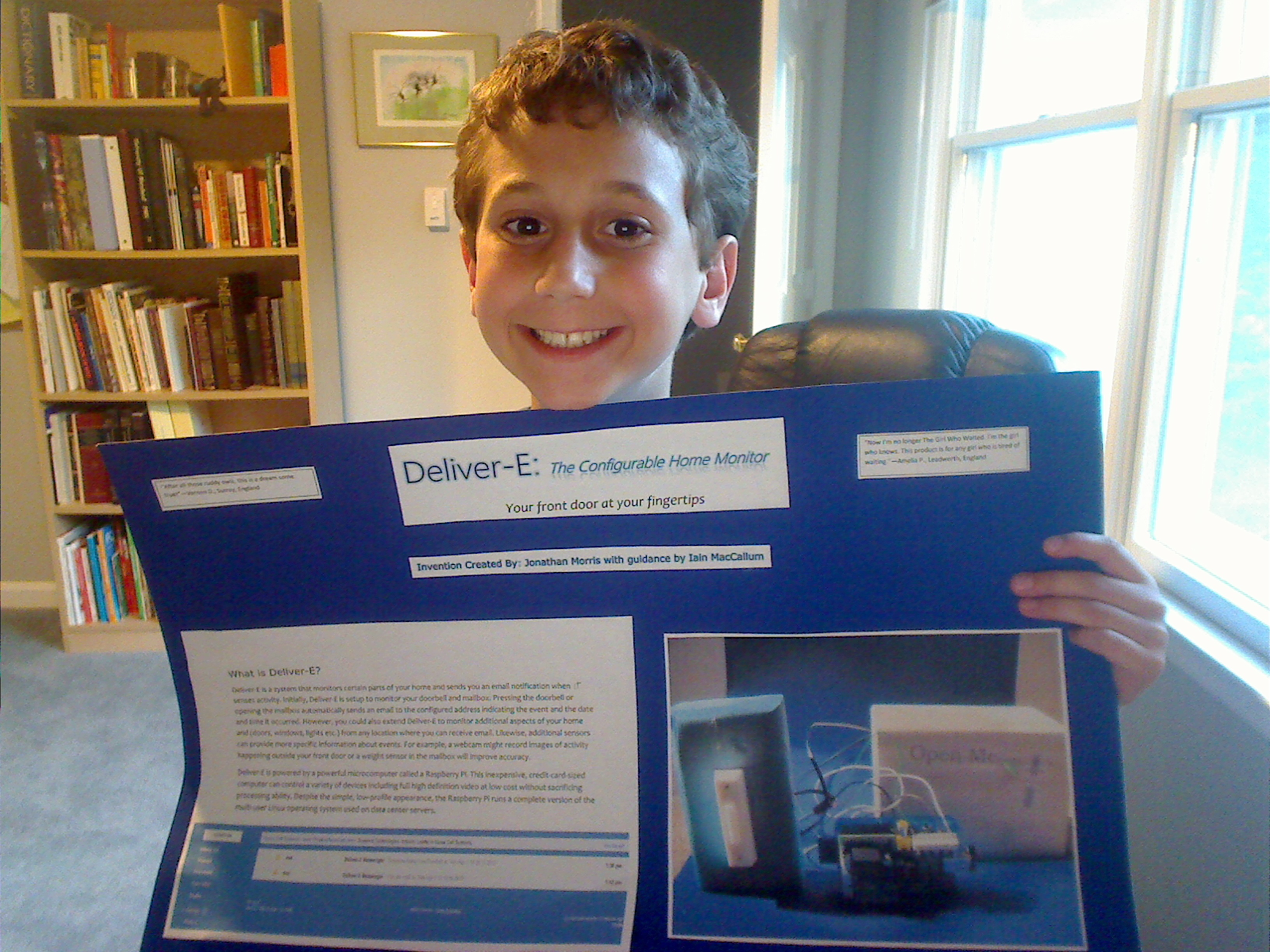
| I’ve spent much of today reading through the delightfully turgid folder of guest blog submissions and I was having a really tough time picking the next entry. Should it be technical? Educational? Just plain daft? Did it have enough documentation? Were the pictures good enough? Was it time for a glass of refreshing barley water? And then I found this short piece from Jonathan Morris. In two hundred words and a couple of pictures, Jonathan sums up what we do at the Raspberry Pi Foundation far better than I ever could. Thanks Jonathan, we love what you are doing! Hello, My name is Jonathan Morris. I am 10 years old and you guessed it…American! For my birthday this year I received a Raspberry Pi. I was overjoyed! I wanted to put my Pi to use so I waited and waited for a good opportunity. My Fourth Grade class had been studying the Industrial Era and our final Project was the Invention Convention. The Invention Convention is where you become the inventor (Instead of studying one). (By the way the project’s name is Deliver-E.) So I bought a small wooden box and a doorbell. Using a Python script and a PiFace Digital, I programmed the mailbox and doorbell to send you emails when either rung or opened. For instance if rang the doorbell, you would receive an email saying “Someone rang your doorbell at (Date/Time).” Same with the mailbox. When I checked the inbox of the project’s Gmail, I had over 115 emails! As of now I am integrating a USB Webcam into the project so when you ring the doorbell it takes a picture and attaches it to the email so you can see who exactly was at your door. |