| Laika is a modular add-on board for the Raspberry Pi that allows control of motors, switches, lamps, robots and more. There are plenty of great hardware control boards out there for the Raspberry Pi but we especially like this one because of the educational focus.There’s lots more information on what it can do and how you can use it on their Kickstarter page. 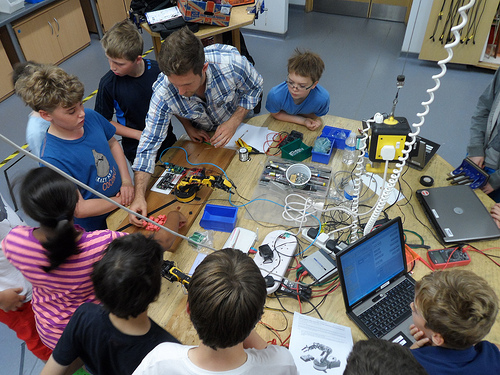 How a learning environment should look In 2014 computing is coming back into the UK school curriculum. And whilst this makes many of us run outside at random intervals to do Snoopy’s Happy Dance we shouldn’t underestimate the challenges involved. Computing is effectively a brand new subject and there are currently few specialist teachers, so the easier we can make it to teach (and learn) computing in an accessible, engaging and creative way the better. This is especially true in primary school. So anyone creating educational resources to go along with their hardware or software makes us happy and the Laika team are doing just that. Here they are running a robotics workshop at Highgate School in London. You can read more about Laika here and if you’d like to get hold of one for yourself or for your school then their Kickstarter has just a few days left to run. We think that Laika has great educational potential but of course you don’t have to be in school to start learning. 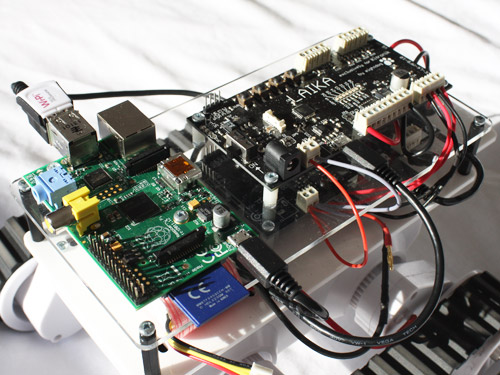 A Laika-Pi powered rover wandering the icy wastes of Europa, the smallest of the Galilean moons. |
Thursday, August 1, 2013
Laika: a hardware control platform for the Raspberry Pi

Microsoft Launches Office App For Android
| Microsoft has released a new app that will introduce its Office suite to Android. The app can be downloaded free from the Google Play Store, though the catch lies elsewhere. The app can only be accesses by those who have subscribed to Microsoft's Office 365 Home Premium and ProPlus services. Also, the app will only be of relevance to smartphones users as the same is yet to be launched for tablet devices, though it is the latter community that could have benefited the most given the larger screen area. Further, the app will only work on devices running Android 4.0 and higher. Also, the Office for Android app will not allow all the operations that one is used to doing with the Office suite in a PC. Rather, the app can be seen to play only a supporting role where users can carry on with their work on Office documents such as editing Word, Excel, and PowerPoint files that won't alter the formatting or the data. Also, users won't have to be connected to the internet to carry on with the editing and the files will be saved once the user is online. Another cool feature of the app is that it will allow the user to create new Word and Excel files on the smartphones. Users will be able to save the changes at SkyDrive or send it via email. Subscribing to Office 365 demands an annual fee of $100 and will allow the users to install the Office app on up to five devices, which includes PCs, smartphones, and even Macs. Microsoft's move to introduce an Office app to Android comes soon after its iOS version was launched a few weeks ago. You can download it today from the Good e-Reader Android App Store. Microsoft Launches Office App For Android is a post from: E-Reader News |

Borders Bookstore to Launch Once More in Singapore
|
Borders bookstore is re-launching in Singapore and will open its doors during the holiday season. Local book retailer Popular Holdings has purchased the rights to Borders and will be launching a single store in Jurong. The last of Borders stores closed down in 2011 and many local readers are really excited about their return. Vincent Ng commented "To me, Borders advocated reading as a way of life. Unlike other places, they allowed customers to browse through the books instead of sealing them up, which helped me discover many new authors. Also, I hope Popular will not turn Borders into an assessment-books bookstore." Amid rising costs and the growing popularity of internet book retailers in Singapore, a number of stores have closed. Page One shuttered its Vivocity outlet last year. The hope is bringing back an iconic bookstore chain will draw more readers into the stores and hopefully act as a staging ground to consolidate the local physical book industry. Borders Bookstore to Launch Once More in Singapore is a post from: E-Reader News |

Wednesday, July 31, 2013
Microsoft Launches Office App For Android
| Microsoft has released a new app that will introduce its Office suite to Android. The app can be downloaded free from the Google Play Store though the catch lies elsewhere. The app can only be accesses by those who have subscribed to Microsoft’s Office 365 Home Premium and ProPlus service. Also, the app will only be of relevance to smartphones users as the same is yet to be launched for tablet devices though it is the latter community that could have benefitted the most given the larger screen area. Further, the app will only work on devices running Android 4.0 and higher. Also, the Office for Android app will not allow all the operations that one is used to doing with the Office suite in a PC. Rather, the app can be seen to play only a supporting role where users can carry on with their work on Office documents such as editing Word, Excel and PowerPoint files that won't alter the formatting or the data. Also, users won't have to be connected to the internet to carry on with the editing and the files will be saved once the user is online. Another cool feature of the app is that it will allow the user to create new Word and Excel files on the smartphones. Users will be able to save the changes at SkyDrive or send it via email. Subscribing to Office 365 demands an annual fee of $100 and will allow the users to install the Office app on up to 5 devices which includes PCs, smartphones and even Macs. Microsoft's move to introduce an Office app to Android comes soon after its iOS version was launched a few weeks ago. You can download it today from the Good e-Reader Android App Store!
|
Borders Bookstore to Launch Once More in Singapore
| Borders bookstore is re-launching in Singapore and will open its doors during the holiday season. Local book retailer Popular Holdings has purchased the rights to Borders and will be launching a single store in Jurong. The last of Borders stores closed down in 2011 and many local readers are really excited about their return. Vincent Ng commented "To me, Borders advocated reading as a way of life. Unlike other places, they allowed customers to browse through the books instead of sealing them up, which helped me discover many new authors. Also, I hope Popular will not turn Borders into an assessment-books bookstore.” Amid rising costs and the growing popularity of internet book retailers in Singapore, a number of stores have closed. Page One shuttered its Vivocity outlet last year. The hope is bringing back an iconic bookstore chain will draw more readers into the stores and hopefully act as a staging ground to consolidate the local physical book industry. |
The Sun Launches Innovative Digital Paywall
| The Sun is currently Britain’s largest newspaper and has the highest dedicated readership base. The company is launching a new digital subscription package today that turns their online website into a Paywall, where you have to take out a membership to read their articles. What is very exciting, is how the Sun is taking a departure from the standard way news companies make money online and doing some fairly innovative things. The Sun is not focusing exclusively on digital, although it does offer a low monthly rate to subscribe to their website. Instead, they want to promote the fact that they don’t want to sell less newspapers to get some quick digital sales. Instead, every issue of the newspaper will have a code that can be redeemed to get a free digital edition of the paper or read the news within their official mobile apps. If you redeem 20 codes in any given month, you are being given the next month for free. Derek Brown, digital editor at the Sun, told us: "We're not becoming digital first, we realize that we still sell a lot of newspapers every day – we don't want print readers to feel that they are missing out on something." Subscribing to the digital newspaper, is seemingly going far beyond just getting news on the website. Readers will also get access to the Sun+ Goals app. It will show highlights from all 380 English Premier matches all season, making them available at 5.15pm on Saturday, five hours earlier than the BBC’s Match of the Day. FA Cup rights will be added in 2014. The other major component is called Sun+ Perks. It promises at least £200 of savings and giveaways each month such as music and eBook downloads. The Sun is doing some fairly excellent things when it comes to launching their new digital subscription packages. The average news agency is just selling access to the internet websites and not giving free access to their news apps. The Sun, instead of doing what everyone else is doing, is blazing their own trail and taking the “companion” approach to mobile. |

Harlequin eBook Sales Account for 24.5% of Total Revenue
| Harlequin is seeing strong growth selling digital books with 24.5% of their global revenue in Q2 2013. This is some fairly solid growth with their entire line of digital products accounting for 20% of revenue in Q2 2012. Overall, revenue declined 7% and they made $99.5 million. One of the reasons why Harlequin is doing so well in the digital arena is because of their expanded selection of non-fiction titles. They are really trying to broaden their approach from authors like Robyn Carr and Susan Mallery. Instead, they are getting lots of sales with second quarter darlings The Virgin Diet and The Beauty Detox Foods. Harlequin saves money on their digital only eBooks for their various splinter companies, like Karina Press. Instead of giving them an advance, they give some fairly high royalty rates. This gives authors an easier time with getting a book onto the market, and more eBooks can be generated in a shorter period of time, compared to print. Digital is also on the upward trend with more readers buying disposable books on their Kindle, instead of cluttering their bookshelves with more trashy novels. |

Nokia Tablet Powered By Snapdragon 800 Chip Makes an Appearance
| Nokia perhaps is among the last of the well-known brands to not have ventured into the tablet space though behind the scene rumblings of the same continues unabated. The latest to have stoked the Nokia tablet fire once more is the unexpected appearance of the same in a GFXBench website. However, before anyone gets too excited about the prospects of a tablet appearing from the Nokia camp, let's not forget the test results can be tampered with by just about anyone. Anyway, what the test results have thrown up is a device codenamed RX-114 that is powered by the latest Qualcomm Snapdragon 800 chip coupled to an Adreno 330 graphics processor, a combination that no doubt will make for a superior performance credential. However, it is the number of pixels mentioned, 1371 x 771 that has led to some confusion. This since the above number of pixels along the longitude and latitude of the device points to something that is a lot similar to the Surface tablet that sports a pixel count of 1366 x 768. Also, with that many pixels spread across a 10.6 inch display of the Surface, what seems likely is that the Nokia tablet too sports a 10 inch display. Or maybe Nokia has just been working on a bigger smartphone or a 7 inch tablet with a longish profile packing in a higher number of pixels to make for a scintillating display. Of course all of the above are mere speculation at the moment and it's not known for sure if the tablet exists in real at all or it has just been a prototype device that Nokia had developed for testing purposes. Any which way it is, a tablet from the Finnish company has been long due. Let's hope we get to hear something concrete on this anytime soon which will be a nice break from the series of rumors we have been treated with so far. Meanwhile, in what can be considered an interesting coincidence, the Snapdragon 800 chip found mention for another high profile tablet, the new Amazon Kindle Fire range today.
|

Camera board documentation
| James Hughes, last seen at the helm of a VW Camper Van heading for Dorset, has been sweating over comprehensive documentation for the Raspberry Pi camera board for some weeks now. You can download the pdf here. It’s worth printing it off; there’s a lot of meat in there. We’ll be linking to this and other useful Pi documentation in a sticky post at the top of each board in the forums in the near future.  Clive and I (plus lots of coffee, a salad from the cafe across the road and a USB analyser) compete for Most Keanu-y rotoscopiness, using the camera’s built-in Sketch effect. Click to for the documentation to find out how to produce something like this yourself. You’ll find examples, troubleshooting tips, full lists of available options, effects and modes, and much more in the pdf.  We got a bit effects-happy this afternoon. This is, in fact, me, and not someone in the mask from Scream, taken using the camera’s onboard gpen effect (we should probably have worked on adjusting the exposure a bit too, but we were in a hurry). Click to download the camera documentation. We’ll be updating the documentation with more information as the software evolves. Look out for James’ piece in August’s MagPi (which should be released later in the week) to find out more about advanced use of the camera. A spot of housekeeping: I’m off on my summer holidays tomorrow. Clive will be babysitting the blog. Please be nice to him. Toodlepip! |
A Closer Look at Sony’s First Lighted eBook Reader
| Sony is expected to announce a new ebook reader in August, the Sony PRS-T3. We already know that it has a 6″ screen and has a slightly different design than last year’s PRS-T2 based on the few photos that turned up in the FCC paperwork. One thing the photos and paperwork don’t reveal, however, is [...] |
B&N and Amazon offering Bestselling eBooks in the UK for .99p
| Barnes and Noble announced a new promotion in the UK yesterday that gives some solid eBook deals. The company is offering a copious amount of bestselling eBooks for only .99p until Thursday. Amazon, not to be outdone, is price matching every title and readers are winning with some low-prices. The list of discounted titles is headlined by And The Mountains Echoed by Khaled Hosseini. It currently dominates the top position of most international bestseller list and is rising in the charts, thanks to these deals. Other solid buys include One Hundred Names by Cecelia Ahern, Revenge Wears Prada by Lauren Weisberger, The Shining Girls by Lauren Beukes and the Game of Thrones by George R R Martin. Most of the titles available are all being sold by major publishers and do not include the normal public domain books that normally populate sales like this. How can these digital companies offer the eBook for .99p, when the normal hardcover edition is being sold for over $20.00? You can thank the European Commission and the US Justice Department for striking down the agency pricing model. Readers win, bookstores, maybe not so much. B&N and Amazon offering Bestselling eBooks in the UK for .99p is a post from: E-Reader News |

Harlequin eBook Sales Account for 24.5% of Total Revenue
| Harlequin is seeing strong growth selling digital books with 24.5% of their global revenue in Q2 2013. This is some fairly solid growth with their entire line of digital products accounting for 20% of revenue in Q2 2012. Overall, revenue declined 7% and they made $99.5 million. One of the reasons why Harlequin is doing so well in the digital arena is because of their expanded selection of non-fiction titles. They are really trying to broaden their approach from authors like Robyn Carr and Susan Mallery. Instead, they are getting lots of sales with second quarter darlings The Virgin Diet and The Beauty Detox Foods. Harlequin saves money on their digital only eBooks for their various splinter companies, like Karina Press. Instead of giving them an advance, they give some fairly high royalty rates. This gives authors an easier time with getting a book onto the market, and more eBooks can be generated in a shorter period of time, compared to print. Digital is also on the upward trend with more readers buying disposable books on their Kindle, instead of cluttering their bookshelves with more trashy novels. Harlequin eBook Sales Account for 24.5% of Total Revenue is a post from: E-Reader News |
Instagram for Blackberry 10 is Not Accepting Picture Uploads
|
Instagram has changed their developer API tools to not accept uploaded images outside of their official tools. This spells bad news for users that have loaded in the Android version of the app on their Z10 or Q10 smartphones. This means if you take a picture and upload it, it seems to disappear into the ether. An Instagram spokesman recently confirmed that "We recently made an update to the systems that we use to fight spam to help prevent future attacks and increase security." The change will affect any apps accessing Instagram outside of the official API no matter if they are using Android, iOS, Windows Phone 8 or otherwise. It remains to be seen if Instagram is only testing new security changes in their API or whether it is apart of a new long-term strategy to secure their service to facilitate further growth. In the meantime, the only Blackberry users who are able to get this to work, are the ones who installed the leaked Jellybean 10.2 firmware update. Instagram for Blackberry 10 is Not Accepting Picture Uploads is a post from: E-Reader News |

Instagram for Blackberry 10 is Not Accepting Picture Uploads
| Instagram has changed their developer API tools to not accept uploaded images outside of their official tools. This spells bad news for users that have loaded in the Android version of the app on their Z10 or Q10 smartphones. This means if you take a picture and upload it, it seems to disappear into the ether. An Instagram spokesman recently confirmed that “We recently made an update to the systems that we use to fight spam to help prevent future attacks and increase security.” The change will affect any apps accessing Instagram outside of the official API no matter if they are using Android, iOS, Windows Phone 8 or otherwise. It remains to be seen if Instagram is only testing new security changes in their API or whether it is apart of a new long-term strategy to secure their service to facilitate further growth. In the meantime, the only Blackberry users who are able to get this to work, are the ones who installed the leaked Jellybean 10.2 firmware update. |
B&N and Amazon Battling for Summer Readers in the UK
| Barnes and Noble announced a new promotion in the UK yesterday that gives some solid eBook deals. The company is offering a copious amount of bestselling eBooks for only .99p until Thursday. Amazon, not to be outdone, is price matching every title and readers are winning with some low-prices. The list of discounted titles is headlined by And The Mountains Echoed by Khaled Hosseini. It currently dominates the top position of most international bestseller list and is rising in the charts, thanks to these deals. Other solid buys include One Hundred Names by Cecelia Ahern, Revenge Wears Prada by Lauren Weisberger, The Shining Girls by Lauren Beukes and the Game of Thrones by George R R Martin. Most of the titles available are all being sold by major publishers and do not include the normal public domain books that normally populate sales like this. How can these digital companies offer the eBook for .99p, when the normal hardcover edition is being sold for over $20.00? You can thank the European Commission and the US Justice Department for striking down the agency pricing model. Readers win, bookstores, maybe not so much. |
Tuesday, July 30, 2013
Four Ways to Read a Digital Comic: Checking out Mark Waid’s Thrillbent Store
| For years (well, three years anyway), a vocal legion of comics readers has been saying that they want to own their files, and they want them DRM-free, not locked into a single app like comiXology (or Kindle, for that matter). A few weeks ago, Image Comics gave them what they wanted; now Mark Waid is doing the same with the web store on his Thrillbent digital comics site. When Waid introduced Thrillbent last year, it was hard to see where he was going. At the beginning, it sort of looked like he had discovered webcomics—ten years after the rest of us. But while he does publish comics on the web, it’s true, Waid has turned Thrillbent into a sort of digital comics lab. In addition to running his comics on the site, he beats the pirates to the punch by offering free downloads, and he also sells them via comiXology. He keeps a blog where he discusses what worked and what didn’t, and he has already changed his mind publicly about several things. The flagship comic on the site is Waid’s own Insufferable, a superhero story with a twist—the superhero and his sidekick have gone their separate ways, and the sidekick is a real jerk. Since Waid offers the story so many different ways, I thought I would kick the tires on all of them reading the comic in all the different formats on my iPad. Reading the story on the web is surprisingly satisfying, because Waid has really worked to get the format right. His comic is horizontal, so it fits into a computer screen without scrolling, and the panels, images, and word balloons are large relative to the page, making it easy to read on a computer without putting your nose to the screen. He also has a nice comics reader that is easy to use—just “previous” and “next” arrows and a few other simple navigation tools. And the comic doesn’t scroll; instead, when you click the arrow the next page simply appears on the screen. This allows Waid and his artist, Peter Krause, to use some digital-comics tricks like dropping in panels or other pictorial elements one at a time or changing the focus of a single panel while keeping the rest of the scene static. The free downloadable PDF is perfectly serviceable, but you scroll from page to page. That means you lose the nifty digital effects: The scene where four panels and a word balloon appear one at a time in the web version becomes five pages in the PDF, with a new panel appearing on each page. When you scroll, you definitely lose the sense of elapsed time that you get when the panels simply appear on the page. Still, it’s free, and the comic is still a good read. Sadly, that is also the case with the PDF of the same chapter that I purchased from the Thrillbent store (Waid has a pay-what-you-like model for his comics; I plunked down $1.99). The image quality looks a bit better (maybe because I paid for it), and the comic is about three times longer than the free PDF, but the digital effects are still missing. It’s just a comic that scrolls. The Thrillbent store is also a bit more of a hassle than I would like. It takes credit cards only, no PayPal, and in order to buy a comic I had to create an account and enter my credit card information. I understand they need my address to verify the credit card, but I resent being forced to hand over my phone number in order to buy a comic. The payoff for this is that once you have an account, you can download your file from the Thrillbent site to any device, which saves you the trouble of moving it via Dropbox or some physical means. However, it would be nice if they had a PayPal option. Finally, I took a look at that same chapter of Insufferable on comiXology. This time, it was formatted like a true digital comic, with the digital effects fully in play. The panels dropped in one by one, the focus changed, and it didn’t scroll. The experience was very similar to the web browser, except now I had the comic on my iPad and could carry it around. There was a lot of talk about DRM’ed versus DRM-free comics at the Digital and Print Comics panel at Comic-Con International in San Diego. With the downloadable PDF, you get full ownership of the file, but the comics experience is incomplete because you are simply scrolling through a set of pages—it’s like reading a print comic that has been scanned in, only a little clumsier because the digital effects require extra pages. With comiXology, you don’t own the file—just a license to read it—but the reading experience is richer. Both are valid choices; it’s really a matter of priorities. |

Amazon Introduces Samples in Kindle for iOS
| Amazon has introduced a new feature in their seminal reading app for the iPad and iPhone. It allows readers to browse their entire database of eBooks that have samples attached to them. Often, these samples have a few chapters of the digital book and when you are done reading it, it will prompt you to enter your email address to have the link sent over. Why is this story big news? Apple mandated awhile ago that all in-app purchases be done through their own system and they gained 30% of each transaction. Overnight, every single major eBook store removed the ability to buy books, including Amazon. This new sample based system is a way to bypass this restriction and still have the ability to browse books and make impulse purchases. In order to look for Samples you have to click the little magnifying glass in the top right hand corner of the app. You can browse by the author or book name, and it will give you a list of all the books. You can click on the download button and it will deliver the book directly to your iPad or iPhone. When you are done reading a sample book, it will give you a “Before You Go” and allow you to check out other books by the same author or just email yourself the book you want. You can then open up the Safari internet browser and buy the book. It will then be synced automatically to your Amazon account and you can than read said book in the Kindle app for iOS. |

Peru Lags Behind Latin America in eBook Adoption
| As digital book distributors make their global expansion a priority, readers have responded with a zeal for ebooks. And despite the smaller-than-average growth in some of these international markets, consumers in most countries have demonstrated their affinity for reading on their devices. Some readers, however are more reluctant to e-reader, but there may be a chicken-or-egg dynamic at play. Are publishers not releasing as many titles in digital format because readers aren’t quick to snap them up? Or are consumers slow to adapt to the digital publishing revolution because there hasn’t been a lot of support it from the publishers? One country whose numbers seem very telling in this situation is Peru, which lags behind the rest of the Latin American reading market in terms of ebook purchasing. An article for the website Peru This Week by Nancy Portugal Prado for Gestión (translated by Alix Farr), demonstrates just how far behind the Peruvian ebook market really is in terms of annual releases from publishers. "’Chile publishes 1,000; Colombia, 1,800; Argentina has launched more than 2,000 and Mexico, more than 5,000,’ Núñez said. However, Peru is far below this average. “According to David Edery, a coordinator of services exports for PromPeru, ‘of the 5,000 titles registered in the last year with the National Library of Peru (BNP), digital books didn't even reach 5 percent (250 books).’ “In the region, the production of this type of book grows at a rate of about 1 percent per year.” Of the books that are distributed as ebooks in Peru, the overwhelming majority of the titles appear to be academic, showing that at least the consumers who are utilizing textbooks and journals have taken to digital reading. In order for publishers to release more ebooks, however, they have to be able to take a calculated risk, something they cannot do–despite the vastly lesser cost of producing an ebook over a print edition–unless they believe that readers will come through and buy ebooks.
|

Rumors: Samsung Developing Two Hi-Res Android Tablets
| With the New Nexus 7 launched, the consumer focus has shifted to what the next generation Nexus 10 will be like. While everything is hush-hush at the moment, there are some insights available–along with some more, as well–thanks to the efforts of the leak-tastic @evleaks. First, there is the SM-P600, which is going to be a 10-inch device with a resolution of 2560 x 1600 pixels. That’s the same number of pixels the current gen Nexus 10 offers, and continues to be the best on any 10-inch tablet ever to be launched. Providing the processing punch will be a quad-core Snapdragon 800 chip that is expected to be clocked at 2.3 Ghz. However, some sources also pointed out it could be a dual core 1.7 GHz A15 chip or the dual core Exynos 5 Octa chip that could be seen doing the processing job (Samsung launched the Exynos 5 Octa CPU just a few weeks ago). Other rumored specs for the Nexus 10 successor include a 2 GB RAM and a 5 megapixel rear facing camera. Meanwhile, @evleaks also claims a second tablet device that Samsung is reported to be developing. Codenamed SM-P900, the tablet will feature a bigger 12.2-inch display and S Pen stylus support (Wacom powered), which means it could well be the newest and biggest member of the Galaxy Note series of tablet devices. However, the P900 will have the same 2560 x 1600 number of pixels to light up the bigger 12.2-inch display which means a slightly lower pixel density for the bigger tablet. As for its processor, the rumor source mentioned it could be the recently released Exynos 5 Octa chip. Both tablet devices are likely to run the latest Android 4.3 Jelly Bean and could be unveiled during the upcoming IFA event to be held in Berlin in September. Meanwhile, there are also reports that Kobo is developing a 10-inch tablet that will also offer a resolution of 2560 x 1600 pixels. However, while that many pixels might make for a stunning display, the real deal maker (or breaker) could the backup time the device is capable of delivering. The original Nexus 10 failed on that, as consumers seemed to have no qualms in trading few extra pixels in favor of gaining a few more hours of run time.
|

Nicholas, some breadboard and a passcode
| Nicholas Harris is 11 years old, and he’s been learning to code with a Raspberry Pi. He’s set up a website to share his progress, and yesterday I was pointed at a project video he’d made. Kids like Nicholas are the whole reason we started the Raspberry Pi project: seeing videos like this makes our day, and makes our job feel so worthwhile. Nicholas started with Codecadamy and a desire to control more of the world in Minecraft: Pi Edition (he’s a big fan of Martin O’Hanlon’s Stuff About Code, particularly the Minecraft bits, and Martin has been giving him pointers in his Minecraft work), and he’s now building bigger and bigger projects, learning Python, Ruby and some PHP. Learning to program as a kid comes with its own set of difficulties. Nicholas’ baby sister threw the entire contents of his hardware kit (which I think was this Adafruit one – let me know if I’ve got that right, Nicholas) into the family LEGO box, and while he was able to retrieve most of the pieces, the light-sensitive photocell never turned up. But Nicholas is a resourceful sort, and found a project in which he could use all the other bits. So here is Nicholas’ passcode reader. It’s great to see him SSH’ing into the Pi, writing Python, and learning electronics and binary, all in one project. Next stop: soldering! Thanks Nicholas: and let us know if you do write up a tutorial like you mentioned! Are you a kid who is learning about computing with the Pi at home? Do you have any projects you’d like to show us? You can get in touch with us via the contact page. |